


01 Oct The First 30 Minutes of a Dental Emergency: Which Actions Can Affect Your Treatment Options?
A dental emergency can happen at any time—a cracked tooth during dinner, a knocked-out tooth from a fall, or a throbbing abscess that wakes you up at 2 a.m. Most people are not sure what to do in those first few minutes, and that uncertainty can make the pain and panic feel worse. Knowing the right steps ahead of time can protect your tooth, reduce your risk of infection, and get you to the right care faster.
This article walks you through exactly what to do if you have a dental emergency—from the moment it happens to what to expect at your urgent dental visit. You will learn how to identify a true emergency, what first aid steps to take at home, when to head to a dentist versus the ER, and how to prepare for a same-day appointment. Whether you are dealing with a severe toothache, a lost crown, or a knocked-out tooth, this guide gives you a clear and practical path forward.
Key Takeaways
- Not every dental problem is a true emergency, but severe pain, swelling, or trauma usually is.
- For a knocked-out tooth, time is critical—ideally you should see a dentist within 30 minutes.
- Basic first aid at home can reduce pain and prevent further damage before your appointment.
- A dentist office near you that offers same-day care is almost always the better first call over the ER.
- Emergency Dental San Francisco provides 24/7 urgent care with walk-ins welcome across the Bay Area.
- Most dental insurance plans cover emergency exams, and financing options are available for those who qualify.
What to Do If You Have a Dental Emergency Right Now
The first thing to do is stay calm and assess what is happening. Panic is understandable, but a clear head helps you take the right steps quickly. Most dental emergencies are treatable—especially when you act fast and get to a qualified dentist.
Ask yourself three questions: Is there severe or worsening pain? Is there visible swelling, bleeding, or a displaced tooth? Did you experience trauma to your face or mouth? If you answered yes to any of these, you are likely dealing with a dental emergency that needs same-day attention.
Call a dentist immediately. Do not wait to see if it gets better on its own. Infections can spread, and a tooth that could have been saved may not be if you delay care by even a few hours.
How to Identify If What You Have Is a Dental Emergency
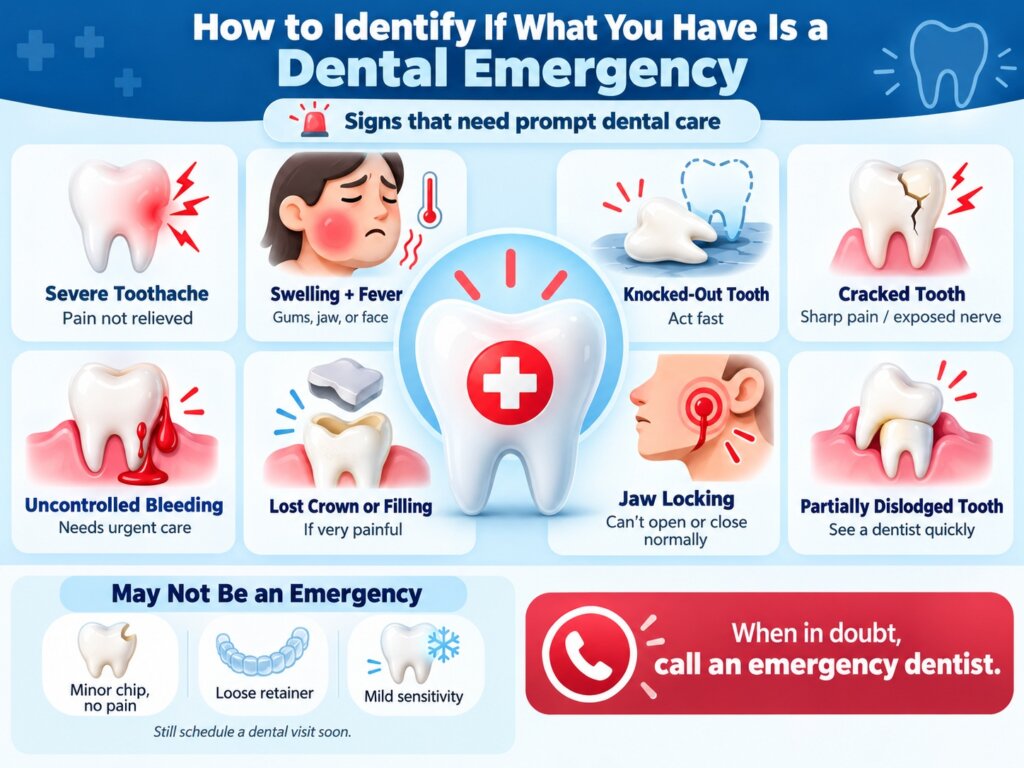
You might be wondering whether your situation is urgent or whether it can wait until a regular weekday appointment. The answer depends on your symptoms. Some issues feel alarming but can wait a day or two, while others need care within the hour.
The following situations are considered dental emergencies that require prompt attention from a dentist or urgent dental care provider:
- Severe toothache that does not respond to over-the-counter pain relief
- Swelling in the gums, jaw, or face—especially with fever
- A knocked-out or partially dislodged tooth
- A cracked or fractured tooth with sharp pain or exposed nerve
- Uncontrolled bleeding from the mouth
- A lost crown or filling that is causing significant pain or sensitivity
- Jaw locking or inability to open or close your mouth normally
Situations like a minor chip with no pain, a loose retainer, or mild sensitivity may not require an emergency visit—but they should still be evaluated by a dentist within a few days. When in doubt, call. A quick phone conversation with a dental professional can help you triage your situation without guessing.
Step-by-Step First Aid: What to Do If You Have a Dental Emergency at Home
Before you reach a dentist, there are specific first aid steps you can take depending on your situation. These steps are not a substitute for professional care—they are meant to protect your tooth and manage pain until you get there. According to the Indian Health Service’s First Aid for Dental Emergencies guide, proper handling of a dental injury in the first few minutes can significantly affect the outcome.
1. For a Knocked-Out Tooth
Pick up the tooth by the crown—the white part you can see—and avoid touching the root. Gently rinse it with clean water if it is dirty, but do not scrub it or remove any tissue fragments.
Try to reinsert the tooth into the socket if you can do so without forcing it. If that is not possible, keep the tooth moist by placing it in a small cup of milk, or between your cheek and gum, and get to a dentist within 30 minutes. According to MedlinePlus, the sooner a knocked-out tooth is replanted, the better the chance of saving it.
2. For a Severe Toothache
Rinse your mouth with warm salt water to reduce bacteria and mild inflammation. Apply a cold compress to the outside of your cheek in 10-minute intervals to help reduce swelling.
Do not place aspirin or any painkiller directly on your gums or tooth—this can cause a chemical burn to the soft tissue. Over-the-counter ibuprofen taken as directed may help manage pain temporarily until you see a dentist.
3. For a Cracked or Broken Tooth
Save any broken tooth fragments if you can find them. Rinse your mouth gently with warm water and apply a cold compress to the outside of your face to reduce swelling.
Avoid eating on that side of your mouth, and stay away from hard, crunchy, or sticky foods. A cracked tooth can worsen quickly if pressure is applied before it is treated.
4. For a Lost Crown or Filling
Keep the area clean and avoid chewing on that side. If you still have the crown and it is intact, bring it to your appointment—your dentist may be able to recement it.
Temporary dental cement, available at most pharmacies, can be used to cover the exposed tooth temporarily. This is a short-term measure only and should not replace a same-day dental visit.
5. For Swelling or a Possible Abscess
Swelling with fever is a sign of infection and should be treated as a dental emergency. Do not try to drain the abscess yourself—this can introduce more bacteria and worsen the infection.
Apply a cold compress to the outside of your face and call a dentist immediately. According to the New Jersey Department of Health Dental Emergency Guide, untreated dental abscesses can spread to the jaw, neck, or other areas and become life-threatening if not addressed promptly.
6. For Soft Tissue Injuries
If you have a cut or laceration inside your mouth, rinse gently with warm salt water and apply light pressure with a clean cloth or gauze. If bleeding does not stop within 15 to 20 minutes, go to the emergency room.
For injuries involving the lips, cheeks, or tongue, clean the area and apply gentle pressure. Seek emergency care if the wound is deep or bleeding heavily.
7. For Dental Emergencies in Children
Dental injuries in children require a slightly different approach depending on whether the tooth is a baby tooth or a permanent one. According to the University of Connecticut Health’s guidance on urgent versus emergent dental situations for kids, a knocked-out baby tooth should not be reinserted—but a knocked-out permanent tooth in a child should be treated the same as in an adult.
If your child has a dental injury, contact a pediatric dentist near you or an urgent care dental office as soon as possible. Our clinic provides gentle pediatric urgent care for knocked-out teeth, sports injuries, and broken braces.
When to Go to the ER Instead of a Dentist
Most dental emergencies are best handled at a dentist office near you, not a hospital emergency room. ERs can treat pain and infection with medication, but they are not equipped to perform dental procedures like extractions, root canals, or tooth repairs.
Go to the ER if you experience any of the following:
- Difficulty breathing or swallowing due to swelling
- A suspected jaw fracture or facial bone injury
- Uncontrolled bleeding that does not stop after 15 to 20 minutes of pressure
- A head injury combined with dental trauma
For everything else—severe toothache, abscess, cracked tooth, knocked-out tooth, lost crown—call an emergency dentist first. You will get faster, more targeted care.
What to Expect at Your Emergency Dental Visit
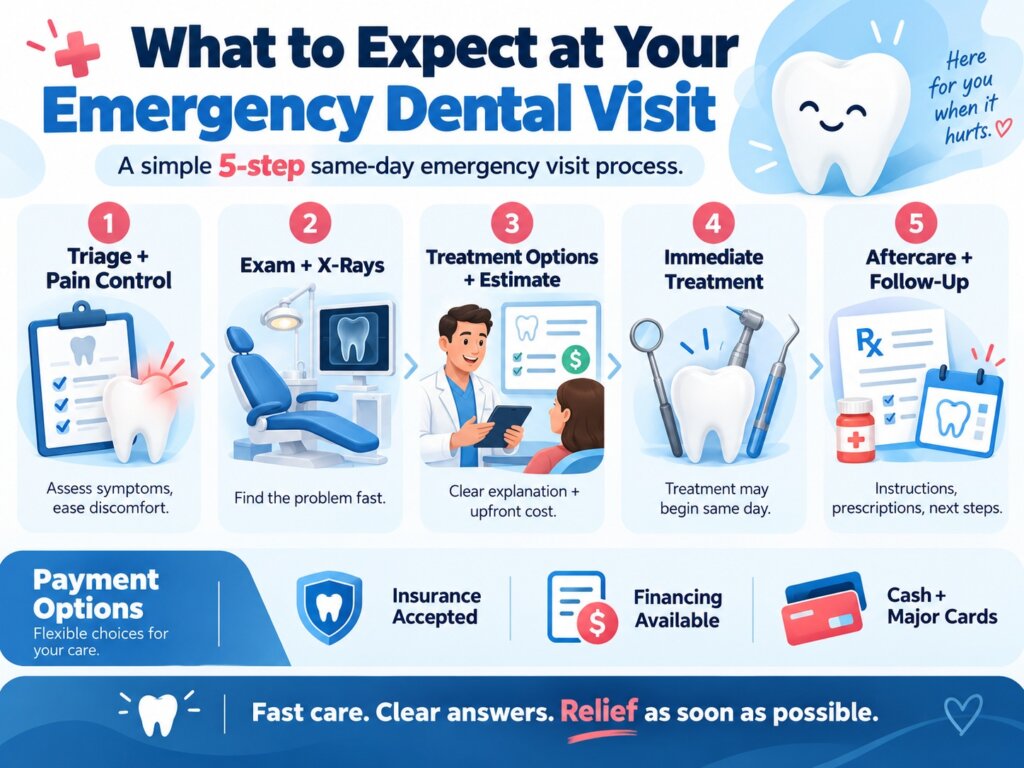
Walking into an urgent dental appointment when you are in pain can feel overwhelming. Knowing what to expect makes the process easier. Emergency Dental San Francisco follows a clear and efficient process designed to get you out of pain as quickly as possible.
Here is what typically happens during a same-day emergency visit:
- Triage and pain control – The team assesses your symptoms and provides immediate comfort measures.
- Exam and X-rays – Digital imaging helps identify the source of the problem quickly.
- Clear treatment options – You receive a plain-language explanation of what is happening and what can be done, along with an upfront cost estimate.
- Immediate treatment – When indicated, treatment such as extraction, root canal therapy, or repair begins the same day.
- Written aftercare instructions – You leave with clear instructions, any necessary prescriptions, and a follow-up plan.
We accept most dental insurance plans and offer financing for qualified patients. For those without dental insurance with no waiting period concerns, we accept cash and all major credit cards. Our goal is to make emergency care accessible—no matter when you need it.
How to Prepare Before You Arrive at the Dentist Office
A little preparation before your visit can save time and help your care team treat you faster. If you are heading to our clinic or any dentist office near you for an emergency, try to bring the following:
- A government-issued photo ID
- Your dental insurance card, if you have one
- A list of current medications and known allergies
- Any recent dental X-rays or records, if available
- The tooth or tooth fragment, if applicable, stored in milk or saliva
Arriving about 15 minutes early allows the team to complete intake quickly so your appointment can focus on treatment. If you are in significant pain, let the front desk know when you call—this helps with triage prioritization.
Emergency Dental San Francisco serves patients across the Bay Area, including Oakland, Berkeley, Alameda, Daly City, Fremont, South San Francisco, and San Leandro. Walk-ins are welcome, and same-day appointments are available. Call 415-230-2783 or book an appointment online to get started.
Conclusion
Dental emergencies are stressful, but knowing what to do makes a real difference in the outcome. Acting quickly, applying the right first aid, and reaching a qualified dentist as soon as possible can save your tooth and prevent serious complications. If you are in the San Francisco Bay Area and need urgent dental care today, Emergency Dental San Francisco is available 24/7—call 415-230-2783 or book online now.
Emergency Dental San Francisco provides same-day urgent dental care to relieve pain fast. We serve the Bay Area daily, including weekends and holidays. Call 415-230-2783 or book online—get started today.
FAQs
What Counts as a Dental Emergency?
A dental emergency is any problem causing severe pain, swelling, uncontrolled bleeding, infection (abscess), trauma (cracked or knocked-out tooth), or a broken restoration that’s cutting your mouth. If you have facial swelling, fever, pus, or trouble swallowing/breathing, seek urgent care immediately—call Emergency Dental San Francisco at 415-230-2783 for same-day, after-hours, and weekend help.
What Should I Do if I Have a Toothache and Can’t See a Dentist Right Away?
Rinse with warm salt water, gently floss to remove trapped debris, and take OTC pain relief as directed (avoid placing aspirin on the gum). Use a cold compress for swelling and avoid chewing on that side. If pain is severe, persistent, or paired with swelling or fever, call Emergency Dental San Francisco (415-230-2783) for fast evaluation and safe pain relief.
What Should I Do if I Knock Out a Tooth?
Pick up the tooth by the crown (not the root), rinse briefly with water if dirty, and try to place it back in the socket. If you can’t, store it in milk or saliva and get urgent dental care immediately—time matters most in the first 30–60 minutes. Call 415-230-2783 so our team can guide you and prepare for same-day treatment.
How Do I Stop Bleeding From My Mouth or Gums?
Apply firm pressure with clean gauze (or a damp tea bag) for 10–15 minutes without checking constantly, and keep your head elevated. Avoid rinsing forcefully, spitting, smoking, alcohol, and strenuous activity. If bleeding is heavy, won’t slow after 20–30 minutes of pressure, or follows major trauma, call 415-230-2783 for urgent care or go to the ER.
Should I Go to the ER for a Dental Emergency?
Go to the ER for trouble breathing or swallowing, rapidly spreading facial/neck swelling, uncontrolled bleeding, severe trauma (jaw fracture), or high fever with worsening swelling. For most dental emergencies—severe toothache, abscess, broken tooth, lost filling/crown, or a knocked-out tooth—an urgent-care dental clinic is usually the fastest way to get definitive treatment; call Emergency Dental San Francisco at 415-230-2783.

Emergency Dental San Francisco is a dental office focused on providing same-day dental appointments to patients in San Francisco and the surrounding area. We provide urgent dental care services during weekends, evenings and holidays.
We accept several forms of payment and have financing options available to those who qualify. We accept most dental insurance.