

24 Sep Emergency Dental Glue: What Is Safe to Use for a Broken Tooth?
You bite into something hard, feel a crack, and suddenly your tooth is in pieces. It happens fast, and the first instinct for many people is to reach for glue. Maybe you’ve searched for a tooth filling kit from Superdrug, looked into dental wax at London Drugs, or even wondered whether a non-toxic super glue for teeth from South Africa is a real option. These searches make sense. You’re in pain, it’s late, and you want a fix right now.
This article walks you through what emergency dental glue options actually exist, which ones are safe, which ones are not, and what to do when a temporary fix is not enough. We’ll also cover when to call a professional, what to expect at an urgent dental visit, and how Emergency Dental San Francisco can help you get real relief the same day.
Key Takeaways
- Super glue and household adhesives are not safe to use inside your mouth, even if labeled non-toxic.
- Over-the-counter dental cement and dental wax are the only appropriate short-term options for a broken tooth.
- Products like a tooth filling kit from Superdrug or similar pharmacies can offer temporary relief but are not a permanent fix.
- The American Dental Association distinguishes professional dental materials from household adhesives for good reason.
- A broken tooth always requires a dental appointment, even if it stops hurting on its own.
- Emergency Dental San Francisco offers same-day care for broken teeth, cracked crowns, and lost fillings across the Bay Area.
What Emergency Dental Glue Is Actually Safe to Use for a Broken Tooth?
Let’s get straight to the answer most people are looking for. When a tooth breaks, the safest temporary options are over-the-counter dental cement, dental wax, and temporary filling material — not super glue, not craft adhesive, and not anything from the hardware store. These products are designed specifically for oral use, which means they’re formulated to be non-irritating to soft tissue and safe if small amounts are swallowed accidentally.
Dental wax, which you can find at pharmacies like London Drugs or similar retailers, is one of the gentlest options. It softens with body heat, molds easily, and creates a temporary barrier over a jagged edge. It won’t hold a fragment in place, but it can protect your tongue and cheek from a sharp surface while you wait for your appointment.
Temporary dental cement, sold under brand names like Dentemp or similar products, works better when you need to re-seat a crown or cover an exposed area. A tooth filling kit from Superdrug or your local pharmacy typically includes this type of material. You press it into the cavity or over the broken area, let it set, and it holds for a few days. It’s not permanent, and it’s not meant to be.
Why Super Glue and Household Adhesives Are Not Emergency Dental Glue Options
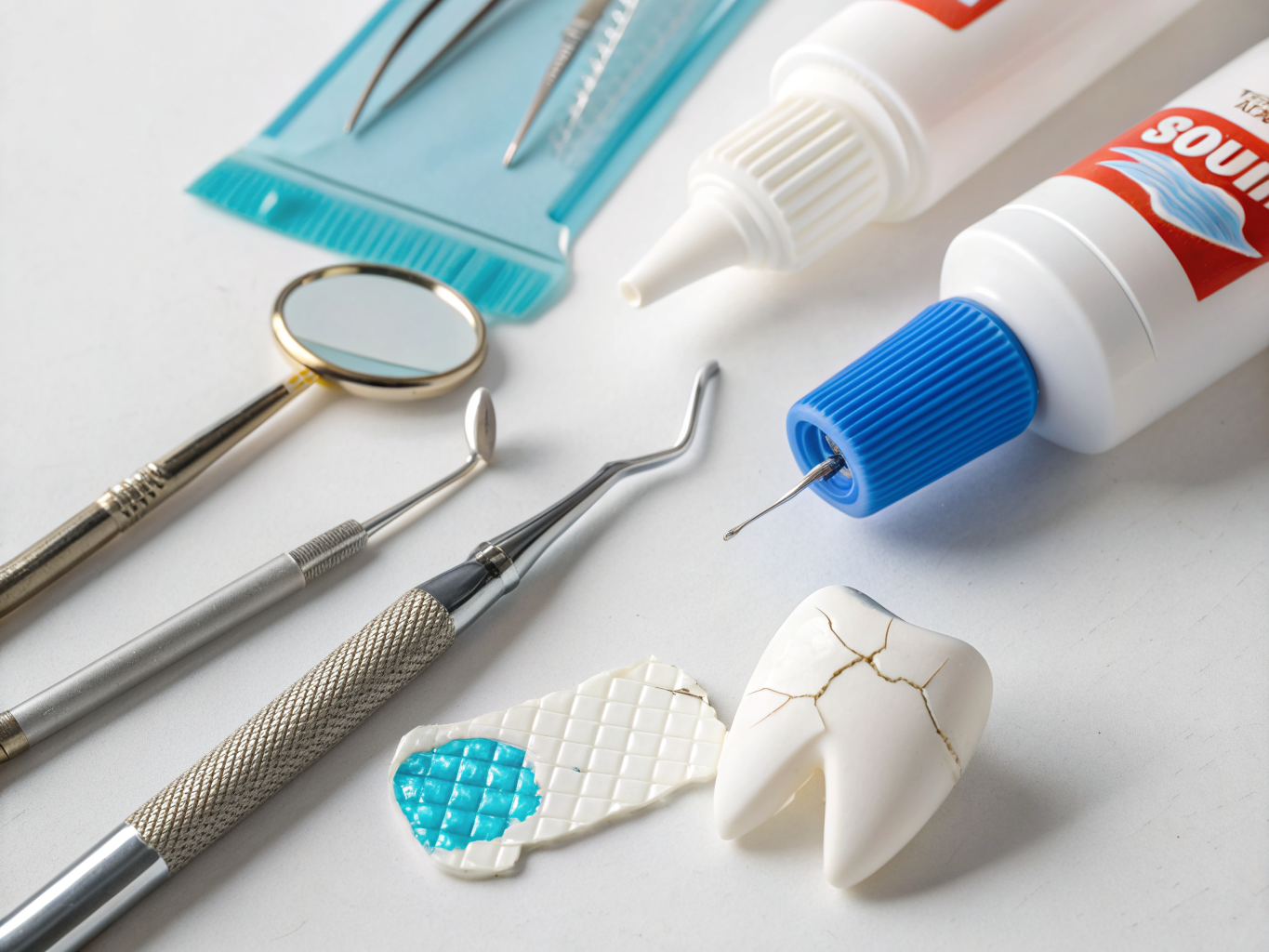
You might be wondering why super glue seems like a logical fix. It bonds fast, it’s strong, and it’s in almost every home. The problem is that super glue is cyanoacrylate, a chemical compound that Poison Control has flagged specifically for its ability to rapidly bond to teeth, tongue, lips, and other oral surfaces. It was not formulated for the wet, dynamic environment of your mouth.
Products like Surehold SH-302 plastic surgery super glue are sometimes mentioned in online forums as a workaround. While certain cyanoacrylate-based adhesives have been used in medical and surgical settings, those are sterile, clinical-grade formulations used by trained professionals in controlled environments. The version sitting in your junk drawer is not the same thing. Using it inside your mouth risks bonding soft tissue, causing chemical irritation, and making professional repair significantly harder.
The American Dental Association is clear that dental cements and restorative materials are subject to specific technical requirements. There is a meaningful difference between a professionally specified dental material and a household adhesive, even one marketed as non-toxic super glue for teeth in South Africa or elsewhere. That label refers to systemic toxicity, not oral safety or compatibility with dental structures.
What to Do Right Now If Your Tooth Is Broken
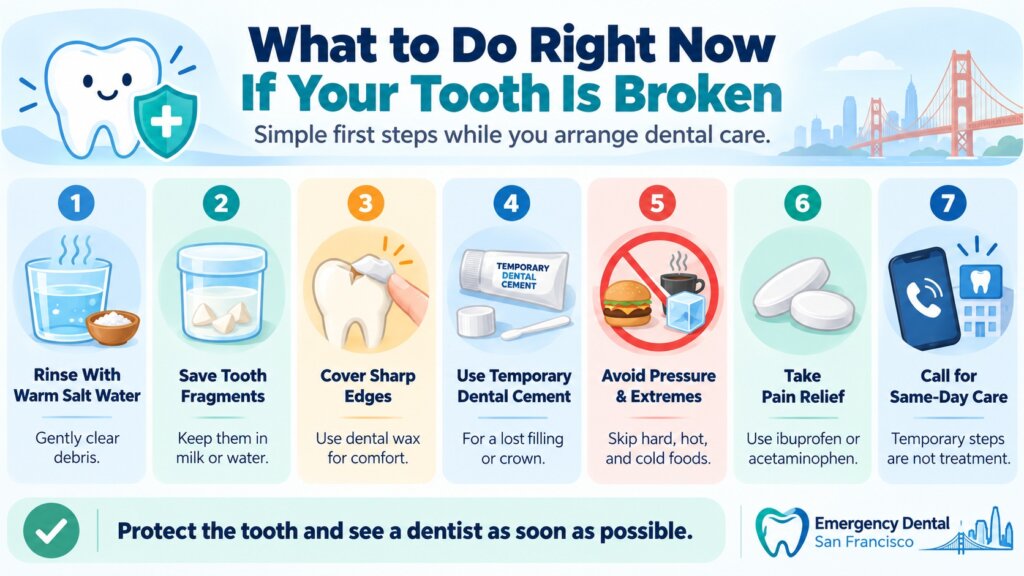
Before you reach for anything, take a breath. A broken tooth is stressful, but you have options, and acting carefully in the next few minutes matters. Here’s what to do while you arrange care.
- Rinse Your Mouth With Warm Salt WaterThis clears debris and reduces bacterial load around the broken area. Use about half a teaspoon of salt in a glass of warm water and rinse gently.
- Save Any Tooth FragmentsPlace them in a small container with a little water or milk. Your dentist may be able to assess or use the fragment during repair.
- Cover Sharp Edges With Dental WaxIf the break left a jagged edge cutting into your cheek or tongue, dental wax from a pharmacy can provide immediate comfort. Press a small piece over the sharp area and reshape as needed.
- Apply Temporary Dental Cement If a Crown or Filling Has Come OutA tooth filling kit from Superdrug or a similar pharmacy product can be pressed into the exposed area. Follow the package directions carefully and avoid chewing on that side.
- Avoid Hard Foods, Temperature Extremes, and PressureNHS guidance recommends staying away from very hot, very cold, and hard foods after a break. These can worsen pain and cause further damage to the tooth structure.
- Take Over-the-Counter Pain Relief If NeededIbuprofen or acetaminophen can help manage discomfort while you wait. Do not place aspirin directly on the gum or tooth tissue.
- Call for a Same-Day Dental AppointmentTemporary measures buy you time, but they are not treatment. A broken tooth needs professional evaluation, X-rays, and a repair plan as soon as possible.
If you’re in the Bay Area and need care today, Emergency Dental San Francisco is available same-day, after hours, on weekends, and on holidays. Call 415-230-2783 or book online to get seen fast. We serve patients across San Francisco, Oakland, Berkeley, Daly City, Fremont, Alameda, San Leandro, and South San Francisco.
Comparing Emergency Dental Glue and Temporary Tooth Repair Options
Not all temporary products work the same way. Here’s a side-by-side look at the most common options people reach for when a tooth breaks.
| Product Type | Safe for Oral Use? | Best For | Holds How Long? |
|---|---|---|---|
| Dental wax (e.g., from London Drugs) | Yes | Covering sharp edges | Hours; reapply as needed |
| Temporary dental cement / tooth filling kit (Superdrug-style) | Yes | Lost fillings, exposed cavities, loose crowns | 2–5 days |
| Super glue / cyanoacrylate (including Surehold SH-302) | No | Not appropriate for oral use | Unpredictable; risk of tissue bonding |
| Household adhesive or craft glue | No | Not appropriate for oral use | Not applicable |
| Professional dental cement (clinic-applied) | Yes | Crown recementation, fragment bonding, restorations | Weeks to permanent, depending on case |
The difference between a pharmacy product and a professional dental material is more than just strength. It’s about biocompatibility, bond integrity, and what happens underneath the repair. A dentist can assess whether the tooth structure is still viable, whether the pulp is exposed, and whether a crown, filling, or extraction is the right next step.
What Happens at an Emergency Dental Visit for a Broken Tooth
A lot of people delay calling because they’re not sure what to expect, or they assume it will take hours. At Emergency Dental San Francisco, the process is straightforward and focused on getting you out of pain first.
Here’s what a typical visit looks like for a broken tooth.
- Triage and pain control: We assess the injury quickly and address discomfort first, before anything else.
- Exam and X-rays: Imaging shows us what’s happening below the surface, including whether the root or pulp is involved.
- Clear options with an estimate: We explain what we found in plain language and give you a realistic picture of your choices, whether that’s a filling, crown, root canal, or extraction.
- Immediate treatment when indicated: If we can fix it the same day, we do. Many broken tooth cases can be addressed in a single visit.
- Written aftercare instructions: You leave with a clear plan, prescriptions if needed, and a follow-up schedule.
We accept most dental insurance plans and offer financing for patients who qualify. For those without insurance, we accept cash and all major credit cards. Up-front estimates are provided whenever possible so there are no surprises.
When a Broken Tooth Becomes a Dental Emergency
Some broken teeth hurt immediately. Others don’t hurt at all, and that can be misleading. A tooth that has cracked into the root or exposed the pulp may initially feel numb before the pain escalates. Waiting it out is rarely the right call.
Watch for these signs that you need care right away, not tomorrow.
- Severe or throbbing pain that doesn’t ease with over-the-counter medication
- Swelling in the gum, jaw, or face near the broken tooth
- Fever alongside dental pain, which may indicate infection or abscess
- Visible pulp exposure, meaning the inner part of the tooth is visible or bleeding
- Numbness in the jaw or surrounding teeth
- A break that extends below the gumline
Any of these symptoms warrants a call to our clinic immediately. You can reach Emergency Dental San Francisco at 415-230-2783, day or night, including weekends and holidays. Walk-ins are welcome, and same-day appointments are available across our Bay Area locations.
One thing worth mentioning: if you’ve come across references to unrelated products during your search, like Walmart urine detox kits appearing in dental search results, that’s a sign you may have landed in a confusing corner of the internet. Stick to pharmacy-sourced dental products and licensed dental professionals for anything going in your mouth.
How to Prepare for Your Emergency Dental Appointment
Getting ready takes less than five minutes, and it makes your visit smoother. Here’s what to bring and do before you arrive.
- Bring a government-issued ID and your insurance card if you have one
- Write down your current medications and any known allergies
- Bring any recent dental X-rays or records if you have access to them
- Save any tooth fragments in a small container with water or milk
- Arrive about 15 minutes early to complete intake paperwork
Our team follows CDC and OSHA infection-control standards, with strict sterilization protocols and appropriate PPE at every visit. All imaging and procedures are performed by licensed professionals using modern equipment in a clean, clinical environment.
Conclusion
A broken tooth needs professional care, not household glue. Dental wax and temporary cement from a pharmacy can buy you a day or two, but they are not a substitute for treatment. Emergency Dental San Francisco provides same-day, after-hours care for broken teeth across the Bay Area, with clear pricing, licensed clinicians, and a focus on getting you out of pain fast. Call 415-230-2783 or book an appointment online today.
Emergency Dental San Francisco provides same-day broken tooth repair with licensed clinicians. Skip the dental glue—we offer safe, immediate fixes. Call 415-230-2783 or book online to get started.
FAQs
What Is the Best Emergency Dental Glue?
The safest option is an over-the-counter temporary dental cement (often sold as “temporary filling” or “lost cap/crown” repair) used exactly as directed. It’s designed for the mouth and can help protect the tooth until a dentist can properly fix it—ideally the same day.
Can I Use Super Glue to Fix a Tooth or Crown?
No. Super glue is not made for oral use and can irritate tissues, damage the tooth, and make professional repair harder. If a crown is loose, use temporary dental cement instead and get urgent dental care as soon as possible.
How Long Does Temporary Dental Glue Last?
Most temporary dental cements are meant to last only a short time—typically hours to a few days—depending on the location, bite pressure, and moisture. Treat it as a brief stopgap and schedule an emergency visit promptly for a durable, safe repair.
What Can I Use If I Don’t Have Dental Glue?
If you can’t get temporary dental cement right away, keep the area clean, avoid chewing on that side, and cover sharp edges with orthodontic wax (or sugar-free gum in a pinch). For pain, use cold compresses and follow labeled directions for OTC pain relievers—then call an emergency dentist for same-day treatment.
Is Temporary Dental Cement Safe to Use at Home?
Yes, when it’s an OTC product labeled for temporary dental use and applied as directed. It should not be used to “permanently” fix a tooth, and you should still be seen by a licensed dentist quickly to treat the underlying problem and prevent infection or worsening damage.

Emergency Dental San Francisco is a dental office focused on providing same-day dental appointments to patients in San Francisco and the surrounding area. We provide urgent dental care services during weekends, evenings and holidays.
We accept several forms of payment and have financing options available to those who qualify. We accept most dental insurance.