

27 Mar How to Get Emergency Dental Insurance: What to Check About Waiting Periods and Immediate Coverage
Dental emergencies strike without warning, leaving you scrambling for coverage and care when pain hits hardest. Getting emergency dental insurance quickly can mean the difference between affordable treatment and overwhelming bills during your most vulnerable moments. The good news is that several pathways exist to secure dental coverage fast, even when you need care immediately.
This guide walks you through practical steps to efficiently obtain emergency dental insurance, from understanding your immediate options to selecting plans that work when a crisis hits. You’ll discover which coverage types provide the fastest access, how to navigate waiting periods, and what to expect from different insurance structures during urgent situations.
Key Takeaways
- PPO dental plans typically offer the fastest access to emergency care with high coverage percentages for urgent treatments.
- Some insurers, like Aflac, offer plans with no waiting periods for routine services, allowing immediate coverage activation.
- Most dental insurance plans cover emergency exams and palliative treatment at higher percentages than routine care.
- HMO plans cost less but require selecting a network dentist and may limit emergency provider options.
- Emergency dental providers often accept multiple insurance plans and offer financing options for immediate care.
Understanding your insurance options becomes critical when dental pain demands immediate attention.
How to Get Emergency Dental Insurance Through Employer Benefits
Your workplace may offer the fastest route to dental coverage through employer-sponsored plans. Most companies provide open enrollment periods annually, but qualifying life events can trigger special enrollment opportunities. Emergency situations don’t always wait for convenient timing, making it essential to understand your current benefits status.
Contact your HR department immediately to review available dental and vision insurance options. Many employer plans activate within 30 days of enrollment, providing quicker access than individual market alternatives.
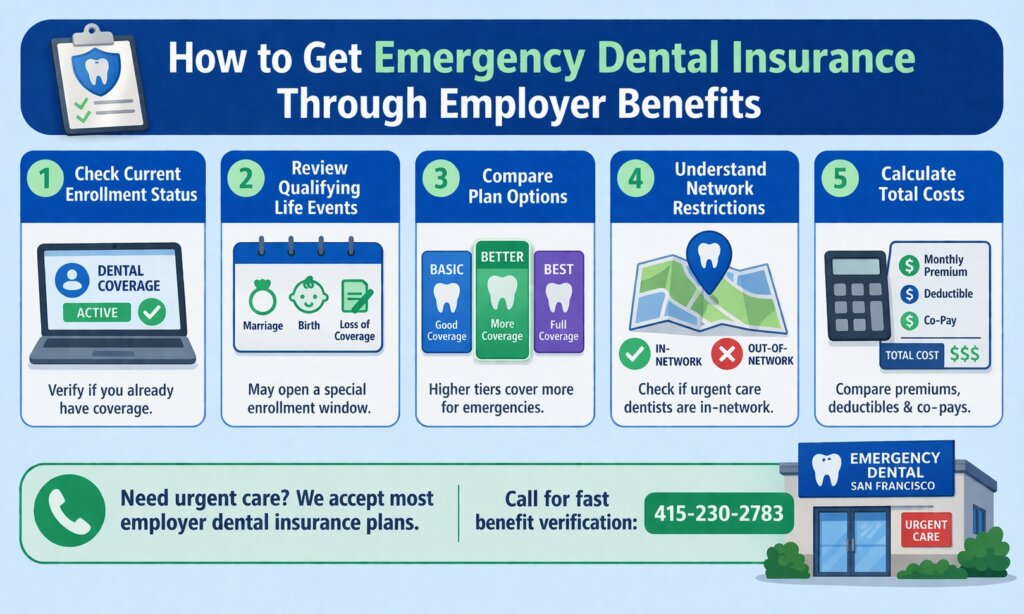
1. Check Current Enrollment Status
Verify whether you already have dental coverage through your employer that you may have overlooked or declined previously. Some companies automatically enroll employees in basic dental plans.
2. Review Qualifying Life Events
Marriage, divorce, birth of a child, or loss of other coverage can open special enrollment windows outside normal periods. These events typically provide 30-60 days to add or change dental benefits.
3. Compare Plan Options
Employer plans often include multiple tiers, from basic coverage to full coverage dental insurance that California residents need for comprehensive care. Higher-tier plans typically cover emergency treatments at better percentages.
4. Understand Network Restrictions
Employer plans may limit you to specific dental networks, potentially affecting your choice of emergency providers. Verify that quality urgent care facilities accept your proposed coverage.
5. Calculate Total Costs
Factor in monthly premiums, deductibles, and co-pays to determine true costs during emergency situations. Sometimes higher-premium plans save money during crisis care.
Emergency Dental San Francisco accepts most employer-sponsored dental insurance plans and can verify your benefits quickly when you call 415-230-2783 for urgent care.
Individual market insurance provides another avenue when employer coverage isn’t available or sufficient.
Securing Individual Dental Insurance Plans That Cover Emergency Care
Individual dental insurance markets offer flexibility but require careful navigation to find plans that work during emergencies. The key lies in understanding which plan structures provide the fastest access to care while effectively covering urgent treatments. Not all individual plans treat emergency care equally, making plan selection critical for your protection.
Research shows that PPO plans typically offer the best emergency coverage, allowing you to visit any licensed dentist while providing higher reimbursement percentages for urgent care.
| Plan Type | Emergency Coverage | Network Requirements | Activation Time |
|---|---|---|---|
| PPO | High percentage coverage | Any licensed dentist | 30-60 days |
| HMO | Full coverage in-network | Selected primary dentist | 30 days |
| Discount Plan | Reduced rates only | Participating providers | Immediate |
Understanding waiting periods becomes crucial when you need care quickly.
Navigating Waiting Periods for Immediate Dental Coverage
Waiting periods represent the biggest obstacle to getting emergency dental insurance when you need it most. Most traditional dental plans impose waiting periods ranging from six months to two years for major procedures, but emergency care often receives different treatment. Understanding which services face waiting periods helps you plan coverage strategically.
The good news is that many plans waive waiting periods for emergency treatments, recognizing that urgent care can’t wait for arbitrary time restrictions.
1. Emergency Services Exemptions
Most insurance plans waive waiting periods for true dental emergencies, including severe pain, infections, trauma, and urgent extractions. These exemptions recognize that emergency care prevents more serious health complications.
2. Preventive Care Immediate Coverage
Basic preventive services like cleanings and exams typically have no waiting periods, activating immediately when your plan begins. Emergency exams fall into this category at most insurers.
3. Plans With Reduced Waiting Periods
Some insurers offer shortened waiting periods for major services, reducing standard wait times from 12 months to 6 months or less. These plans may cost slightly more but provide faster access to comprehensive care.
4. Employer Plan Advantages
Group plans through employers often have reduced or eliminated waiting periods compared to individual coverage. If you’re starting a new job, prioritize dental enrollment during your benefits window.
5. Prior Coverage Credits
If you had previous dental insurance, many new plans will credit that coverage time toward waiting period requirements. Maintain documentation of your previous coverage to qualify for these credits.
We work with patients to maximize their insurance benefits and provide financing options when coverage gaps exist, ensuring that emergency care remains accessible regardless of insurance timing.
Specialized coverage options exist for specific dental needs that often require emergency attention.
Finding Full Coverage Dental Insurance California Plans for Comprehensive Protection
California residents have access to comprehensive dental plans that cover everything from routine care to complex emergency procedures. Full coverage dental insurance california plans typically include preventive care, basic restorative work, and major procedures like root canals and extractions that commonly arise during dental emergencies. These plans provide the most complete protection when dental crises strike unexpectedly.
The state’s insurance marketplace offers multiple options, from individual plans to family coverage that protects everyone under one policy.
1. Covered California Marketplace Options
California’s state marketplace includes standalone dental plans and medical plans with dental benefits. These plans must meet essential health benefit requirements, ensuring comprehensive emergency coverage.
2. Major Carrier Comprehensive Plans
Companies like Delta Dental, Anthem, and Kaiser offer full-coverage plans that include emergency services, major restorative work, and preventive care with varying co-pay structures.
3. Family Plan Considerations
Family plans often provide better value when multiple household members need coverage, spreading costs across all covered individuals while maintaining comprehensive benefits for each person.
4. Network Size and Provider Access
Larger networks mean more choices for emergency care, especially important in California’s diverse geographic regions where you may need urgent treatment away from home.
5. Annual Maximum Benefits
Full coverage plans typically offer higher annual maximum benefits, providing more financial protection during years when multiple emergency treatments become necessary.
Specific procedures often drive the need for emergency insurance coverage.
Understanding What Emergency Procedures Your Insurance Covers
Emergency dental situations often involve expensive procedures that can devastate your budget without proper insurance coverage. Knowing whether your plan covers common emergency treatments helps you choose the right insurance and understand your financial responsibility during urgent situations. Different procedures receive different levels of coverage, even within the same insurance plan.
Emergency procedures typically fall into categories that insurance companies treat differently for coverage purposes.
| Emergency Procedure | Typical Coverage Level | Common Waiting Period |
|---|---|---|
| Emergency Exam | 80-100% | None |
| Pain Relief Treatment | 70-90% | None |
| Emergency Extraction | 60-80% | Waived for emergencies |
| Root Canal Therapy | 50-70% | 6-12 months (may be waived) |
Specialized treatments require specific insurance considerations.
Getting Coverage for Specialized Emergency Treatments
Certain dental emergencies involve specialized treatments that require specific insurance coverage considerations. Procedures like emergency implant placement, orthodontic repairs, or complex oral surgery may need particular plan features to ensure adequate coverage. Understanding these specialized coverage areas helps you select insurance that protects against the full range of potential dental emergencies.
Many people don’t realize that common treatments like braces or implants can create emergency situations requiring immediate professional attention.
1. Does Dental Insurance Cover Implants in Emergency Situations
Implant coverage varies significantly between plans, with some excluding implants entirely while others cover them as major procedures. Emergency implant situations, such as immediate placement after trauma, may receive different coverage treatment than elective implant procedures.
2. Dental Insurance That Covers Invisalign Emergency Repairs
Broken or lost Invisalign aligners can create urgent orthodontic situations requiring immediate replacement. Plans that include orthodontic benefits typically cover emergency repairs or replacements, though coverage levels vary by insurer.
3. Dental Insurance Plans Cover Braces Emergency Care
Broken brackets, displaced wires, or other orthodontic emergencies require immediate attention to prevent treatment delays or injury. Plans with orthodontic benefits usually cover emergency repairs at the same level as routine orthodontic care.
4. Oral Surgery Emergency Coverage
Complex oral surgery emergencies may require coordination between dental and medical insurance, especially when hospitalization becomes necessary. Understanding which plan pays first prevents billing complications during crisis situations.
5. Pediatric Emergency Dental Coverage
Children’s dental emergencies often involve trauma or developmental issues requiring specialized care. Pediatric dental coverage may have different rules and higher coverage levels for emergency treatments.
Our clinic handles insurance coordination for specialized emergency treatments, working directly with your insurer to maximize benefits and minimize your out-of-pocket costs during urgent orthodontic or surgical situations.
Payment alternatives become important when insurance coverage has gaps.
Alternative Payment Options When Insurance Coverage Falls Short
Even comprehensive dental insurance may not cover all emergency treatment costs, leaving you responsible for deductibles, co-pays, or uncovered procedures. Having backup payment strategies ensures that financial concerns don’t delay necessary emergency care when every minute counts. Multiple financing options exist to bridge the gap between insurance coverage and total treatment costs.
Emergency dental providers understand that patients need flexible payment options during crisis situations.
1. Healthcare Credit Cards
Companies like CareCredit offer healthcare-specific credit cards with promotional financing terms, including zero-interest periods for qualified applicants. These cards work immediately upon approval, providing instant payment solutions.
2. Provider Financing Programs
Many dental practices offer in-house financing or work with third-party financing companies to provide payment plans. These programs often offer more flexible terms than traditional credit options.
3. Health Savings Accounts
HSAs and Flexible Spending Accounts can pay for dental emergencies with pre-tax dollars, effectively reducing your costs by your marginal tax rate. These accounts work with any qualified dental provider.
4. Personal Loans
Online lenders often provide quick approval for personal loans that can cover emergency dental costs. While interest rates vary, these loans can provide immediate funding when other options aren’t available.
5. Family and Community Resources
Some communities offer emergency dental assistance programs, while family members may provide temporary financial assistance during crisis situations. Research local resources before emergencies occur.
We accept most dental insurance plans and offer financing options for qualified patients, ensuring that emergency care remains accessible regardless of your insurance coverage limitations or immediate financial situation.
Conclusion
Getting emergency dental insurance quickly requires understanding your options and acting decisively when coverage gaps exist. PPO plans offer the most flexibility for emergency care, while some insurers provide immediate coverage activation without waiting periods. Emergency Dental San Francisco works with most insurance plans and offers flexible payment solutions to ensure that urgent dental care remains accessible when you need it most.
Emergency Dental San Francisco accepts most dental insurance plans and offers flexible financing options for qualifying patients. Our comprehensive dental exams help maximize your insurance benefits while ensuring affordable emergency care. Get started with same-day relief today.
FAQs
Can I Get Dental Insurance That Starts Immediately for an Emergency?
Sometimes, but it depends on the plan—many dental policies have waiting periods for major services, even if basic benefits start right away. If you’re in pain now, Emergency Dental San Francisco can see you same-day and explain your treatment options and costs clearly while you check plan details.
Does Dental Insurance Cover Emergency Dental Work?
Many plans help cover emergency exams, X-rays, and pain-relief treatment, but coverage varies by insurer and whether the service is considered basic or major. We work with most dental insurance plans and can help you understand what may be covered at your visit.
How Can I Get Help Paying for Emergency Dental Care Without Insurance?
You can ask about cash/self-pay rates, financing options (if you qualify), and prioritizing immediate pain relief first with a step-by-step treatment plan. We accept cash and major credit cards and offer financing options to help keep urgent care accessible.
What Is the Waiting Period for Dental Insurance for Major Work?
Commonly, waiting periods for major services (like crowns, root canals, or extractions) range from about 6 to 12 months, though it varies by plan and employer. If you need urgent care now, we can stabilize the problem safely and outline next steps while you confirm benefits.
Is There Emergency Dental Insurance With No Waiting Period?
Some plans advertise “no waiting period,” but it often applies only to certain services, and major work may still have limits or exclusions—always read the policy details. If you need immediate relief, we’re available same-day, after-hours, weekends, and holidays for prompt evaluation and treatment.

Emergency Dental San Francisco is a dental office focused on providing same-day dental appointments to patients in San Francisco and the surrounding area. We provide urgent dental care services during weekends, evenings and holidays.
We accept several forms of payment and have financing options available to those who qualify. We accept most dental insurance.