

19 Mar Is Losing a Filling a Dental Emergency?
A lost filling can turn an ordinary day into a painful ordeal, leaving you wondering whether this situation requires immediate attention or can wait until regular office hours. The answer depends on several factors, including your pain level, the location of the missing filling, and any accompanying symptoms like swelling or fever. Understanding when a lost filling constitutes a true dental emergency can help you make the right decision for your oral health.
This article will guide you through the warning signs that indicate the need for urgent care, provide immediate steps to manage discomfort, and explain what to expect during emergency treatment. You’ll also learn about prevention strategies and when same-day dental care becomes your best option.
Key Takeaways
- A lost filling becomes a dental emergency when accompanied by severe pain, swelling, fever, or signs of infection.
- Immediate care is needed if the exposed tooth causes unbearable discomfort or if its sharp edges cut your tongue or cheek.
- Emergency Dental San Francisco provides same-day treatment for lost fillings, available 24/7, including weekends and holidays.
- Temporary relief measures include over-the-counter pain medication, salt water rinses, and dental wax to cover sharp edges.
- Quick professional treatment prevents complications such as tooth fractures, infections, or the need for more extensive procedures.
Understanding When a Lost Filling Requires Emergency Care

Not every lost filling demands immediate emergency attention, but certain symptoms signal the need for urgent dental care. Severe pain that interferes with daily activities, eating, or sleeping typically indicates that the tooth’s nerve is exposed or irritated. When a filling falls out, it leaves the tooth structure vulnerable and can expose sensitive inner layers.
You should seek emergency treatment if the lost filling causes unbearable discomfort or creates sharp edges that cut your tongue or cheek. Swelling around the affected tooth, fever, or signs of infection also warrant immediate professional care.
The location of the lost filling also plays a role in determining urgency levels.
Immediate Steps to Take When You Lose a Filling
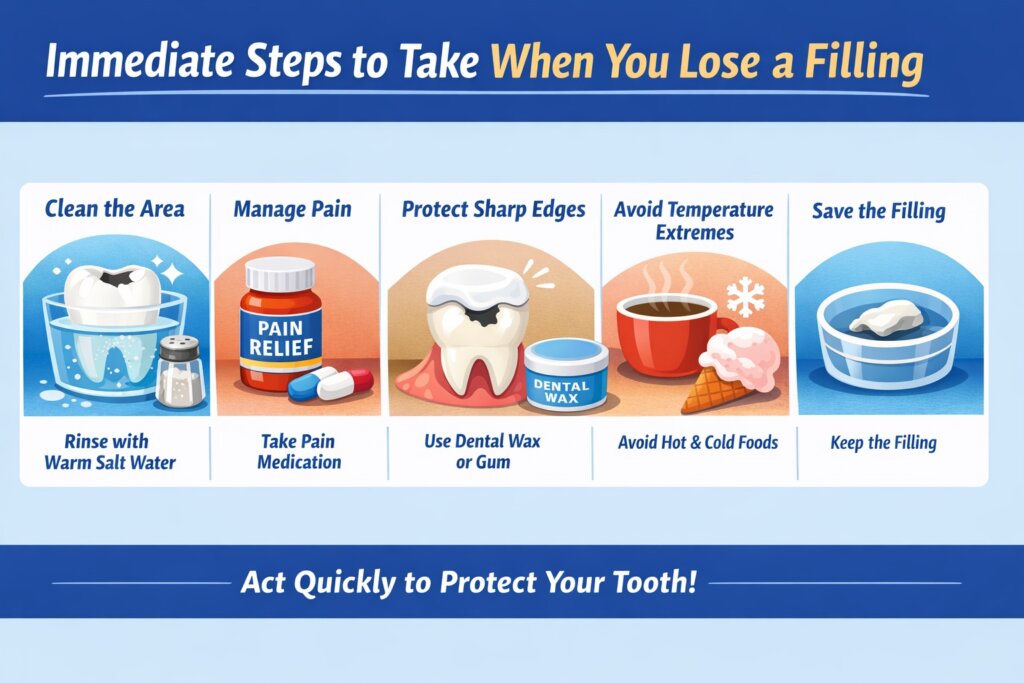
The moments after losing a filling are important for managing pain and preventing complications. Your first priority should be to gently clean the area and assess your comfort level. Rinse your mouth with warm salt water to remove any debris and reduce bacteria around the exposed tooth.
1. Clean the Area Gently
Use warm salt water to rinse the mouth, removing food particles and bacteria. Avoid aggressive brushing or poking at the exposed tooth, as this could cause further damage.
2. Manage Pain with Over-the-Counter Medication
Ibuprofen works well for dental pain because it reduces both pain and inflammation. Follow package directions and avoid placing aspirin directly on the gums, which can cause chemical burns.
3. Protect Sharp Edges
Dental wax from a pharmacy can temporarily cover sharp tooth edges. Sugar-free gum also works in a pinch, but avoid anything that might permanently stick to the teeth.
4. Avoid Temperature Extremes
Hot and cold foods or drinks can cause intense pain in the exposed tooth. Room temperature or lukewarm items are usually more comfortable until you receive treatment.
5. Save the Filling if Possible
If you find the lost filling intact, bring it to your dental appointment. Sometimes fillings can be recemented, though this depends on their condition and the state of the tooth.
Avoid chewing on the affected side and stick to soft foods until you receive professional treatment. These immediate actions can make a significant difference in your comfort and the tooth’s condition.
What Happens During Emergency Filling Treatment
Emergency dental treatment for a lost filling typically begins with pain management and a thorough examination. The dentist will assess the tooth’s condition, take X-rays if needed, and determine the best course of action. Treatment options range from simple filling replacement to more complex procedures if complications have developed.
| Treatment Option | Best For | Time Required |
|---|---|---|
| Simple Filling Replacement | Clean cavity, no complications | 30-60 minutes |
| Temporary Filling | After-hours relief, follow-up needed | 15-30 minutes |
| Crown Preparation | Extensive tooth damage | 60-90 minutes |
| Root Canal Therapy | Infected or severely damaged pulp | 90-120 minutes |
At Emergency Dental San Francisco, we prioritize immediate pain relief while developing a comprehensive treatment plan. Our approach focuses on addressing your discomfort first, then providing lasting solutions to restore your tooth’s function and health.
Preventing Future Filling Problems
Regular dental checkups help identify potential problems with fillings before they become emergencies. During routine visits, your dentist can spot early signs of wear on fillings, decay around existing fillings, or other issues that might lead to sudden failure. Most fillings have a lifespan of 5-15 years, depending on the material used and your oral hygiene habits.
1. Maintain Excellent Oral Hygiene
Brush twice daily with fluoride toothpaste and floss regularly to prevent decay around existing fillings. Poor oral hygiene is the leading cause of filling failure and secondary cavities.
2. Avoid Hard Foods and Ice
Chewing ice, hard candies, or using teeth as tools can crack fillings or the surrounding tooth structure. These habits create stress fractures that eventually lead to filling failure.
3. Address Teeth Grinding
Nighttime teeth grinding puts enormous pressure on fillings and can cause them to crack or fall out. A custom night guard from your dentist protects both fillings and natural teeth.
4. Schedule Regular Dental Checkups
Professional cleanings and examinations every six months allow early detection of filling problems. Your dentist can replace worn fillings before they fail completely.
5. Choose Quality Filling Materials
Discuss filling options with your dentist, as some materials last longer than others. While cost matters, investing in durable materials often saves money in the long term by reducing replacement frequency.
Good oral hygiene practices and avoiding habits that stress your teeth can significantly extend the life of fillings. Simple changes in daily routines often prevent the need for emergency dental visits.
When to Choose Emergency Dental San Francisco
Same-day dental care becomes essential when pain interferes with your daily life or when symptoms suggest infection. Emergency Dental San Francisco provides immediate relief for lost fillings, offering 24/7 availability including weekends and holidays. Our clinic serves San Francisco and the greater Bay Area, with walk-in appointments and online booking options.
We accept most dental insurance plans and offer financing options for qualified patients. For those without insurance, we accept cash and all major credit cards while working to keep emergency care accessible and affordable.
Our treatment approach focuses on pain relief first, followed by clear explanations of your options and transparent cost estimates.
Conclusion
A lost filling becomes a dental emergency when accompanied by severe pain, infection signs, or significant discomfort that disrupts daily activities. Quick professional treatment prevents complications and often requires less extensive procedures than delayed care. Emergency Dental San Francisco provides immediate relief with 24/7 availability, ensuring you receive prompt, professional treatment when you need it most.
Emergency Dental San Francisco provides same-day broken filling repair to stop pain fast. We’re available after-hours, weekends, and holidays for immediate relief. Learn more about our urgent dental care services.
FAQs
Is a Lost Filling Considered a Dental Emergency?
It can be—especially if you have pain, sensitivity, swelling, a cracked tooth, or the tooth is sharp and cutting your tongue or cheek. Even without symptoms, a lost filling leaves the tooth exposed and more likely to decay or fracture, so same-day evaluation is recommended.
What Should I Do If My Filling Falls Out?
Rinse your mouth with warm water, avoid chewing on that side, and keep the area clean with gentle brushing and flossing. If there’s discomfort, use an over-the-counter pain reliever as directed and a cold compress for swelling. Call an emergency dentist for prompt replacement or a protective restoration.
How Long Can I Go Without a Filling Before It Becomes an Emergency?
There’s no safe universal timeline—some teeth worsen quickly, especially if the cavity is deep or the tooth is weakened. In general, the sooner you’re seen (ideally within 24–48 hours), the better the chance of avoiding infection, a crack, or the need for a root canal or crown.
Can I Wait to See a Dentist If I Lost a Filling but It Doesn’t Hurt?
You can sometimes wait briefly, but it’s still urgent to schedule care soon because damage can progress silently. If you develop pain, sensitivity, swelling, a bad taste, fever, or facial swelling, treat it as an emergency and seek immediate care.
What Can I Use to Temporarily Cover a Lost Filling Until I See a Dentist?
You can use temporary dental filling material or dental wax (available at most pharmacies) to cover the area and reduce sensitivity. Avoid household glues. If the tooth is sensitive, you can also place a small piece of sugar-free gum (not on braces) as a short-term barrier, and then get professional treatment as soon as possible.

Emergency Dental San Francisco is a dental office focused on providing same-day dental appointments to patients in San Francisco and the surrounding area. We provide urgent dental care services during weekends, evenings and holidays.
We accept several forms of payment and have financing options available to those who qualify. We accept most dental insurance.