

03 Feb Preparing for Emergency Dental Procedures with Anxiety: How to Discuss Sedation, Pain Control, and Treatment Concerns
Dental anxiety affects millions of people, making emergency dental procedures feel overwhelming when you’re already in pain. The fear of the unknown, combined with urgent dental pain, can create a cycle of stress that prevents you from getting the immediate care you need. Understanding how to prepare mentally and physically for emergency dental procedures can transform a frightening experience into a manageable one.
This guide provides practical strategies to help you navigate emergency dental procedures with confidence, from pre-visit preparation techniques to communication strategies with your dental team. You’ll discover actionable steps to reduce anxiety, what to expect during your emergency visit, and how to work with compassionate dental professionals who prioritize your comfort alongside urgent pain relief.
Key Takeaways
- Mental preparation techniques can significantly reduce anxiety before emergency dental procedures.
- Bringing the right documentation and knowing what to expect helps create a sense of control.
- Clear communication with your dental team about your anxiety helps ensure personalized comfort measures.
- Breathing exercises and relaxation techniques provide immediate anxiety relief during procedures.
- Understanding the procedure steps beforehand reduces fear of the unknown.
- Having a support system and an aftercare plan builds confidence throughout the process.
Managing dental anxiety during emergencies requires a comprehensive approach that addresses both immediate fears and practical preparation needs.
Understanding Emergency Dental Procedures and Anxiety Triggers

Emergency dental procedures include urgent treatments such as tooth extractions, root canal therapy, abscess drainage, and trauma repair that require immediate attention to prevent further complications. These procedures often occur when you’re already experiencing significant pain, which can heighten anxiety levels and make the dental clinic environment feel more intimidating. The combination of physical discomfort and time pressure creates a perfect storm for dental anxiety to intensify.
Common anxiety triggers during emergency dental procedures include fear of pain, loss of control, and uncertainty about what will happen next. The sounds of dental equipment, bright lights, and clinical smells can overwhelm your senses when you’re already stressed.
1. Fear of Pain and Discomfort
The anticipation of pain often creates more anxiety than the actual procedure itself. Modern emergency dental procedures use effective numbing techniques and pain management protocols that significantly reduce discomfort during treatment.
2. Loss of Control Feelings
Being in a vulnerable position with your mouth open while experiencing urgent dental pain can trigger feelings of helplessness. Understanding that you can communicate with your dental team throughout the procedure helps maintain a sense of control.
3. Unknown Procedure Outcomes
Not knowing what to expect during emergency dental procedures amplifies anxiety for many patients. Clear explanations from your dentist about each step can dramatically reduce this uncertainty.
4. Time Pressure and Urgency
The urgency of emergency dental care can make you feel rushed and increase stress. Remember that thorough care is more important than speed, and reputable emergency dentist practices prioritize both efficiency and patient comfort.
5. Financial Concerns
Worrying about costs during a dental emergency adds another layer of stress to an already challenging situation. Discussing payment options and insurance coverage upfront can alleviate this anxiety trigger.
Research shows that nearly 1.8 million people visit emergency departments for dental conditions annually, with many delaying care due to anxiety until their condition becomes critical. This delay often makes procedures more complex and anxiety-provoking than they would have been with earlier intervention.
Pre-Visit Mental Preparation Strategies
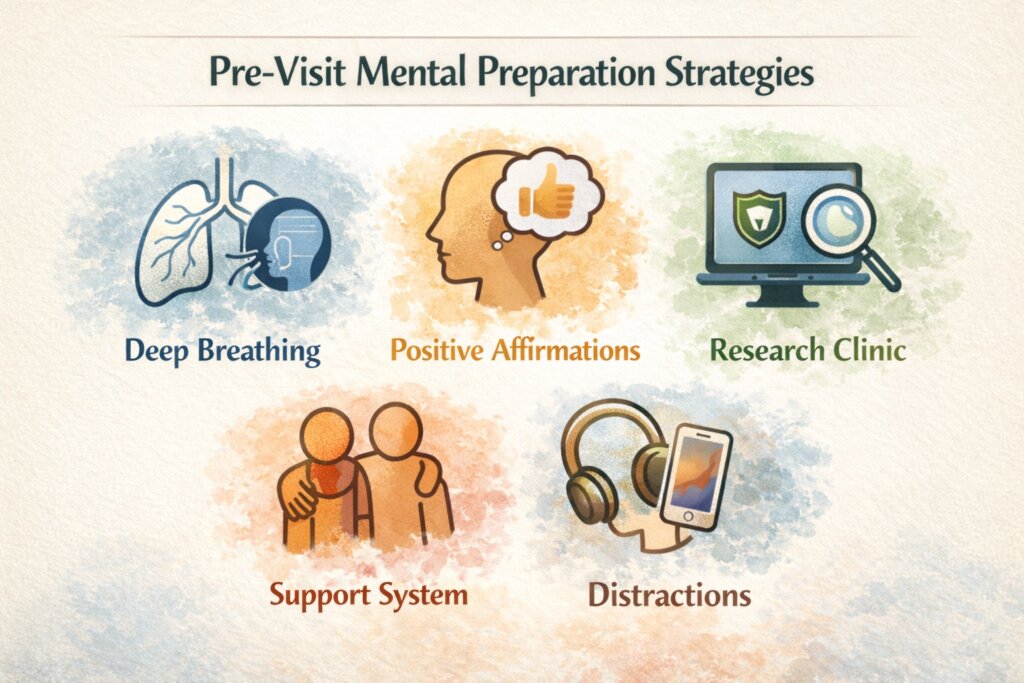
Preparing mentally for emergency dental procedures starts with acknowledging your anxiety as a normal response to an unfamiliar and potentially uncomfortable situation. Acceptance reduces the additional stress of fighting your natural fear response and allows you to channel that energy into productive preparation. Creating a pre-visit routine helps establish a sense of control when everything else feels chaotic.
Visualization techniques can be particularly effective for managing anticipatory anxiety before emergency dental procedures. Spend a few minutes imagining yourself successfully completing the dental visit, focusing on the relief you’ll feel when your pain is resolved.
1. Practice Deep Breathing Exercises
Start practicing 4-7-8 breathing (inhale for 4, hold for 7, exhale for 8) several times daily before your appointment. This technique activates your parasympathetic nervous system and can be used during the procedure for immediate anxiety relief.
2. Create Positive Affirmations
Develop personal statements like “I am getting the care I need” or “This discomfort is temporary, and relief is coming.” Repeat these affirmations when anxiety peaks to redirect anxious thoughts toward positive outcomes.
3. Research Your Dental Clinic
Learning about your emergency dentist’s credentials, patient reviews, and approach to anxious patients builds confidence in your care team. Look for practices that specifically mention comfort measures and anxiety management in their services.
4. Plan Your Support System
Arrange for a trusted friend or family member to accompany you to the appointment if possible. Having emotional support nearby can significantly reduce anxiety levels during emergency dental procedures.
5. Prepare Distraction Techniques
Identify what helps you relax – music, podcasts, or mental exercises – and discuss with your dental team whether these can be incorporated during your treatment. Many emergency dental clinics accommodate reasonable comfort requests.
Communication Strategies with Your Dental Team
Open communication with your emergency dental team is essential for managing anxiety and ensuring you receive personalized care that addresses both your urgent dental needs and comfort concerns. Most dental professionals are experienced in working with anxious patients and appreciate it when you share your specific fears and preferences. Being honest about your anxiety level allows them to adjust their approach and provide appropriate support throughout your visit.
Effective communication starts before the procedure begins and continues throughout your treatment. Don’t hesitate to ask questions or request clarification about any aspect of your care.
1. Discuss Your Anxiety Level Honestly
Tell your dentist about your specific fears, previous negative experiences, and current anxiety level on a scale of 1-10. This information helps them tailor their communication style and comfort measures to your needs.
2. Ask for Step-by-Step Explanations
Request detailed explanations of each procedure step before it happens. Understanding what to expect reduces fear of the unknown and helps you feel more in control during emergency dental procedures.
3. Establish Communication Signals
Agree on hand signals or other ways to communicate during the procedure when you can’t speak. Common signals include raising your hand to pause or to indicate discomfort.
4. Request Comfort Modifications
Ask about available comfort options, such as blankets, music, or breaks, during longer procedures. Many dental clinics can accommodate reasonable requests that help reduce patient anxiety.
5. Clarify Pain Management Options
Discuss available anesthesia and pain relief options, including how quickly they work and what sensations to expect. Understanding pain management helps reduce anticipatory anxiety about discomfort.
During-Procedure Anxiety Management Techniques
Managing anxiety during emergency dental procedures requires practical techniques you can implement while receiving treatment. These strategies help you stay calm and cooperative, which actually improves treatment outcomes and reduces procedure time. Remember that some anxiety during dental emergencies is normal, and having coping tools ready makes the experience more manageable.
| Technique | How to Use | When Most Effective |
|---|---|---|
| Progressive Muscle Relaxation | Tense and release muscle groups starting with feet | Before numbing takes effect |
| Controlled Breathing | Focus on slow, deep breaths through your nose | Throughout entire procedure |
| Mental Distraction | Count backwards, recite song lyrics, or visualize peaceful scenes | During active treatment |
| Mindful Awareness | Notice physical sensations without judgment | When feeling overwhelmed |
Focus on techniques that work with the constraints of dental procedures, where your mouth may be occupied, and movement is limited. Practice these methods beforehand so they become automatic responses when you need them most.
Conclusion
Managing anxiety during emergency dental procedures becomes achievable with proper preparation, effective communication, and proven coping strategies. Your successful completion of urgent dental care demonstrates personal resilience and creates a foundation for confident future dental experiences. Remember that seeking immediate dental care despite anxiety shows tremendous courage and prioritizes your long-term health and well-being.
Emergency Dental San Francisco specializes in compassionate, anxiety-focused emergency care that prioritizes your comfort. Our team explains procedures clearly and focuses on pain relief first. Learn more about our calming approach today.
FAQs
What Is Considered a Dental Emergency?
A dental emergency is any issue that needs prompt care to stop severe pain, control bleeding, prevent infection, or save a tooth—such as facial swelling, an abscess, a knocked-out or loose tooth, a broken/cracked tooth, uncontrolled bleeding, or trauma to the mouth. If you’re unsure, call us 24/7 at 415-230-2783, and we’ll help you decide the safest next step.
What Should I Do If I Have a Toothache and Can’t See a Dentist Right Away?
Rinse with warm salt water, use floss to remove trapped debris, apply a cold compress to reduce swelling, and take an OTC pain reliever as directed (avoid placing aspirin on the gums). If you have swelling, fever, pus, or worsening pain, seek same-day urgent dental care—these can be signs of infection that shouldn’t wait.
How Do Dentists Treat a Knocked-Out Tooth in an Emergency?
Time matters. If possible, gently place the tooth back in the socket (hold it by the crown only), or store it in milk or saliva, and come in immediately. We’ll assess the tooth and socket, clean and reposition it if viable, stabilize it (splint), and plan follow-up care to improve the chance of saving the tooth.
Can the Emergency Room Perform Emergency Dental Procedures?
Most ERs can help with pain control, antibiotics, and serious swelling or trauma, but they typically don’t provide definitive dental treatment like fillings, root canals, or extractions. For most tooth-related emergencies, an urgent-care dental office can treat the cause the same day and provide clear next steps.
How Much Do Emergency Dental Procedures Typically Cost?
Costs vary by the problem and treatment needed, but most visits include an exam and X-rays, then a clear estimate before any procedure. We accept most dental insurance plans, offer financing for those who qualify, and also accept cash and major credit cards to keep urgent care accessible.

Emergency Dental San Francisco is a dental office focused on providing same-day dental appointments to patients in San Francisco and the surrounding area. We provide urgent dental care services during weekends, evenings and holidays.
We accept several forms of payment and have financing options available to those who qualify. We accept most dental insurance.