

25 May Family Emergency Dental Plans: How to Prepare for Different Dental Emergencies at Home
A dental emergency does not schedule itself. It happens on a Sunday evening, during a holiday road trip, or right before your child’s school play. Most families have a plan for medical emergencies, but very few have thought through what to do when a tooth cracks, an abscess swells, or a filling falls out at midnight. That gap in preparation is exactly where pain and panic take over.
This article walks you through why every family needs a clear emergency dental plan, what that plan should include, how to recognize a true dental emergency, and what to do in the first critical minutes. You will also find practical guidance on insurance coverage, pediatric dental emergencies, and how to find a reliable dentist office near me when time is short.
Key Takeaways
- A dental emergency can happen to any family member at any age, with little to no warning.
- Having a plan before an emergency occurs reduces panic, delays, and potential complications.
- Not every dental problem requires an ER visit, but some require immediate professional attention.
- Insurance coverage and financing options can make same-day emergency dental care more accessible than most families expect.
- Emergency Dental San Francisco offers 24/7 same-day urgent care across the Bay Area, including weekends and holidays.
- Pediatric dental emergencies have specific first-response steps that every parent should know in advance.
Building an emergency dental plan is not complicated, but it does require some thought before a crisis hits. Let’s start with the most important question most families never ask themselves.
What an Emergency Dental Plan Actually Is and Why Your Family Needs One
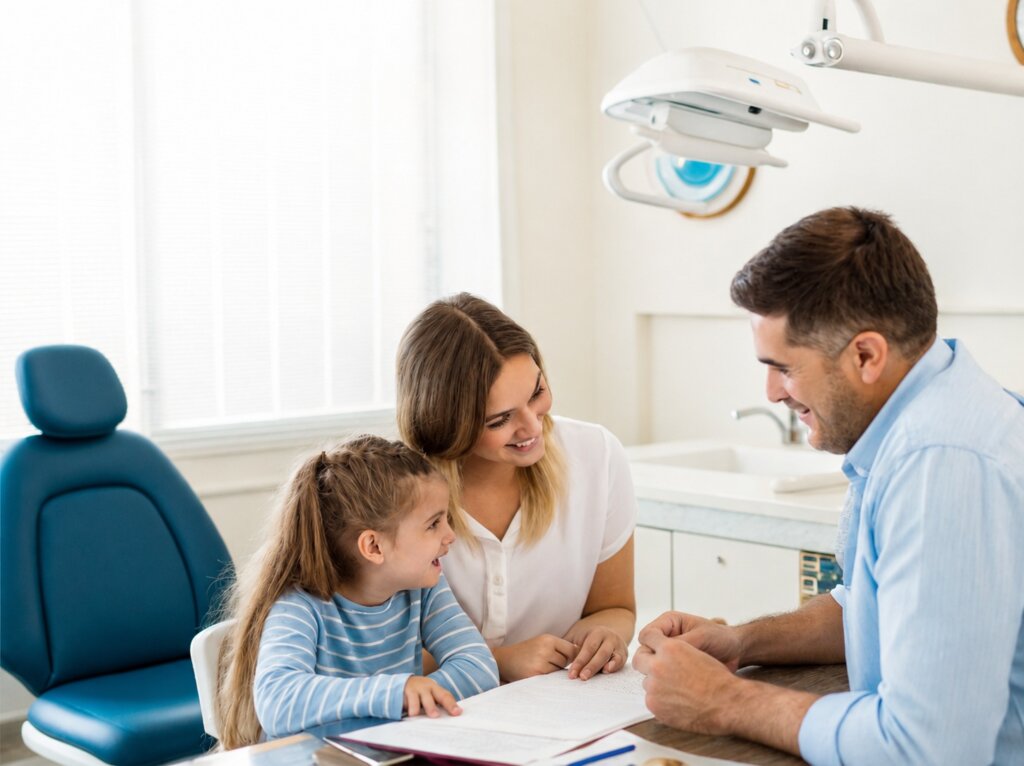
An emergency dental plan is a simple, documented set of decisions your family makes in advance. It covers who to call, where to go, what to do in the first 30 minutes, and how to handle costs. Think of it like a fire escape plan, but for your teeth.
Most families assume they will figure it out when the time comes. That works fine for minor issues. It does not work well when a child knocks out a tooth at a weekend soccer game, or when a parent wakes up at 2 a.m. with jaw swelling and a fever. In those moments, searching for a dentist near me while in pain is not a plan. It is a scramble.
Having a plan means you already know the phone number to call, you know what information to have ready, and you know the basic first-response steps for the most common emergencies. That preparation alone can be the difference between saving a tooth and losing one.
How to Recognize a True Dental Emergency for Your Emergency Dental Plan
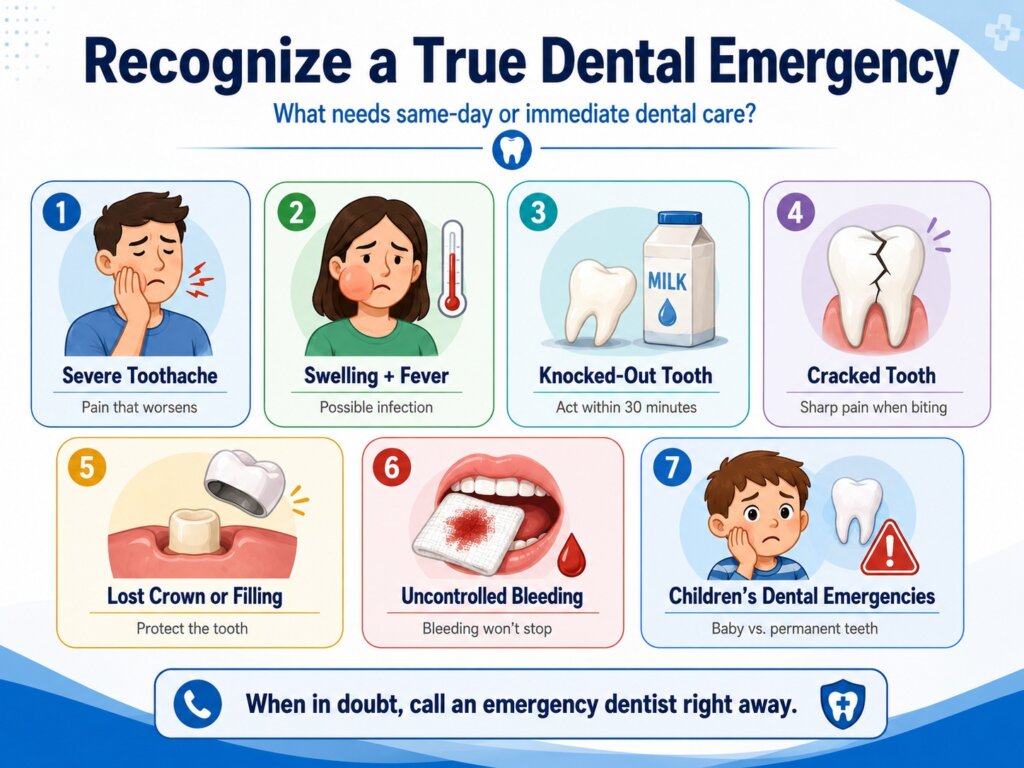
Part of building your emergency dental plan is knowing what actually qualifies as an emergency. Not every toothache demands a midnight call, but some situations genuinely cannot wait until Monday morning.
The following conditions typically require same-day or immediate attention from a dentist office near me.
1. Severe or Persistent Toothache
Pain that does not respond to over-the-counter relief and worsens over several hours is a warning sign. It may indicate infection, a cracked root, or an abscess that needs drainage.
2. Swelling With Fever
Facial swelling combined with fever suggests a spreading dental infection. This is time-sensitive. Left untreated, oral infections can spread to the jaw, neck, or airway.
3. Knocked-Out Tooth
A fully displaced tooth has the best chance of being saved if you reach a dentist within 30 minutes. Handle the tooth by the crown, rinse it gently without scrubbing, and keep it moist in milk or between your cheek and gum while you travel.
4. Cracked or Fractured Tooth
A visible crack, especially one causing sharp pain when biting, needs prompt evaluation. Save any fragments and avoid hard or sticky foods until you are seen.
5. Lost Crown or Filling
A missing restoration exposes the underlying tooth to bacteria and temperature sensitivity. Keep the area clean and bring any intact crown or filling with you to your appointment.
6. Uncontrolled Bleeding
Bleeding from the mouth that does not slow with gentle pressure after 10 to 15 minutes warrants immediate care. If there is suspected facial fracture or breathing difficulty, go directly to an emergency room.
7. Dental Emergencies in Children
Pediatric dental emergencies follow similar rules, but baby teeth and developing permanent teeth need specific handling. A knocked-out baby tooth should not be reinserted, but a knocked-out permanent tooth in a child should be treated the same way as in an adult. Finding a pediatric dentist near me who handles urgent care is a key part of any family plan.
Knowing this list before an emergency happens means you spend less time second-guessing and more time acting. That matters when every minute counts.
How to Build a Family Emergency Dental Plan Step by Step
Building your plan takes less than an hour. The steps below give you a framework you can adapt for your household.
Step 1: Identify Your Emergency Dentist in Advance
Search for a dentist near me that offers 24/7 availability, same-day appointments, and after-hours access. Save the number in your phone now. Emergency Dental San Francisco, for example, is available 24 hours a day, every day of the year, including holidays, and serves families across San Francisco, Oakland, Berkeley, Fremont, Alameda, Daly City, and surrounding Bay Area cities. Having that contact saved means you are not searching in a panic at 11 p.m.
Step 2: Know Your Insurance Coverage Before You Need It
Review your dental insurance plan to understand what emergency services are covered. Many plans cover emergency exams, X-rays, extractions, and some oral surgery. Programs like TRICARE cover emergency dental services with no cost-share for eligible beneficiaries, and government dental care programs in various regions increasingly include urgent care coverage. If you do not have dental insurance, ask your chosen dentist office near me about financing options. We accept most dental insurance plans and offer financing for qualified patients, so cost does not have to be a barrier when time matters most.
Step 3: Assemble a Basic Dental Emergency Kit
Keep a small kit at home and in your car. It should include dental wax, temporary filling material (available at most pharmacies), gauze, a small container with a lid for storing a knocked-out tooth, and over-the-counter pain relief. This is not a substitute for professional care, but it buys you time while you travel to the dentist.
Step 4: Write Down First-Response Steps for Common Emergencies
Post a short reference card on your refrigerator or save it in your phone’s notes. Cover the basics: what to do for a knocked-out tooth, how to manage a toothache, and when to go to the ER versus a dental office. The clearer your instructions, the faster your household responds.
Step 5: Prepare Your Medical and Dental Information in Advance
Keep a list of each family member’s current medications, allergies, and any recent dental records or X-rays in one accessible place. When you arrive at a dentist office near me during an emergency, having this information ready speeds up triage and reduces errors. Arriving about 15 minutes early with a government ID and insurance card also helps streamline the visit.
Step 6: Include a Plan for Children and Older Adults
Children involved in sports face a higher risk of dental trauma. Talk to a pediatric dentist near me about custom mouthguards as a preventive measure. For older adults with dentures or crowns, know in advance that same-day denture repair and crown recementation are available services. No family member should be left out of your plan.
Step 7: Review the Plan Annually
Insurance plans change. Phone numbers change. Children grow and their dental needs shift. Set a reminder to review your emergency dental plan once a year, ideally at the same time you review your home emergency kit or update your family’s medical information.
Once your plan is in place, the next step is understanding how dental insurance fits into the picture, especially if you have never looked closely at your coverage before.
Understanding Dental Insurance and Your Emergency Dental Plan
You might be wondering whether your current dental insurance actually covers emergencies. The answer depends on your plan, but most standard dental insurance policies include coverage for emergency exams, diagnostic X-rays, extractions, and basic restorative procedures like fillings and recementations. Some plans also cover endodontic treatment such as root canals and periodontal care for infections.
One common concern is the waiting period. Some dental plans impose a dental insurance no waiting period clause for preventive care but require a waiting period for major procedures. If you are shopping for a new plan, look specifically for dental insurance no waiting period options that cover emergency services from day one. These plans exist and are worth prioritizing for families with children or active adults who face higher injury risk.
| Emergency Situation | Typical Insurance Coverage | ER or Dental Office? |
|---|---|---|
| Severe toothache or abscess | Emergency exam, X-ray, possible root canal or extraction | Dental office |
| Knocked-out tooth | Emergency exam, reimplantation attempt | Dental office (within 30 min) |
| Cracked or fractured tooth | Emergency exam, repair or extraction | Dental office |
| Uncontrolled bleeding or facial fracture | Medical insurance (ER visit) | Emergency room |
| Lost crown or filling | Emergency exam, recementation or temporary restoration | Dental office |
| Dental infection with swelling and fever | Emergency exam, drainage, antibiotics | Dental office (urgent) |
For families without dental insurance, the picture is still manageable. We accept cash and all major credit cards, and financing options are available for qualified patients. The goal is to make sure cost does not delay care when delay makes the situation worse.
What to Expect When You Arrive at an Emergency Dentist Office Near Me
Knowing what happens during an emergency dental visit helps reduce anxiety, especially for children. A clear picture of the process makes it easier to explain to a nervous family member what is about to happen.
When you arrive at our clinic, the visit typically follows this sequence.
- Triage and pain control: The first priority is reducing your discomfort. The team assesses your symptoms and begins pain management right away.
- Exam and X-rays: Diagnostic imaging helps identify the source of the problem quickly and accurately.
- Clear options with an estimate: Before any procedure begins, you receive a plain-language explanation of your options, whether that is an extraction, root canal, repair, or temporary relief, along with an up-front cost estimate.
- Immediate treatment when indicated: If same-day treatment is appropriate, it happens during that visit. No unnecessary delays.
- Written aftercare and follow-up plan: You leave with written instructions, any needed prescriptions, and a clear next step for follow-up care.
Emergency Dental San Francisco follows CDC and OSHA infection-control standards, uses strict sterilization protocols, and employs licensed clinicians with modern diagnostic equipment. Every visit is conducted in a clean, clinical environment with full HIPAA-compliant privacy practices. You can walk in, book same-day online, or call 415-230-2783 at any hour.
Conclusion
A dental emergency will likely affect your family at some point, and preparation is what separates a manageable situation from a painful, costly one. Building your emergency dental plan now means less panic, faster care, and better outcomes when it matters most. If you are in San Francisco or anywhere in the Bay Area, call Emergency Dental San Francisco at 415-230-2783 or book a same-day appointment online so your family is never without a trusted option when urgent care is needed.
Emergency Dental San Francisco offers same-day urgent tooth pain relief for every family. We’re available after hours, weekends, and holidays. Call 415-230-2783 or get started today.
FAQs
What Is an Emergency Dental Plan?
An emergency dental plan is a simple, ready-to-use plan for what to do if someone has sudden dental pain or injury—who to call, where to go, what information to bring, and how to handle costs—so you can get same-day relief quickly and safely.
How Much Does an Emergency Dental Plan Cost?
Many “plans” cost nothing if you create them yourself (saved contact info, insurance details, and a preferred urgent dentist). If you mean a dental savings or membership plan, pricing varies; the best approach is to call and get a clear estimate based on your symptoms and needed treatment.
Does Dental Insurance Cover Emergency Dental Work?
Often, yes—many plans help cover emergency exams, X-rays, and treatments like fillings, extractions, or root canals, but coverage depends on your specific policy, deductibles, and annual maximums.
What Qualifies as a Dental Emergency?
Severe tooth pain, facial swelling, suspected infection or abscess, bleeding that won’t stop, a knocked-out or broken tooth, trauma to the mouth or jaw, or any dental issue that’s worsening quickly or affecting eating, sleeping, or breathing.
Where Can I Get Emergency Dental Care Without Insurance?
You can still be seen at urgent-care dental practices that accept cash and credit cards and offer financing options; at Emergency Dental San Francisco, we work to keep emergency care accessible and can discuss costs and next steps before treatment.

Emergency Dental San Francisco is a dental office focused on providing same-day dental appointments to patients in San Francisco and the surrounding area. We provide urgent dental care services during weekends, evenings and holidays.
We accept several forms of payment and have financing options available to those who qualify. We accept most dental insurance.