

18 Feb When to Book a Dental Emergency Appointment for Tooth Pain or Injury
dental emergencies strike without warning, leaving you with intense pain and uncertainty about what to do next. Knowing when to book a dental emergency appointment can mean the difference between saving a tooth and losing it permanently. The key is recognizing which symptoms require immediate professional attention and which can wait until regular office hours.
This guide will walk you through the warning signs that require urgent care, help you understand what constitutes a true dental emergency, and provide clear steps to get the relief you need. You’ll also learn what to expect during your emergency visit and how to prepare for the best possible outcome.
Key Takeaways
- Severe tooth pain, swelling with fever, and knocked-out teeth require immediate emergency dental care.
- Acting within 30 minutes of a tooth being knocked out gives you the best chance of saving it.
- Hospital emergency rooms cannot provide definitive dental treatment and should only be used for life-threatening situations.
- Same-day dental emergency appointments are available 24/7 at specialized urgent care dental practices.
- Proper preparation and quick action can prevent minor dental issues from becoming major complications.
Signs You Need an Emergency Dental Appointment Right Now

Recognizing a true dental emergency helps you get appropriate care quickly and avoid unnecessary complications. Certain symptoms indicate serious problems that require immediate professional attention. Waiting too long can turn a treatable issue into a more complex and expensive problem.
The most urgent situations involve pain, infection, or trauma that threatens your tooth’s survival. These conditions often worsen rapidly without proper treatment.
1. Severe, Persistent Tooth Pain
An intense toothache that doesn’t respond to over-the-counter pain medication signals a serious problem. This type of pain often indicates infection or nerve damage that requires immediate intervention.
2. Facial Swelling with Fever
Swelling accompanied by fever suggests a dental abscess, which can become life-threatening if the infection spreads. This combination of symptoms requires emergency treatment within hours, not days.
3. Knocked-Out Tooth
A completely knocked-out permanent tooth has the best chance of being saved if you receive treatment within 30 minutes. Time is critical for successful reimplantation.
4. Broken or Cracked Tooth with Sharp Pain
Fractures that expose the tooth’s nerve cause severe pain and leave the tooth vulnerable to infection. These breaks need immediate protection and treatment.
5. Uncontrolled Bleeding
Bleeding from the mouth that won’t stop after 15 minutes of direct pressure indicates trauma that requires professional care. This could involve damage to soft tissues or blood vessels.
6. Lost Crown or Filling with Pain
When a crown or filling falls out and causes significant discomfort, the exposed tooth structure needs immediate protection. Bacteria can quickly enter and cause infection.
7. Jaw Injury or Locking
Trauma to the jaw or difficulty opening and closing your mouth normally may indicate fractures or joint problems. These injuries require prompt evaluation and treatment.
Emergency Dental San Francisco provides immediate relief for urgent situations, with same-day appointments available 24/7. Our experienced team prioritizes pain control and tooth preservation, giving you the best chance for a successful outcome.
When to Choose Emergency Dental Care Over the Hospital
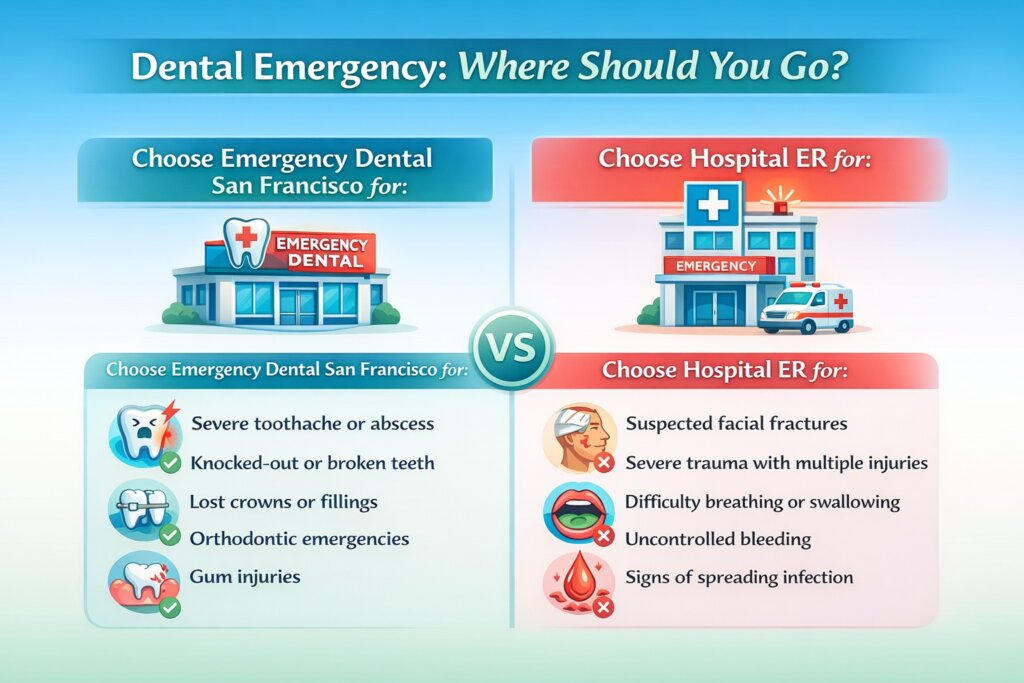
Many people automatically head to the emergency room when dental pain hits, but that often leads to temporary relief rather than a real fix. Hospitals can provide pain medication and antibiotics, yet they typically can’t perform the definitive dental procedures that stop the problem at its source. Knowing where to go helps you get faster, more effective care—and that’s exactly what Emergency Dental San Francisco is built for.
| Choose Emergency Dental San Francisco for: | Choose Hospital ER for: |
|---|---|
| Severe toothache or abscess | Suspected facial fractures |
| Knocked-out or broken teeth | Severe trauma with multiple injuries |
| Lost crowns or fillings | Difficulty breathing or swallowing |
| Orthodontic emergencies | Uncontrolled bleeding |
| Gum injuries | Signs of spreading infection |
Across the U.S., tooth disorders account for roughly 1.9 million emergency department visits each year, and many of these visits could be handled more efficiently in a dental clinic. When you come to Emergency Dental San Francisco, you’re getting a team equipped for dental emergencies—diagnostics and treatments that hospitals usually don’t provide, like dental X-rays, restorations, extractions, and other definitive care. If you’re dealing with a tooth- or gum-specific emergency (and you’re not having breathing trouble, uncontrolled bleeding, or major trauma), choosing an emergency dentist is usually the most direct path to real relief.
Common Emergency Dental Procedures and Recovery
Emergency dental procedures vary based on the type and severity of your dental problem. Understanding common treatments helps you know what to expect and how to prepare for recovery. Most emergency procedures focus on pain relief, preventing further damage, and preserving as much natural tooth structure as possible.
Recovery times and aftercare requirements depend on the specific procedure performed.
1. Emergency Tooth Extraction
When a tooth cannot be saved, extraction provides immediate pain relief and prevents the spread of infection. Recovery typically takes 3-7 days with proper aftercare and pain management.
2. Root Canal Therapy
This procedure removes infected tissue from inside the tooth while preserving the natural tooth structure. Most patients experience significant pain relief within 24-48 hours after treatment.
3. Temporary Restoration
Broken teeth often receive temporary fillings or crowns to protect the damaged tooth structure until a permanent restoration can be placed. These temporary measures provide immediate relief and prevent further damage.
4. Abscess Drainage
Dental abscesses require drainage to relieve pressure and eliminate infection. This procedure provides rapid pain relief and prevents the infection from spreading to other areas.
5. Crown or Filling Replacement
Lost dental work can often be replaced during the emergency visit, especially if you bring the original restoration. Quick replacement prevents sensitivity and further damage.
6. Soft Tissue Repair
Injuries to the gums, tongue, or cheeks may require sutures or other treatments to stop bleeding and promote healing. Most soft tissue injuries heal within 1-2 weeks.
The key to successful recovery is following aftercare instructions carefully and attending any recommended follow-up appointments. Watch for signs of complications like increasing pain, swelling, or fever.
Preventing Future Dental Emergencies
While some dental emergencies result from accidents, many can be prevented through proper oral hygiene and protective measures. Regular preventive care catches problems early before they become emergencies. Simple lifestyle changes and protective equipment significantly reduce your risk of urgent dental situations.
Prevention is always more comfortable and cost-effective than emergency treatment.
- Schedule regular dental checkups every six months to catch problems early
- Wear a mouthguard during sports and recreational activities
- Avoid chewing ice, hard candy, or non-food items that can crack teeth
- Don’t use your teeth as tools to open packages or bottles
- Maintain good oral hygiene with daily brushing and flossing
- Address dental problems promptly before they become emergencies
- Keep emergency dental contact information easily accessible
Custom mouthguards provide superior protection compared to over-the-counter options for athletes and people who grind their teeth at night. Professional fitting ensures comfort and maximum protection.
Emergency Dental San Francisco serves the entire Bay Area, including South San Francisco, Alameda, Berkeley, Daly City, Fremont, Oakland, and San Leandro. We’re available 24/7 for true emergencies and offer walk-in appointments for immediate care.
Conclusion
Dental emergencies require quick decision-making and prompt professional care to achieve the best outcomes. Recognizing urgent symptoms and knowing when to seek immediate treatment can save your teeth and prevent serious complications. Call 415-230-2783 or book online when dental pain or injury strikes.
Emergency Dental San Francisco provides same-day emergency appointments for severe tooth pain and dental injuries. Our urgent-care practice offers immediate relief with compassionate, professional treatment available 24/7. Learn more about quickly and safely ending your dental pain.
FAQs
What Counts as a Dental Emergency?
A dental emergency is any tooth or gum problem that causes severe pain, swelling, bleeding, infection (such as an abscess), fever, trauma (a cracked, broken, or knocked-out tooth), or trouble swallowing or breathing. If symptoms are worsening or you can’t function normally, it’s safest to get urgent dental care right away.
Can I Get an Emergency Dental Appointment the Same Day?
Yes—same-day emergency dental appointments are often available, and many urgent-care dental practices can also see patients after hours, on weekends, and on holidays. Emergency Dental San Francisco offers walk-in and same-day options; call 415-230-2783 or book online for the fastest scheduling.
How Much Does an Emergency Dental Appointment Cost?
Costs vary based on the exam, X-rays, and the treatment needed (such as drainage for an abscess, a filling, or an extraction). We accept most dental insurance plans, offer financing options for those who qualify, and provide clear, upfront estimates so you understand your options before treatment.
What Should I Do If I Have a Toothache and Can’t See a Dentist Right Away?
Rinse gently with warm salt water, take OTC pain relief as directed (if safe for you), apply a cold compress to reduce swelling, and avoid chewing on the painful side. Do not place aspirin on the gum, and seek urgent care promptly if you have swelling, pus, fever, or worsening pain—those can signal an infection that needs professional treatment.
Should I Go to the ER for a Dental Emergency?
Go to the ER or call 911 for trouble breathing or swallowing, facial/neck swelling that’s spreading, uncontrolled bleeding, high fever, or severe trauma. For most toothaches, abscesses, broken teeth, or knocked-out teeth, an emergency dentist is usually the right choice because we can diagnose the cause and provide definitive dental treatment.

Emergency Dental San Francisco is a dental office focused on providing same-day dental appointments to patients in San Francisco and the surrounding area. We provide urgent dental care services during weekends, evenings and holidays.
We accept several forms of payment and have financing options available to those who qualify. We accept most dental insurance.