

29 Jan How to decide What qualifies as a Dental Emergency
Dental pain strikes at the worst moments—Sunday night, during vacation, or right before an important meeting. The question that haunts every patient is whether this situation demands immediate attention or can wait until regular office hours. Understanding what qualifies as a dental emergency can save your tooth, reduce your pain, and prevent costly complications.
This guide will help you recognize true dental emergencies, understand when to seek immediate care, and know what steps to take before reaching the dentist. You’ll learn to distinguish between urgent situations that need same-day treatment and dental problems that can wait for a scheduled appointment.
Key Takeaways
- Severe pain with swelling, fever, or facial changes indicates a dental emergency requiring immediate care.
- Knocked-out teeth have the best survival rate when treated within 30 minutes of injury.
- Uncontrolled bleeding from dental trauma or after procedures needs urgent professional attention.
- Dental abscesses can become life-threatening if the infection spreads to other areas.
- Emergency dentists provide 24/7 care for situations that cannot wait for regular appointments.
- Knowing what to do before reaching the dental clinic can significantly improve treatment outcomes.
Understanding What Qualifies as a Dental Emergency
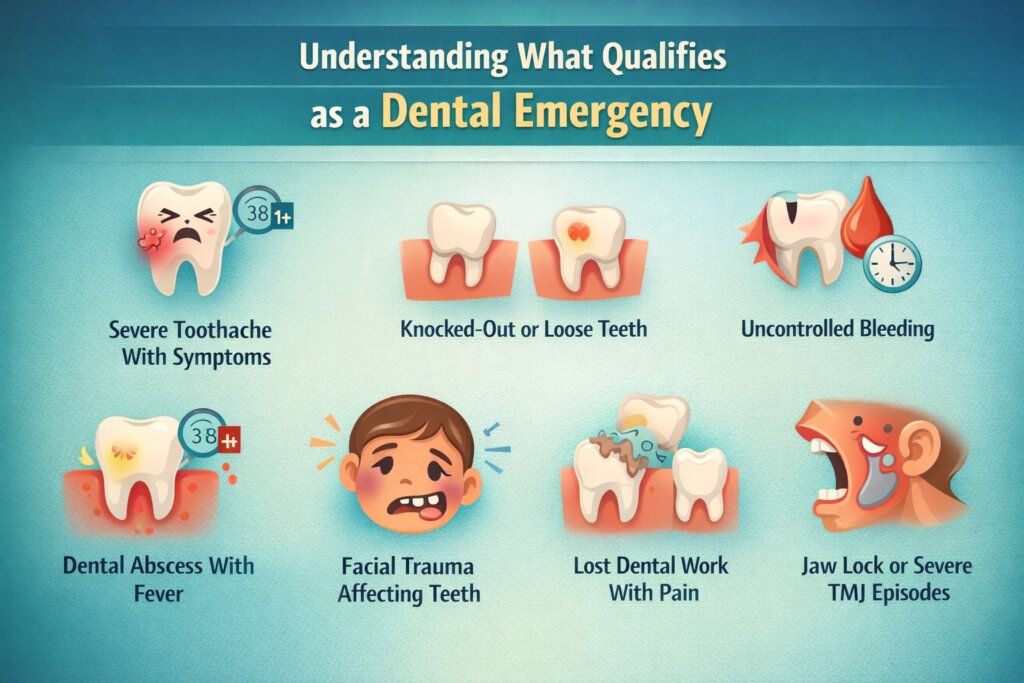
The American Dental Association defines dental emergencies as conditions that require urgent intervention to stop bleeding, relieve severe pain, or treat infections that could become life-threatening. These situations involve immediate threats to your oral health, overall well-being, or the survival of your teeth. Not every dental problem constitutes an emergency, but recognizing the difference can prevent permanent damage.
True dental emergencies share common characteristics: they cause severe pain that interferes with daily activities, involve trauma that damages teeth or soft tissues, or present signs of serious infection. Emergency Dental San Francisco treats these urgent conditions 24/7 across the Bay Area, providing same-day relief when regular dental offices are closed.
1. Severe Toothache With Additional Symptoms
A regular toothache becomes an emergency when accompanied by swelling, fever, or facial changes. These symptoms suggest infection spreading beyond the tooth, potentially threatening your overall health.
2. Knocked-Out or Partially Dislodged Teeth
Dental trauma that completely removes a tooth from its socket or leaves it hanging loose requires immediate attention. The first 30 minutes are critical for tooth survival and successful reimplantation.
3. Uncontrolled Bleeding
Bleeding that continues for more than 10-15 minutes after injury or dental work indicates a serious problem. This situation may require emergency intervention to prevent excessive blood loss.
4. Dental Abscess With Systemic Signs
Gum or tooth abscesses become emergencies when accompanied by fever, facial swelling, or difficulty swallowing. These infections can spread rapidly and become life-threatening without prompt treatment.
5. Facial Trauma Affecting Teeth
Accidents that impact your face and damage multiple teeth, cause jaw misalignment, or result in suspected fractures need immediate professional evaluation. Delayed treatment can lead to permanent complications.
6. Lost Dental Work With Pain
While losing a filling or crown isn’t always an emergency, it becomes urgent when the exposed tooth causes severe pain or sharp edges cut your tongue or cheek.
7. Jaw Lock or Severe TMJ Episodes
Inability to open or close your mouth, or jaw joints that lock in place, can indicate serious temporomandibular joint problems that require immediate attention.
Recognizing Emergency Dentist Situations Versus Routine Care
Many dental problems feel urgent, but they can actually wait until a regular appointment. Understanding this distinction helps you make informed decisions about when to seek emergency care versus when to schedule routine treatment. The key lies in assessing pain levels, signs of infection, and the risk of permanent damage.
Emergency situations typically involve severe symptoms that worsen over time, while routine problems remain stable or improve with basic home care. Consider the timing, intensity, and associated symptoms when making this decision.
| Emergency Situations | Can Wait for Regular Appointment |
|---|---|
| Severe pain with swelling or fever | Mild toothache without swelling |
| Knocked-out tooth | Small chip without pain |
| Uncontrolled bleeding | Minor gum irritation |
| Abscess with facial swelling | Sensitive tooth without infection signs |
| Broken tooth causing severe pain | Loose filling without discomfort |
| Trauma with multiple damaged teeth | Routine cleaning or check-up needs |
Pain intensity serves as a reliable indicator. Emergency pain typically rates 7-10 on a scale of 10, interferes with sleep, and doesn’t respond to over-the-counter medications. Routine dental discomfort usually rates below 6 and can be managed temporarily with appropriate pain relievers.
Steps to Take During Open Dental Emergency Situations

Your actions during the first few minutes of a dental emergency can significantly impact treatment outcomes and tooth survival. Quick, appropriate responses often mean the difference between saving and losing a tooth, or between simple and complex treatments. Knowing what to do before reaching the emergency dentist can reduce pain and improve your prognosis.
These immediate care steps apply to the most common dental emergencies. Each situation requires specific actions to preserve oral tissues and minimize damage until professional help arrives.
1. For Knocked-Out Teeth
Handle the tooth only by its crown, never touching the root surface. Gently rinse with clean water if dirty, but don’t scrub or remove attached tissue fragments.
Try to reinsert the tooth into its socket if possible, biting gently on clean gauze to hold it in place. If reinsertion isn’t possible, keep the tooth moist in milk, saliva, or between your cheek and gum.
2. For Severe Toothache
Rinse your mouth with warm salt water to reduce inflammation and remove debris. Apply a cold compress to the outside of your cheek for 15-20 minutes to control swelling.
Take appropriate over-the-counter pain medication following package directions, but never place aspirin directly on gums as this can cause tissue burns.
3. For Broken or Cracked Teeth
Save any tooth fragments in clean water or milk for potential reattachment. Rinse your mouth gently with warm water to clean the area.
Cover sharp edges with dental wax, sugar-free gum, or gauze to prevent cuts to your tongue or cheek. Avoid chewing on the affected side.
4. For Dental Bleeding
Apply gentle pressure with clean gauze or cloth directly to the bleeding area. Maintain consistent pressure for 10-15 minutes without checking frequently.
If bleeding continues, replace the gauze and apply pressure for another 10-15 minutes, then seek immediate professional care.
5. For Lost Crowns or Fillings
Keep the restoration if intact and bring it to your emergency appointment. Clean the exposed tooth gently and avoid extremely hot or cold foods.
Temporary dental cement from pharmacies can provide short-term protection, but professional replacement is necessary for permanent repair.
When to Contact an Emergency Dentist Near Me
Certain symptoms demand immediate professional attention, regardless of the time or day. These red flag situations indicate serious problems that can worsen rapidly without prompt treatment. Recognizing these warning signs helps you decide whether to call an emergency dentist immediately or wait until regular office hours.
Emergency Dental San Francisco provides 24/7 urgent care across San Francisco and the greater Bay Area, including same-day appointments and walk-in availability. Our team prioritizes pain relief and addresses urgent situations that cannot wait for scheduled care.
1. Signs of Serious Infection
A fever above 100.4°F combined with dental pain indicates infection spreading beyond the tooth. Facial swelling that affects your eye, makes swallowing difficult, or changes your appearance requires immediate attention.
2. Breathing or Swallowing Difficulties
Any dental problem that interferes with breathing or swallowing becomes a medical emergency. These symptoms suggest severe infection or swelling that could become life-threatening.
3. Trauma With Multiple Injuries
Accidents affecting multiple teeth, causing jaw misalignment, or involving suspected facial fractures need immediate professional evaluation. Delayed treatment can result in permanent complications.
4. Persistent Heavy Bleeding
Bleeding that doesn’t stop after 15-20 minutes of direct pressure, or bleeding that resumes repeatedly, requires urgent professional intervention to prevent excessive blood loss.
5. Severe Pain Unresponsive to Medication
Pain rated 8-10 on a scale of 10, that prevents sleep, or that doesn’t improve with appropriate pain medication, indicates a serious problem that needs immediate care.
6. Suspected Medication Reactions
Allergic reactions to dental medications, including swelling, difficulty breathing, or widespread rash, require immediate emergency attention and may need hospital care.
Understanding Dentist Emergencies Treatment Options
Emergency dental treatment focuses on relieving pain, controlling infection, and preserving damaged teeth when possible. The specific treatment depends on your condition, but emergency dentists prioritize stabilizing your situation and providing immediate relief. Understanding common emergency procedures helps reduce anxiety and prepares you for what to expect during urgent care visits.
Treatment options range from simple pain management to complex surgical procedures. Emergency dentists assess each situation individually and recommend the most appropriate immediate intervention.
1. Emergency Extractions
Severely damaged or infected teeth may require immediate removal to prevent complications. Emergency extractions relieve pain and prevent the spread of infection when other treatments aren’t viable.
2. Root Canal Therapy
Infected tooth pulp often needs emergency root canal treatment to save the tooth and eliminate pain. This procedure removes infected tissue and seals the tooth to prevent reinfection.
3. Drainage and Antibiotic Treatment
Dental abscesses require drainage to release infected material and reduce pressure. Antibiotics help control the spread of infection while definitive treatment is planned.
4. Temporary Restorations
Broken teeth often receive temporary crowns or fillings to protect exposed areas until permanent repairs can be completed. These provide immediate relief and prevent further damage.
5. Soft Tissue Repair
Cuts or tears in gums, lips, or cheeks may need sutures or other treatments to control bleeding and promote proper healing.
6. Reimplantation Procedures
Knocked-out teeth may be repositioned and stabilized with splints if treatment occurs within the critical time window. Success rates decrease significantly with delayed treatment.
We accept most dental insurance plans and offer financing options to make emergency care accessible. Our team provides transparent cost estimates and works with patients to find affordable treatment solutions.
Preparing for Your Emergency Dental Clinic Visit
Proper preparation for your emergency dental visit can streamline treatment and improve outcomes. Gathering necessary information and items before leaving home helps the dental team provide faster, more effective care. Being prepared also reduces stress during an already challenging situation.
Emergency Dental San Francisco recommends arriving 15 minutes early when possible to complete necessary paperwork and prepare for treatment. This extra time allows our team to review your medical history and plan appropriate care.
1. Essential Items to Bring
Bring a government-issued photo ID and your dental insurance card if you have coverage. Include a current list of all medications, supplements, and known allergies.
Collect any recent dental records, X-rays, or treatment notes from other providers. If you have a knocked-out tooth or a broken restoration, bring them in for appropriate storage.
2. Medical History Information
Prepare details about current health conditions, recent surgeries, or ongoing medical treatments. Include information about blood thinners, heart conditions, or immune system disorders.
Note any previous reactions to dental medications, anesthetics, or antibiotics. This information helps prevent complications and ensures safe treatment.
3. Pain and Symptom Documentation
Record when symptoms started, what triggers or relieves pain, and any changes in intensity. Note associated symptoms like swelling, fever, or difficulty eating.
Rate your pain level on a scale of 1-10 and describe the type of pain (sharp, throbbing, constant, or intermittent). This information helps diagnose the problem and plan treatment.
4. Insurance and Payment Preparation
Contact your dental insurance provider to understand emergency coverage and any authorization requirements. Prepare alternative payment methods including credit cards or financing applications.
We accept cash, all major credit cards, and offer financing options for qualified patients. Our staff provides cost estimates and works with you to make treatment affordable.
5. Transportation and Support
Arrange transportation if you anticipate receiving sedation or strong pain medications that may impair driving. Consider bringing a trusted friend or family member for support.
Plan for potential follow-up appointments or prescription pickups after your emergency visit. Having support available reduces stress and ensures you can focus on recovery.
Conclusion
Recognizing true dental emergencies can save teeth, reduce pain, and prevent serious complications. Quick action during the first critical minutes often determines treatment success and long-term outcomes. Emergency Dental San Francisco provides 24/7 urgent care across the Bay Area when you need immediate relief most.
Emergency Dental San Francisco provides immediate diagnostic exams and X-rays to assess urgent dental situations. Our licensed professionals quickly determine if your pain requires emergency treatment. Get started with same-day care today.
FAQs
What is considered a dental emergency?
A dental emergency is any oral health problem that involves severe pain, infection, bleeding, or trauma and needs prompt treatment to prevent the situation from getting worse. This includes things like sudden intense toothaches, abscessed teeth, facial or gum swelling, uncontrolled bleeding, knocked-out teeth, broken or cracked teeth, or injuries to the mouth from accidents or sports. If you’re in significant pain or the issue is interfering with eating, sleeping, or normal daily activities, it’s usually considered an emergency.
What dental issues require immediate attention?
Dental issues that require immediate attention are those that could rapidly worsen or lead to complications if delayed. This typically includes severe tooth pain, signs of infection such as swelling in the gums, jaw, or face, an abscess or pus, continuous gum bleeding, knocked-out or loose teeth, cracked or fractured teeth, and dental trauma from falls or impacts. It can also include lost fillings or crowns when they cause sharp edges, sensitivity, or pain. Getting seen quickly helps control pain, stop infection from spreading, and protect the tooth and surrounding tissues.
Is a toothache considered a dental emergency?
A toothache can be a dental emergency, especially if it’s severe, getting worse, or accompanied by swelling, fever, a bad taste in the mouth, or pain when biting. Tooth pain often points to an underlying issue such as deep decay, infection, a cracked tooth, or an inflamed nerve, and waiting can allow the problem to spread or become harder to treat. If the pain is strong enough to keep you awake, makes it hard to eat, or comes with swelling, you should seek urgent dental care.
Is a broken or chipped tooth a dental emergency?
A broken or chipped tooth may be an emergency depending on the severity and symptoms. If the tooth is painful, bleeding, has sharp edges that can cut your mouth, looks dark or has exposed inner layers, or was damaged by a significant injury, it should be treated as soon as possible. Even smaller chips can worsen over time or lead to sensitivity and decay, so it’s still smart to have it evaluated quickly to prevent further damage and restore the tooth’s function and appearance.
When should I go to the ER for a dental problem?
You should go to the ER for a dental problem when it involves symptoms that could affect your breathing, swallowing, or overall safety, such as severe facial swelling that impacts the airway, uncontrolled bleeding, high fever with signs of spreading infection, or major trauma to the jaw or face. For most dental emergencies—like toothaches, abscesses, broken teeth, or a lost crown—an emergency dentist is usually the best option because they can directly treat the tooth and address the source of the problem. Emergency Dental San Francisco is open 24/7 for same-day urgent dental care, including nights, weekends, and holidays, and you can call 415-230-2783 or book online, with walk-ins welcome.

Emergency Dental San Francisco is a dental office focused on providing same-day dental appointments to patients in San Francisco and the surrounding area. We provide urgent dental care services during weekends, evenings and holidays.
We accept several forms of payment and have financing options available to those who qualify. We accept most dental insurance.