03 Oct Why Dental Emergency Kits Need More Than Supplies to Be Effective During a Medical Crisis
A dental emergency can happen without warning. One moment everything is fine, and the next, someone is dealing with a knocked-out tooth, uncontrolled bleeding, or a jaw injury that needs immediate attention. In a clinical setting, the difference between a good outcome and a serious complication often comes down to how quickly and correctly the care team responds.
This article covers when a dental medical emergency kit should be used during patient care, what situations call for it, how it compares to standard first aid tools, and what patients and caregivers should know before a crisis hits. You will also find guidance on when professional urgent dental care is the right call and how our team at Emergency Dental San Francisco can help when things go wrong fast.
Key Takeaways
- A dental medical emergency kit should be used immediately when a patient experiences oral trauma, uncontrolled bleeding, or a medical event during dental care.
- Not every dental incident requires an emergency kit, but knowing when to reach for one can prevent serious harm.
- Dental clinics and caregivers serving children, athletes, or high-risk patients should keep a kit stocked and accessible at all times.
- A dental emergency kit is different from a standard first aid kit and contains tools specific to oral and facial injuries.
- When a kit is not enough, same-day urgent dental care from a dentist office near me is the next critical step.
What a Dental Medical Emergency Kit Is and Why It Matters in Patient Care
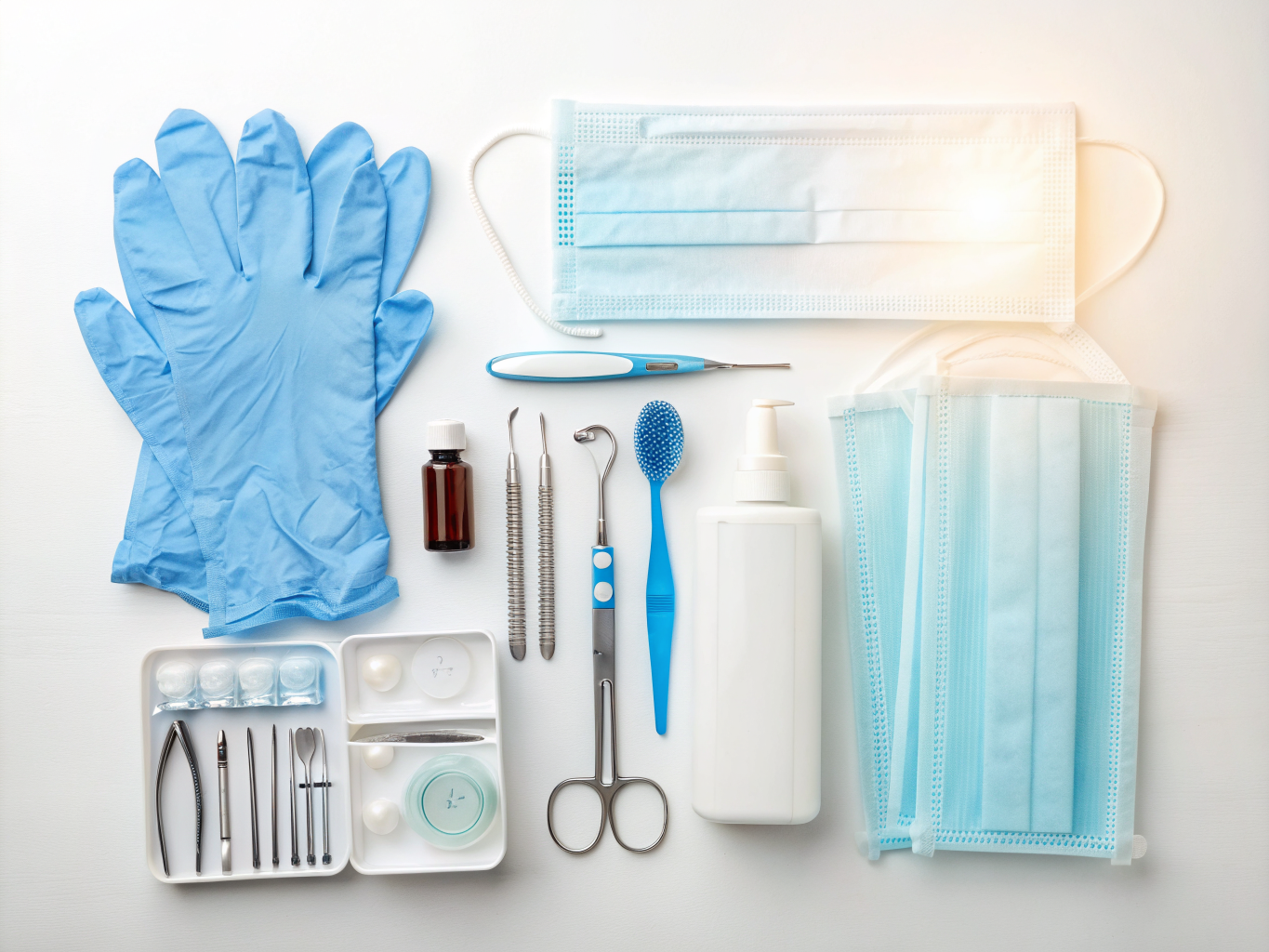
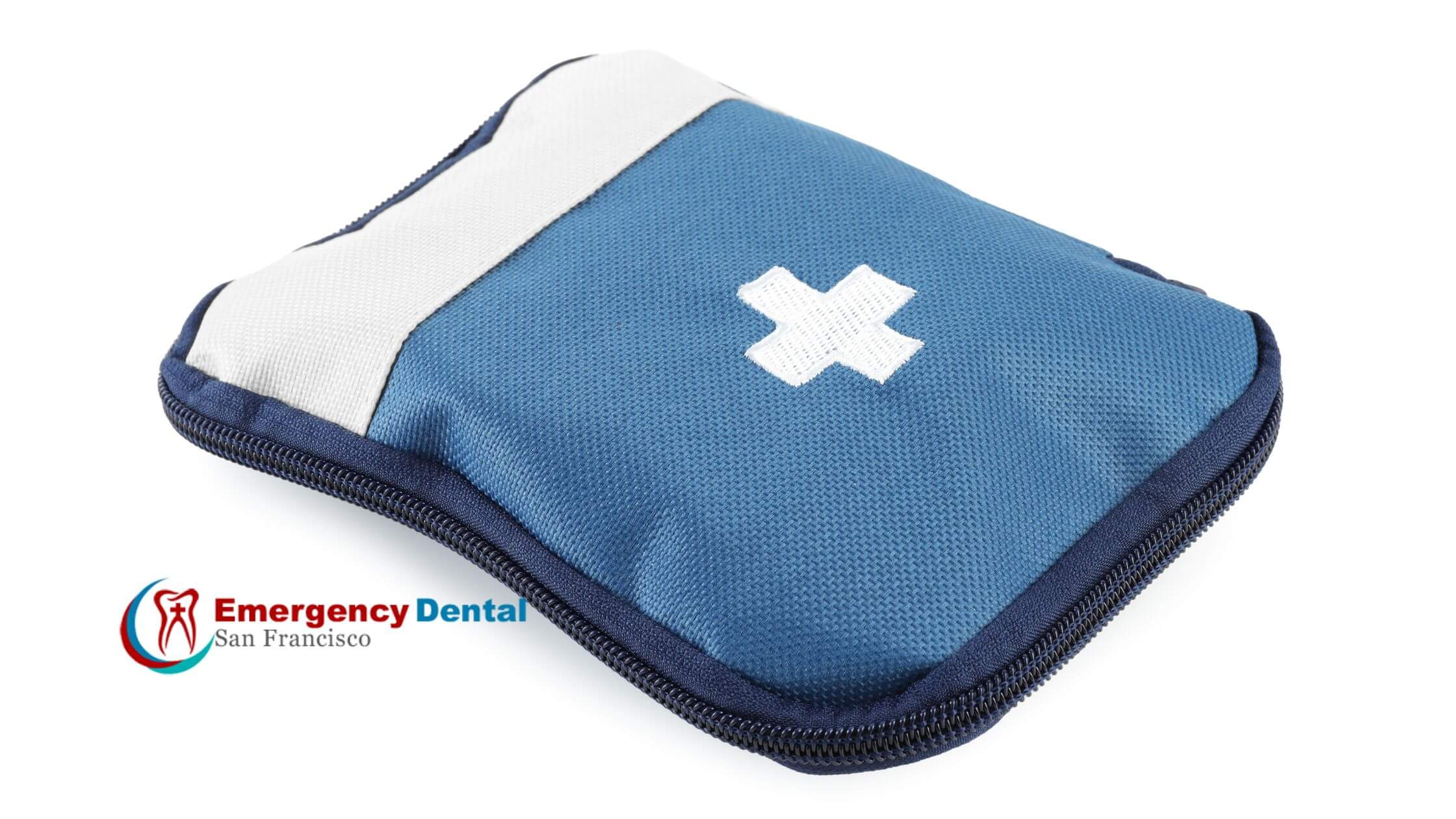
A dental medical emergency kit is a collection of tools, materials, and supplies designed to manage acute oral injuries or medical events that occur during or outside of dental treatment. It is not the same as a general first aid kit, though there is some overlap. The dental version includes items like tooth preservation solution, sterile gauze, a bite block, epinephrine, airway management tools, and materials for temporary crown or filling replacement.
According to research published by the NIH National Library of Medicine, dental emergencies range from traumatic tooth injuries to systemic medical events triggered during treatment, such as allergic reactions or vasovagal syncope. Each scenario requires a different response, and the kit should reflect that range.
You might be wondering whether a standard first aid kit could handle most dental emergencies. In short, it cannot. A knocked-out tooth, for example, needs to be stored in a specific medium like milk or a commercial tooth preservation solution to stay viable. Gauze alone will not save it. That is why a purpose-built dental emergency kit matters.
When Should a Dental Medical Emergency Kit Be Used During Patient Care at a Dental Clinic
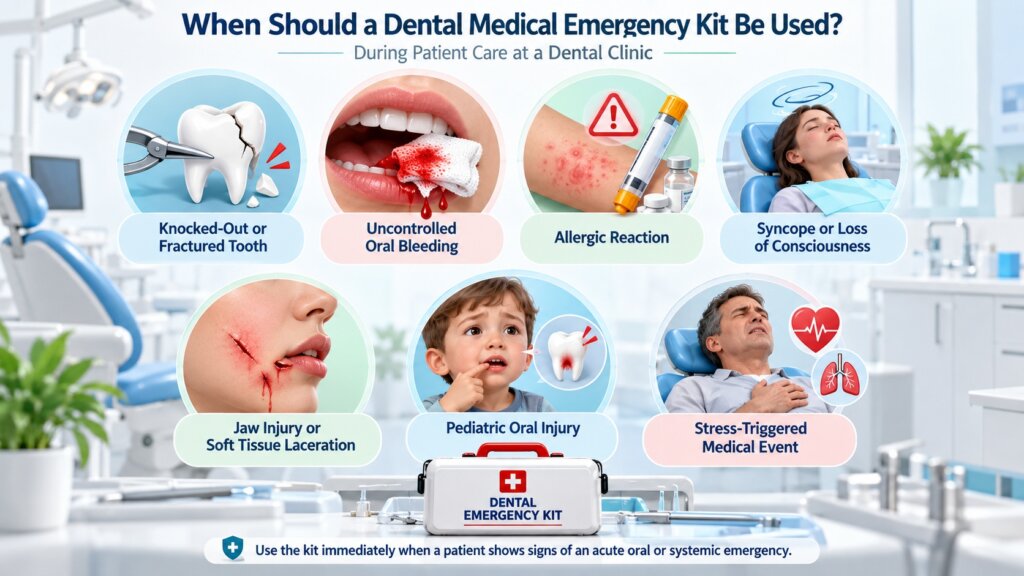
The kit should be used the moment a patient shows signs of an acute oral or systemic emergency during a dental visit. Waiting too long, even by a few minutes, can change the outcome significantly. There are specific situations where reaching for the kit immediately is the right move.
1. Traumatic Tooth Avulsion or Fracture During Treatment
If a tooth is fully knocked out or fractured during a procedure or from an accident in the clinic, the emergency kit should be opened right away. The tooth preservation solution inside gives the root cells the best chance of survival before reimplantation is attempted.
2. Uncontrolled Oral Bleeding
Bleeding that does not stop within a few minutes of applying pressure is a clinical red flag. The kit typically contains hemostatic gauze or agents that go beyond standard cotton rolls, and these should be applied while the team assesses whether additional intervention is needed.
3. Allergic Reaction to a Dental Material or Medication
Some patients react to local anesthetics, latex, or materials used in restorations. A well-stocked dental emergency kit includes epinephrine auto-injectors and antihistamines. The Virginia Department of Health First Aid Guide confirms that anaphylaxis requires immediate epinephrine administration, not a wait-and-see approach.
4. Syncope or Loss of Consciousness in the Dental Chair
Vasovagal syncope, or fainting, is one of the most common medical emergencies in a dental setting. The kit should include ammonia inhalants and the team should know the protocol for positioning the patient and monitoring vital signs until the episode passes or EMS arrives.
5. Jaw Dislocation or Soft Tissue Laceration
Jaw injuries and significant soft tissue lacerations require more than a bandage. The kit should have materials for wound closure, bite blocks to stabilize the jaw, and sterile irrigation tools to clean the wound. According to MedlinePlus, soft tissue injuries around the mouth need careful cleaning to prevent infection.
6. Pediatric Oral Injuries During Care
Children are more likely to experience dental trauma during treatment due to movement or anxiety. Head Start guidelines on treating oral injuries emphasize that pediatric dental emergencies require age-appropriate tools and a calm, structured response. The kit should include smaller-sized instruments and child-safe materials.
7. Medical Events Triggered by Dental Anxiety or Stress
Patients with cardiovascular conditions or severe dental anxiety may experience chest pain, shortness of breath, or elevated blood pressure during treatment. The kit should include a blood pressure cuff, nitroglycerin if protocol allows, and clear instructions for when to call 911 versus managing in-office.
Each of these situations has a narrow window for effective response. Having the kit within reach and knowing how to use it is not optional in a professional dental setting.
Dental Medical Emergency Kit vs. Standard First Aid Kit: A Comparison for Dental Assistant Jobs and Clinical Teams
Many clinics, especially smaller practices or community health programs, rely on a general first aid kit. That approach works for minor cuts and burns, but it falls short in a dental emergency. The table below outlines the key differences.
| Feature | Standard First Aid Kit | Dental Medical Emergency Kit |
|---|---|---|
| Tooth preservation | Not included | Tooth preservation solution included |
| Airway management | Basic or none | Oral airways, suction tips |
| Medications | Antihistamines only | Epinephrine, nitroglycerin, glucose |
| Bleeding control | Standard gauze | Hemostatic gauze, pressure materials |
| Temporary restoration | Not included | Temporary cement, crown materials |
| Pediatric tools | Limited | Age-specific instruments |
| Vital sign monitoring | Not included | Blood pressure cuff, pulse oximeter |
This comparison matters for any dental assistant jobs or clinical roles that involve patient-facing care. The right kit is not a luxury. It is part of safe, standard practice.
How to Prepare Your Dental Clinic Near Me or Caregiving Setting With the Right Emergency Supplies
Preparation is the part that most people skip until something goes wrong. Head Start’s guidance on incorporating oral health into emergency preparedness makes it clear that dental emergencies should be planned for in the same way as any other health crisis. That means having a kit, training the team, and reviewing the protocol regularly.
Here is what a well-prepared setting should have in place.
- A dental medical emergency kit that is checked and restocked every six months
- A written emergency response protocol posted in the treatment area
- Staff trained in basic life support and dental-specific emergency response
- Clear documentation of each patient’s allergies, medications, and medical history before treatment begins
- Direct contact information for the nearest urgent dental care provider
- A designated staff member responsible for managing the kit and leading the emergency response
If you manage a school, sports program, or community health setting, these same principles apply. Oral injuries are common in those environments, and having a plan means you are not making decisions under pressure for the first time when a child gets hit in the mouth during recess.
When the Kit Is Not Enough: Getting Same-Day Urgent Dental Care
There are situations where the emergency kit buys time but does not resolve the problem. A tooth that has been knocked out still needs professional reimplantation. An abscess that has been temporarily managed still needs drainage and antibiotics. Uncontrolled bleeding after a procedure still needs clinical evaluation.
That is where Emergency Dental San Francisco comes in. We provide same-day urgent dental care across San Francisco and the greater Bay Area, including Oakland, Berkeley, Fremont, Daly City, and Alameda. If you or a patient you are caring for needs immediate attention after an oral injury or in-office emergency, call us at 415-230-2783. Walk-ins are welcome, and we are available 24 hours a day, including weekends and holidays.
Our team follows CDC and OSHA infection-control standards, uses licensed clinicians and modern equipment, and provides upfront estimates before any treatment begins. Whether you need an emergency tooth extraction, infection management, or repair of a broken tooth, we can help the same day. If your insurance is through a plan that uses the MetLife dental provider login portal, we can verify your benefits before your visit to avoid surprises at the front desk.
You might be wondering what to do in the minutes before you arrive. For a knocked-out tooth, handle it by the crown only, rinse it gently without scrubbing, and keep it moist in milk or between your cheek and gum. Get to us within 30 minutes if possible. For swelling or pain, a cold compress on the outside of the face and a warm salt-water rinse can help manage discomfort during transit. Do not place aspirin directly on the gum tissue.
What Patients and Families Should Know About Dental Emergency Preparedness
Most people do not think about dental emergencies until they are in one. That is understandable. But a little preparation at home or in a caregiving setting can make a real difference. If you have children, athletes in your care, or elderly family members with dentures or complex dental histories, it is worth keeping a basic dental emergency kit at home and knowing where the closest dental clinic near me is located.
For patients who already have a relationship with a dentist, check whether that practice has after-hours coverage or a referral protocol for emergencies. Many general dentists do not offer same-day or after-hours care. If yours does not, it helps to have a backup plan before you need one.
Our clinic serves patients who come to us directly, as well as those referred by general dentists who cannot accommodate urgent cases on short notice. If you have MetLife dental login access through your employer or insurance portal, you can check your coverage before your visit and bring your insurance card to streamline the intake process. We also accept cash and all major credit cards for patients without insurance, and financing is available for those who qualify.
Conclusion
A dental medical emergency kit should be used the moment an acute oral injury or medical event occurs during patient care, not after waiting to see if the situation resolves on its own. Knowing when to use it, what it contains, and when professional care is the next step protects patients and supports better outcomes. When the kit is not enough, Emergency Dental San Francisco is ready to help with same-day, after-hours, and weekend urgent dental care across the Bay Area. Call 415-230-2783 or book an appointment online to get the care you need, when you need it.
Emergency Dental San Francisco provides same-day urgent dental care when every second counts. We handle severe pain, abscesses, and trauma fast. Call 415-230-2783 or get started today.
FAQs
What Should Be in a Dental Emergency Kit?
A good dental emergency kit typically includes sterile gauze, a cold pack, dental wax (for sharp edges), temporary filling/cement, a small container with a lid (for a knocked-out tooth), saline or clean water for rinsing, pain relievers (as directed), and gloves. In urgent cases, the kit helps you control bleeding, protect the area, and stay comfortable until you can be seen—call Emergency Dental San Francisco at 415-230-2783 for same-day guidance and care.
What Is the Best Dental Emergency Kit?
The best kit is one that’s sealed, not expired, and includes temporary filling material/cement, dental wax, sterile gauze, and clear instructions—plus a container for tooth preservation. For true emergencies (severe pain, swelling, trauma, or uncontrolled bleeding), the “best” solution is prompt professional care; we’re available after-hours, weekends, and holidays for fast, safe treatment.
Can You Buy a Dental Emergency Kit Over the Counter?
Yes. Many pharmacies and online retailers sell over-the-counter dental emergency kits with temporary filling material and dental wax. These are meant for short-term protection only, not a cure—if you have significant pain, swelling, fever, pus, or a broken/knocked-out tooth, contact a licensed emergency dentist right away.
How Do You Temporarily Fix a Broken Tooth at Home?
Rinse gently with warm salt water, apply a cold compress for swelling, and cover sharp edges with dental wax or sugar-free gum. If available, use an over-the-counter temporary filling/cement to protect the area, avoid chewing on that side, and do not use superglue. Then arrange urgent evaluation—cracks and breaks often need same-day treatment to prevent infection and worsening damage.
What Should I Do in a Dental Emergency Before Seeing a Dentist?
Control bleeding with firm pressure using clean gauze, use a cold compress for swelling, and take over-the-counter pain relief as directed (avoid placing aspirin on the gums). For a knocked-out tooth, hold it by the crown, rinse briefly if dirty, and store it in milk or saliva and seek care immediately. If you have facial swelling, fever, trouble swallowing/breathing, or severe uncontrolled pain, call us 24/7 at 415-230-2783 for next steps and urgent care.

Emergency Dental San Francisco is a dental office focused on providing same-day dental appointments to patients in San Francisco and the surrounding area. We provide urgent dental care services during weekends, evenings and holidays.
We accept several forms of payment and have financing options available to those who qualify. We accept most dental insurance.