
03 Sep Dental Emergencies in Children: How to Respond Differently to Baby Teeth and Permanent Teeth
A dental emergency involving your child can happen without warning. One moment everything is fine, and the next your child is crying from a knocked-out tooth or a swollen jaw that appeared overnight. Knowing what to do in those first few minutes can make a real difference in how well the situation is managed and how quickly your child gets relief.
This article walks you through the most common pediatric dental emergencies, what steps to take at home before you get professional help, and when to seek immediate care. You will also find guidance on insurance coverage through plans like Delta Dental, Guardian Dental, and MetLife Dental, so cost does not become a barrier to getting your child treated quickly.
Key Takeaways
- Facial swelling, uncontrolled bleeding, and knocked-out permanent teeth are life-threatening or time-sensitive emergencies that require immediate care.
- Avulsed primary (baby) teeth should not be replanted, but avulsed permanent teeth need urgent dental attention within 30 minutes.
- Emergency dental for children covers trauma, infections, pain, and oral injuries that cannot wait for a regular appointment.
- Most dental insurance plans, including Delta Dental and MetLife Dental, cover emergency exams and may cover a portion of follow-up treatment.
- Emergency Dental San Francisco offers same-day, after-hours, and weekend pediatric urgent care across the Bay Area.
What Counts as Emergency Dental for Children: Recognizing the Signs
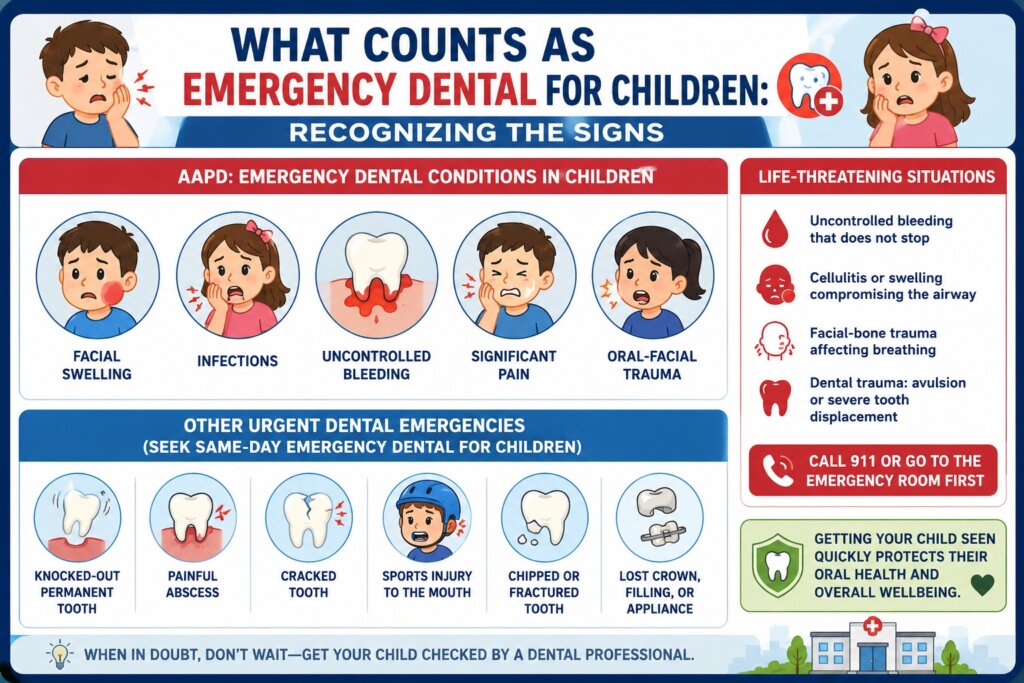
Not every dental issue is an emergency, but some situations in children are urgent and should not wait. The American Academy of Pediatric Dentistry (AAPD) identifies facial swelling, infections, uncontrolled bleeding, significant pain, and oral-facial trauma as conditions that require prompt professional attention. If your child has any of these, you are dealing with an emergency.
Life-threatening situations go one step further. These include uncontrolled bleeding that does not stop, cellulitis or swelling that may compromise the airway, facial-bone trauma affecting breathing, and dental trauma involving avulsion or severe tooth displacement. In those cases, call 911 or go to the nearest emergency room first, then follow up with a dentist.
For everything else, including a knocked-out permanent tooth, a painful abscess, a cracked molar, or a sports injury to the mouth, emergency dental for children is exactly what a same-day urgent dental clinic is built for. Getting your child seen quickly by a licensed clinician protects both their oral health and their overall wellbeing.
How to Handle a Dental Emergency in Children: Step-by-Step
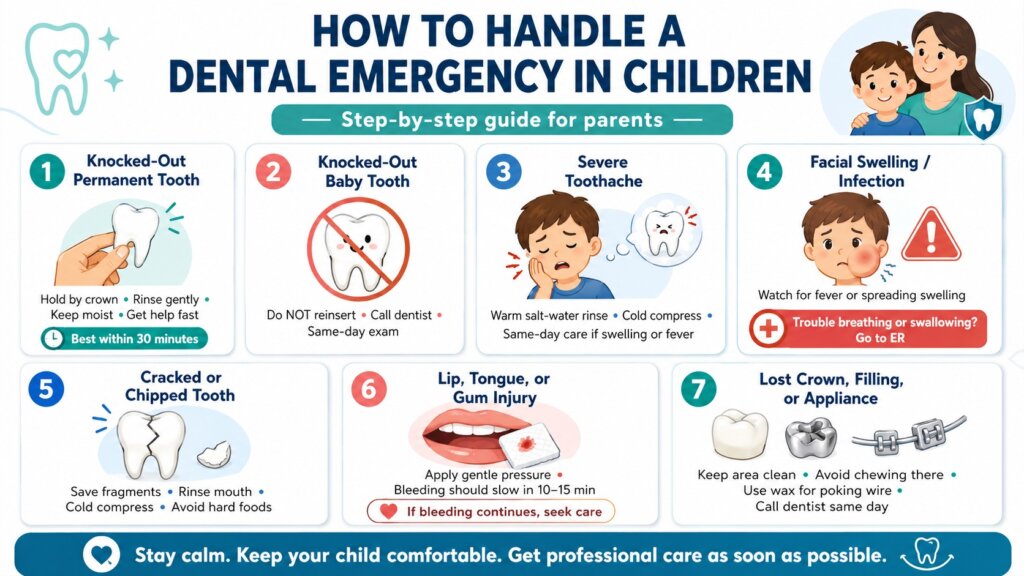
When a dental emergency happens, your first job is to stay calm. Children take emotional cues from their parents, and a calm adult in the room helps a frightened child feel safer. Once you have assessed the situation, follow these steps based on the type of emergency.
1. Knocked-Out Permanent Tooth
Pick up the tooth by the crown, not the root. Gently rinse it with water if it is dirty, but do not scrub it or wrap it in a dry cloth.
Try to reinsert it gently into the socket if your child is old enough to cooperate. If that is not possible, keep the tooth moist in a small container of milk or between your child’s cheek and gum, and head to an emergency dentist immediately. Time is critical here, ideally within 30 minutes.
2. Knocked-Out Primary (Baby) Tooth
Do not attempt to reinsert a knocked-out baby tooth. The AAPD is clear on this: replanting primary teeth can damage the developing permanent tooth underneath.
Call a dentist to confirm the tooth is fully out and to check whether any root fragment remains. A same-day exam is still a good idea to rule out other injuries.
3. Severe Toothache or Dental Pain
Rinse your child’s mouth with warm salt water to clear any debris. You can apply a cold compress to the outside of the cheek to reduce swelling, but do not place aspirin or any painkiller directly on the gum tissue.
If the pain is severe, persistent, or accompanied by swelling or fever, this may signal an infection. That requires professional evaluation the same day, not a wait-and-see approach.
4. Facial Swelling or Signs of Infection
Swelling that spreads to the jaw, neck, or under the eye is a serious warning sign. A dental abscess left untreated can become a systemic infection.
If your child has swelling along with fever, difficulty swallowing, or trouble breathing, go to the emergency room first. For swelling that is localized and not affecting the airway, emergency dental for children is the right call.
5. Cracked, Chipped, or Fractured Tooth
Save any tooth fragments you can find. Rinse the child’s mouth gently and apply a cold compress to manage swelling or discomfort.
Avoid giving your child hard or sticky foods until the tooth is examined. A same-day dental visit will determine whether the tooth can be repaired, needs a crown, or requires further treatment.
6. Soft-Tissue Injuries (Lips, Tongue, Gums)
Apply gentle pressure with a clean cloth to control bleeding. Most minor soft-tissue injuries stop bleeding within 10 to 15 minutes.
If bleeding does not stop or the cut is deep, seek care right away. Lacerations inside the mouth can sometimes require suturing, and a clinician should assess the extent of the injury.
7. Lost Crown, Filling, or Dental Appliance
Keep the area clean and avoid chewing on that side of the mouth. If your child wears braces and a wire is poking the cheek, use orthodontic wax as a temporary buffer.
Contact a dentist the same day for a lost crown or filling, especially if the tooth is sensitive or painful. These situations are manageable but should not be left unaddressed for days.
Once you have taken those immediate steps at home, the next priority is getting your child seen by a professional. That is where same-day urgent care becomes essential.
Emergency Dental for Children With Delta Dental, Guardian Dental, and MetLife Dental Coverage
One of the first things parents ask in a dental emergency is whether their insurance will cover the visit. The good news is that most major dental insurance plans, including Delta Dental, Guardian Dental, and MetLife Dental, cover emergency exams and diagnostic X-rays. Coverage for follow-up treatment varies by plan, but emergency care is typically included at least in part.
If you have Delta Dental, you can often verify coverage quickly through the Delta Dental login portal on their website. Guardian Dental and MetLife Dental also provide online account access where you can review your child’s benefits before the visit. Knowing your coverage ahead of time helps you avoid surprises at checkout.
| Insurance Plan | Emergency Exam Coverage | X-Ray Coverage | Follow-Up Treatment |
|---|---|---|---|
| Delta Dental | Typically covered | Often covered | Varies by plan tier |
| Guardian Dental | Typically covered | Often covered | Varies by plan tier |
| MetLife Dental | Typically covered | Often covered | Varies by plan tier |
| No Insurance | Out-of-pocket, flat fee | Out-of-pocket | Financing available |
At Emergency Dental San Francisco, we accept most dental insurance plans, including Delta Dental, Guardian Dental, and MetLife Dental. For families without dental insurance, we accept cash and all major credit cards and offer financing options for those who qualify. We work hard to make emergency dental for children accessible regardless of your financial situation. Call us at 415-230-2783 or book an appointment online and we will walk you through your options before treatment begins.
What to Expect During a Pediatric Dental Emergency Visit
You might be wondering what actually happens when you walk in with a child in pain. The process at an urgent care dental clinic is designed to move quickly and keep your child as comfortable as possible. Here is the typical flow of a same-day emergency visit.
First, the team will triage your child to assess the level of urgency and manage pain right away. After that, the clinician will perform an exam and take any necessary X-rays to understand what is happening beneath the surface.
Next, you will receive a clear explanation of the findings and a treatment plan with an upfront cost estimate. Treatment options may include extraction, infection control, a temporary restoration, or immediate repair, depending on the situation. The visit ends with written aftercare instructions and any prescriptions needed, along with a follow-up plan.
Our clinic follows CDC and OSHA infection-control standards with strict sterilization protocols, appropriate PPE, and licensed clinicians using modern equipment. Every step is done in a clean, clinical environment designed to put both children and parents at ease.
How to Prepare Before You Arrive at an Emergency Dental Clinic
A little preparation before the visit can make things go more smoothly, especially when you are managing a stressed or hurting child. Here is what to bring and do before you walk in.
- Bring a government-issued ID and your child’s dental insurance card if you have one.
- Write down your child’s current medications and any known allergies.
- Bring any recent dental records or X-rays if you have them on hand.
- If a tooth was knocked out, bring it in a container of milk or wrapped in a damp cloth.
- Save any tooth fragments from a cracked or chipped tooth in a small bag.
- Plan to arrive about 15 minutes early to complete intake paperwork.
- Reassure your child that the team is there to help and that their job is just to sit still for a little while.
Emergency Dental San Francisco serves families across the Bay Area, including San Francisco, Oakland, Berkeley, Alameda, Daly City, Fremont, South San Francisco, and San Leandro. Walk-ins are welcome, and same-day appointments are available seven days a week, including holidays. If you are not sure whether your child’s situation qualifies as an emergency, call 415-230-2783 and one of our team members will help you decide.
Preventing Pediatric Dental Emergencies Before They Happen
Prevention is not always possible, but some steps reduce the risk of common childhood dental injuries. Sports-related dental trauma is one of the most frequent causes of emergency dental visits for children, and a properly fitted mouthguard can significantly lower that risk.
We offer custom mouthguards for children who play contact sports or high-impact activities. A custom-fitted guard offers better protection than a store-bought option and is more comfortable for a child to wear consistently. Ask about this during your next visit or when you come in for urgent care.
Regular dental checkups also catch problems early, before they become emergencies. Untreated cavities, early signs of infection, and developing alignment issues are all easier and less costly to address when found at a routine exam. If your child has not had a checkup recently, scheduling one sooner rather than later is a practical step toward avoiding a future emergency visit.
According to a review indexed on PubMed (PMID: 30020737), emergency department management of dental trauma in children reflects how common these injuries are and how emergency-medicine approaches can meaningfully improve outcomes when applied correctly. That research reinforces why having a clear action plan matters before an emergency ever happens.
Final Thoughts on Emergency Dental for Children
When your child is in pain or has suffered a dental injury, the steps you take in the first few minutes matter. Stay calm, manage what you can at home, and get professional help the same day. Emergency dental for children, whether it involves a knocked-out tooth, an abscess, or a sports injury, is time-sensitive care that should not be delayed. Emergency Dental San Francisco is here for your family, day or night, with same-day appointments, accepted dental insurance plans including Delta Dental and MetLife Dental, and a team that treats every child with patience and care. Call 415-230-2783 or book an appointment now.
Emergency Dental San Francisco specializes in same-day urgent care for children’s dental emergencies. We provide fast, compassionate relief—even after hours and weekends. Call 415-230-2783 or get started today.
FAQs
What Is Considered a Dental Emergency for a Child?
A child dental emergency is any mouth injury or tooth problem causing severe pain, swelling, bleeding that won’t stop, signs of infection (like a gum boil or fever), a knocked-out or loose tooth, a broken tooth with pain, or trouble eating, speaking, or opening the mouth—call right away so we can guide you and arrange same-day care.
What Should I Do If My Child Knocks Out a Tooth?
If it’s a permanent tooth, handle it by the crown (not the root), gently rinse if dirty, try to place it back in the socket, or store it in milk or saliva, and come in immediately (ideally within 30–60 minutes); if it’s a baby tooth, don’t reinsert it—call us right away for the safest next steps.
Where Can I Take My Child for Emergency Dental Care?
You can bring your child to an urgent-care dental office equipped for same-day emergencies—Emergency Dental San Francisco offers same-day, after-hours, weekend, and holiday visits, and you can call us 24/7 at 415-230-2783 or book online.
How Much Does an Emergency Dentist Visit Cost for a Child?
Cost depends on the exam, X-rays, and what treatment is needed, but we accept most dental insurance plans, offer financing options for those who qualify, and accept cash and major credit cards—call and we’ll provide a clear estimate before proceeding.
Can I Take My Child to the ER for a Dental Emergency?
Yes—go to the ER for trouble breathing or swallowing, uncontrolled bleeding, severe facial swelling, high fever, or major trauma; for most toothaches, broken teeth, and dental infections, an emergency dentist is usually the fastest way to get definitive relief and treatment.

Emergency Dental San Francisco is a dental office focused on providing same-day dental appointments to patients in San Francisco and the surrounding area. We provide urgent dental care services during weekends, evenings and holidays.
We accept several forms of payment and have financing options available to those who qualify. We accept most dental insurance.