

06 Nov Emergency in Dental Clinic: What Happens If a Patient Has a Seizure During Treatment?
A seizure during dental treatment is a medical emergency that requires immediate attention to patient safety, even though many seizures stop without emergency intervention. Dental professionals should stop the procedure, remove instruments when safe, protect the patient from injury, and monitor the seizure’s duration. Knowing how dental clinics respond to seizures helps patients understand what to expect if an unexpected medical event occurs.
This guide explains how dental professionals recognize and respond to seizures during treatment, when emergency medical assistance is necessary, and what precautions help reduce potential risks. It also discusses how patients with epilepsy or a history of seizures can prepare for safer dental appointments.
Key Takeaways
- Seizures can occur in a dental clinic due to stress, missed medication, or reactions to anesthetic agents.
- Dental teams follow a specific emergency protocol to protect the patient during and after a seizure episode.
- Oral injuries such as tooth fractures or soft-tissue trauma may result from convulsive movements.
- Patients with epilepsy or a seizure history should disclose this before any dental procedure begins.
- Post-seizure dental injuries, including knocked-out or cracked teeth, may require same-day urgent care.
- Clinics that follow CDC and OSHA standards are better equipped to manage in-office medical emergencies.
Most people associate dental emergencies with pain or trauma. A seizure during treatment is a different kind of crisis, but it shares one thing in common with every other emergency in dental clinic situations: the outcome depends heavily on how prepared the team is.
What Triggers a Seizure During an Emergency in Dental Clinic Settings?
Seizures in a dental office do not happen randomly. There are identifiable risk factors that make certain patients more vulnerable during treatment. Knowing these factors helps both the clinical team and the patient prepare more effectively.
Anxiety is one of the most common triggers. Dental-related stress can elevate the nervous system to a point where patients with a pre-existing seizure disorder lose their threshold for control. A missed dose of antiepileptic medication before the appointment is another frequent cause, especially when patients are nervous and rush out the door without their usual routine.
Local anesthetics, when accidentally injected into a blood vessel, can cause systemic toxicity. In rare cases, this triggers convulsive activity. Hyperventilation from anxiety can also lower carbon dioxide levels in the blood, which may precipitate a seizure in susceptible individuals. Some patients have undiagnosed epilepsy, and the dental chair is simply where their first episode presents.
| Trigger Type | Common Cause | Risk Level |
|---|---|---|
| Psychological | Severe dental anxiety or panic | Moderate |
| Medication-related | Missed antiepileptic dose | High |
| Pharmacological | Intravascular local anesthetic injection | Moderate to High |
| Physiological | Hyperventilation, low blood sugar | Moderate |
| Undiagnosed condition | First-time seizure with no prior history | Variable |
This is why every dental intake form asks about your medical history, current medications, and known conditions. It is not administrative routine. It is a safety screen.
Recognizing the Warning Signs: Emergency in Dental Clinic Situations Before the Seizure Starts
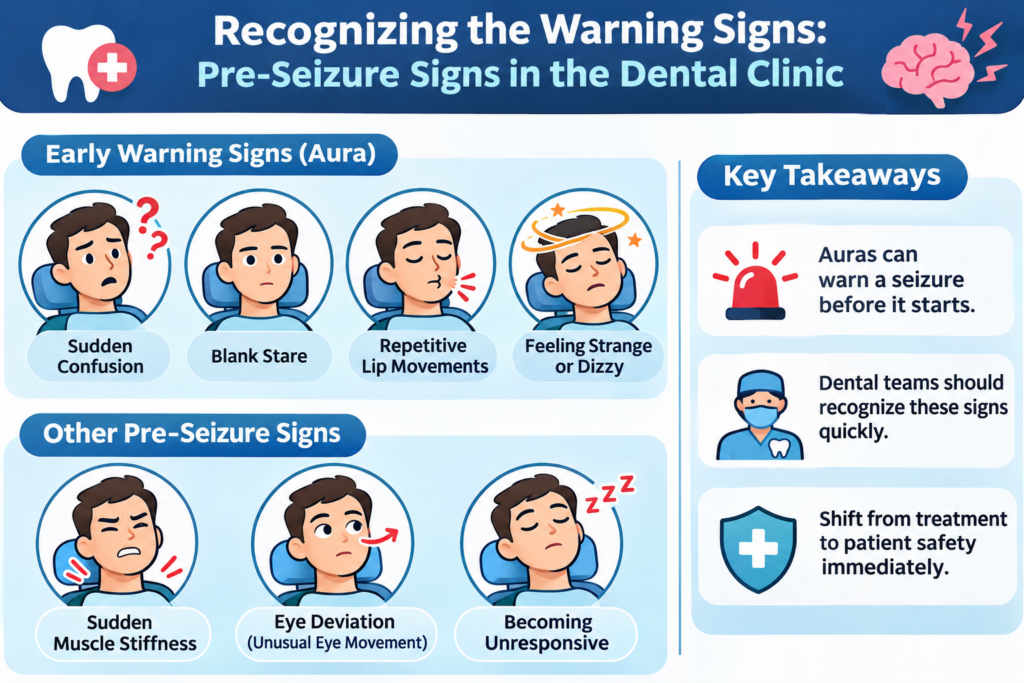
Seizures do not always arrive without warning. Some patients experience what is called an aura, a brief sensory or emotional signal that a seizure is about to begin. Dental teams trained in emergency response learn to recognize these early cues before the convulsive phase starts.
You might be wondering what an aura actually looks like in a clinical setting. It can appear as sudden confusion, a blank stare, repetitive lip movements, or a patient saying they feel strange or dizzy. These signals last seconds to a minute and require immediate action from the dental team.
Other pre-seizure signs include sudden muscle stiffness, eye deviation, or a patient becoming unresponsive mid-conversation. If a dental assistant or clinician notices any of these, the protocol shifts immediately from treatment to patient safety management. That is why dental assistant jobs in well-run practices include emergency training as a core competency, not an optional add-on.
Step-by-Step: How a Dental Team Responds to a Seizure Emergency in Dental Clinic
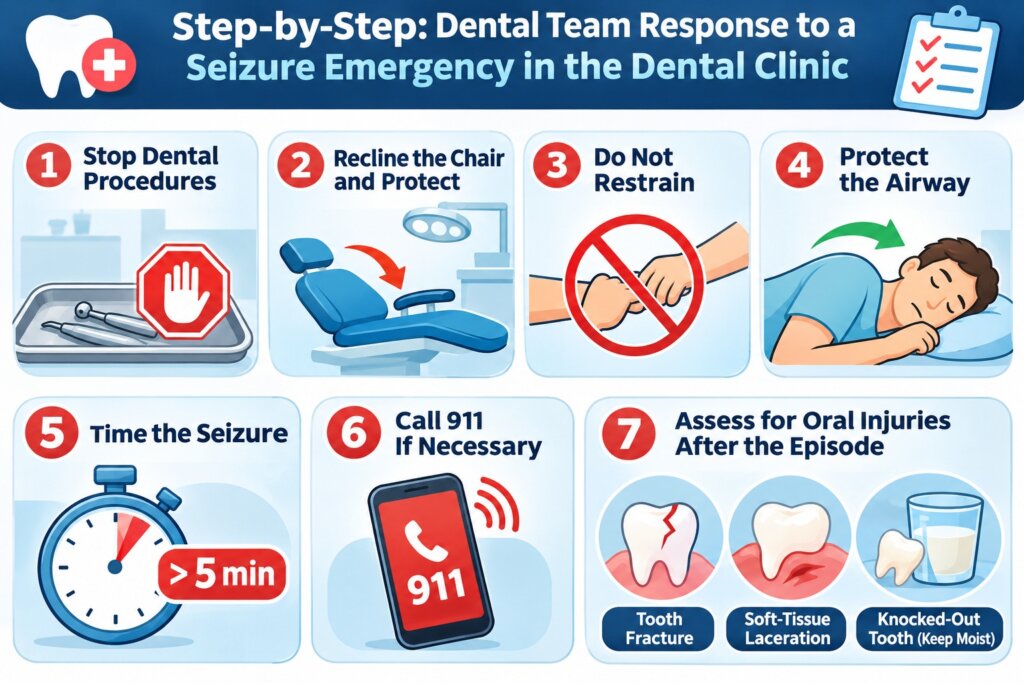
When a seizure begins, the response must be immediate and organized. Every second counts, and a practiced protocol prevents injury and keeps the patient stable. Here is how a trained dental team manages the situation from onset to recovery.
1. Stop All Dental Procedures Immediately
When a patient experiences a seizure during dental treatment, the dental team should immediately stop the procedure and remove dental instruments and equipment from the patient’s mouth when it is safe to do so. Staff should protect the patient from injury, avoid restraining involuntary movements, monitor breathing, and time the seizure.
2. Recline the Chair and Protect the Patient
The dental chair may be lowered to reduce the risk of falling, while staff follow established medical emergency procedures and position the patient safely as circumstances allow. Once the seizure ends, the team should assess breathing, responsiveness, and potential injuries before determining whether further emergency care is required.
3. Do Not Restrain the Patient
Restraining someone during a seizure can cause fractures or dislocations. The team allows the seizure to run its course while keeping the environment clear of hazards.
4. Protect the Airway
The patient is turned to one side if possible to prevent aspiration. Contrary to old advice, nothing is placed in the mouth during a seizure. The airway is monitored continuously.
5. Time the Seizure
A team member notes the start time. A seizure lasting more than five minutes, or one that repeats without recovery, requires emergency services to be called immediately. This is classified as status epilepticus and is a medical emergency.
6. Call 911 If Necessary
Dental staff should call 911 if a seizure lasts five minutes or longer, another seizure begins before the patient fully recovers, or the patient experiences difficulty breathing, serious injury, or an unusually prolonged recovery. Emergency medical assistance is also recommended when the patient has never experienced a seizure before or is pregnant.
A seizure may end within a few minutes without emergency intervention, but the dental team must continue monitoring the patient and follow its established emergency response protocols.
7. Assess for Oral Injuries After the Episode Ends
Once the patient is stable and alert, the team conducts a careful assessment of the mouth. Convulsive jaw movements can cause tooth fractures, soft-tissue lacerations, or in some cases, a tooth may be displaced or knocked out entirely.
According to guidance from MedlinePlus and the Indian Health Service, a knocked-out tooth should be handled only by the crown, kept moist in milk or saline, and treated as soon as possible. In a dental clinic, this assessment and initial management can happen on the spot.
Oral Injuries That Can Occur During a Seizure: Emergency in Dental Clinic Dental Assistant Jobs Context
The physical force of a tonic-clonic seizure is significant. The jaw can clamp shut with enough pressure to fracture teeth, damage restorations, or injure the lips, tongue, and cheeks. These injuries are not rare, and they require prompt attention.
A peer-reviewed review published in a clinical journal identifies severe tooth fractures and orofacial trauma as conditions requiring immediate dental treatment. Head Start oral health guidance recommends using clean gauze to control bleeding and contacting a dentist right away for displaced or fractured teeth. The New Jersey Department of Health also recommends assessing for head injury, wearing gloves when managing bleeding injuries, applying pressure with clean gauze, and using a cold compress for swelling.
If a tooth is knocked out or fractured during a seizure in the dental chair, the team is already in the right place to begin care. That is one practical advantage of an in-clinic event versus a seizure at home or in public.
| Injury Type | Immediate Action | Follow-Up Care Needed |
|---|---|---|
| Tooth fracture | Save fragments, avoid biting | Same-day repair or extraction |
| Knocked-out tooth | Handle by crown, keep moist | Replantation within 30 minutes if possible |
| Soft-tissue laceration | Apply gauze, gentle pressure | Suturing if deep |
| Displaced tooth | Do not force back; keep moist | Urgent dental evaluation |
| Jaw soreness or bruising | Cold compress, rest | Monitor for fracture signs |
If you or someone you care for experiences a dental injury following a seizure, our clinic offers same-day urgent exams, X-rays, and treatment for exactly these situations. Emergency Dental San Francisco is open 24 hours a day, including weekends and holidays, and accepts walk-ins across the Bay Area including Oakland, Berkeley, Daly City, and Fremont. Call 415-230-2783 to reach us any time.
What Patients With Epilepsy Should Do Before Any Emergency in Dental Clinic Visit
If you have a diagnosed seizure disorder, your dental team needs to know before treatment begins. This is not about being turned away. It is about building a safer appointment for you from the start. Disclosure changes how the team prepares and how they respond if something happens.
Here is what to do before your visit:
- List all current medications, including antiepileptic drugs, on your intake form.
- Take your medication on schedule the day of the appointment, do not skip it.
- Inform the front desk or dental assistant about your seizure history when you check in.
- Bring a contact person if possible, someone who knows your seizure history and can assist if needed.
- Ask about sedation options if anxiety is a significant trigger for your episodes.
- Request a morning appointment when energy and medication levels are typically more stable.
When you search for a dental clinic near me, look for a practice that asks detailed health history questions and has staff trained in emergency response. These are markers of a clinic that takes patient safety seriously, not just dental outcomes.
Our team at Emergency Dental San Francisco reviews every patient’s medical history before treatment begins. We follow California state dental regulations and adhere to CDC and OSHA infection-control and emergency-readiness standards. If you have a complex medical history, including epilepsy, we encourage you to call ahead so we can prepare appropriately for your visit.
After the Seizure: Recovery and Next Steps in the Dental Clinic
The period after a seizure ends is called the postictal phase. Patients are often confused, exhausted, or disoriented for several minutes to an hour. The dental team does not rush back into treatment during this window.
The patient is monitored for breathing, level of consciousness, and any signs of injury. If the patient came alone, the team may contact an emergency contact or arrange transportation. Dental treatment is rescheduled unless the patient is fully alert, medically stable, and gives clear consent to continue.
If oral injuries occurred during the seizure, those are triaged and addressed as the priority. A cracked tooth, lacerated tongue, or displaced restoration may need same-day treatment. Our urgent care services cover emergency exams and X-rays, tooth repair, soft-tissue management, and extraction if needed. Patients covered under plans accessible via MetLife dental login or Delta dental provider login can verify benefits before or after the visit. We also accept most major insurance plans and offer financing options for patients who qualify.
Conclusion
A seizure during dental treatment is a serious but manageable event when the clinical team is trained and prepared. Oral injuries may follow, and prompt assessment is key to protecting your teeth and soft tissues. If you need same-day urgent dental care in San Francisco or the surrounding Bay Area, call Emergency Dental San Francisco at 415-230-2783 or book an appointment online any time, day or night.
Dental emergencies can happen unexpectedly, and timely professional assessment helps patients understand their treatment options. Emergency Dental SF assists patients with urgent dental concerns, including dental injuries and severe tooth pain. Call 415-230-2783 to discuss your dental emergency and available care options.
FAQs
What Is Considered a Dental Emergency?
A dental emergency is any problem that needs prompt care to stop severe pain, control bleeding, treat infection (like swelling or an abscess), or save a tooth (such as a knocked-out or badly broken tooth). If you’re unsure, call Emergency Dental San Francisco at 415-230-2783 for guidance 24/7.
What Should I Do If I Have a Dental Emergency?
Call an emergency dentist right away, avoid chewing on the affected side, and use a cold compress for swelling. For a knocked-out tooth, gently rinse it, keep it moist (milk or saliva), and come in immediately—Emergency Dental San Francisco offers same-day, after-hours, weekend, and holiday care.
Can I Go to the ER for a Dental Emergency?
You can go to the ER for uncontrolled bleeding, trouble breathing/swallowing, severe facial swelling, or a serious injury, but most dental problems are best treated by an emergency dentist who can diagnose and fix the tooth. We can often see you the same day and provide clear next steps.
How Much Does an Emergency Dental Visit Cost?
Cost depends on the exam, X-rays, and treatment needed (like drainage, a filling, or an extraction). We accept most dental insurance, offer financing for those who qualify, and accept cash and major credit cards—call 415-230-2783 for a quick estimate based on your symptoms.
What Qualifies as an Emergency in a Dental Clinic?
Anything that requires immediate attention for safety or pain relief qualifies—severe toothache, infection/abscess, swelling, broken or knocked-out teeth, bleeding, or trauma. Our licensed clinicians prioritize comfort, infection control, and straightforward treatment options during urgent visits.

Emergency Dental San Francisco is a dental office focused on providing same-day dental appointments to patients in San Francisco and the surrounding area. We provide urgent dental care services during weekends, evenings and holidays.
We accept several forms of payment and have financing options available to those who qualify. We accept most dental insurance.