

21 May Emergency Dental Kit Essentials for Families
A dental emergency rarely announces itself. One moment your child is playing soccer, and the next, a tooth is on the ground. Or you bite into something hard at dinner and feel that unmistakable crack. Most families have a first-aid kit somewhere in the house, but very few have thought about what to do specifically when a tooth breaks, gets knocked out, or starts throbbing at midnight on a Sunday.
This article covers exactly what belongs in a family emergency dental kit, how each item is used, and when a kit is simply not enough. You will also find a comparison of home care versus professional care, so you know where the line is between managing symptoms temporarily and needing same-day treatment from a licensed dentist.
Key Takeaways
- A home emergency dental kit helps you manage pain and protect a tooth before you reach a dentist.
- The CDC recommends having basic supplies ready to control bleeding and seek urgent professional care promptly.
- MedlinePlus advises handling a knocked-out tooth by the crown, rinsing gently, and storing it in milk or saliva.
- The American Dental Association stresses rapid assessment, sterile gauze, and protecting soft tissues after dental trauma.
- No kit replaces professional care—some emergencies require same-day X-rays, infection control, or extraction.
- Emergency Dental San Francisco offers 24/7 walk-in urgent dental care across the Bay Area, including weekends and holidays.
What an Emergency Dental Kit Actually Is
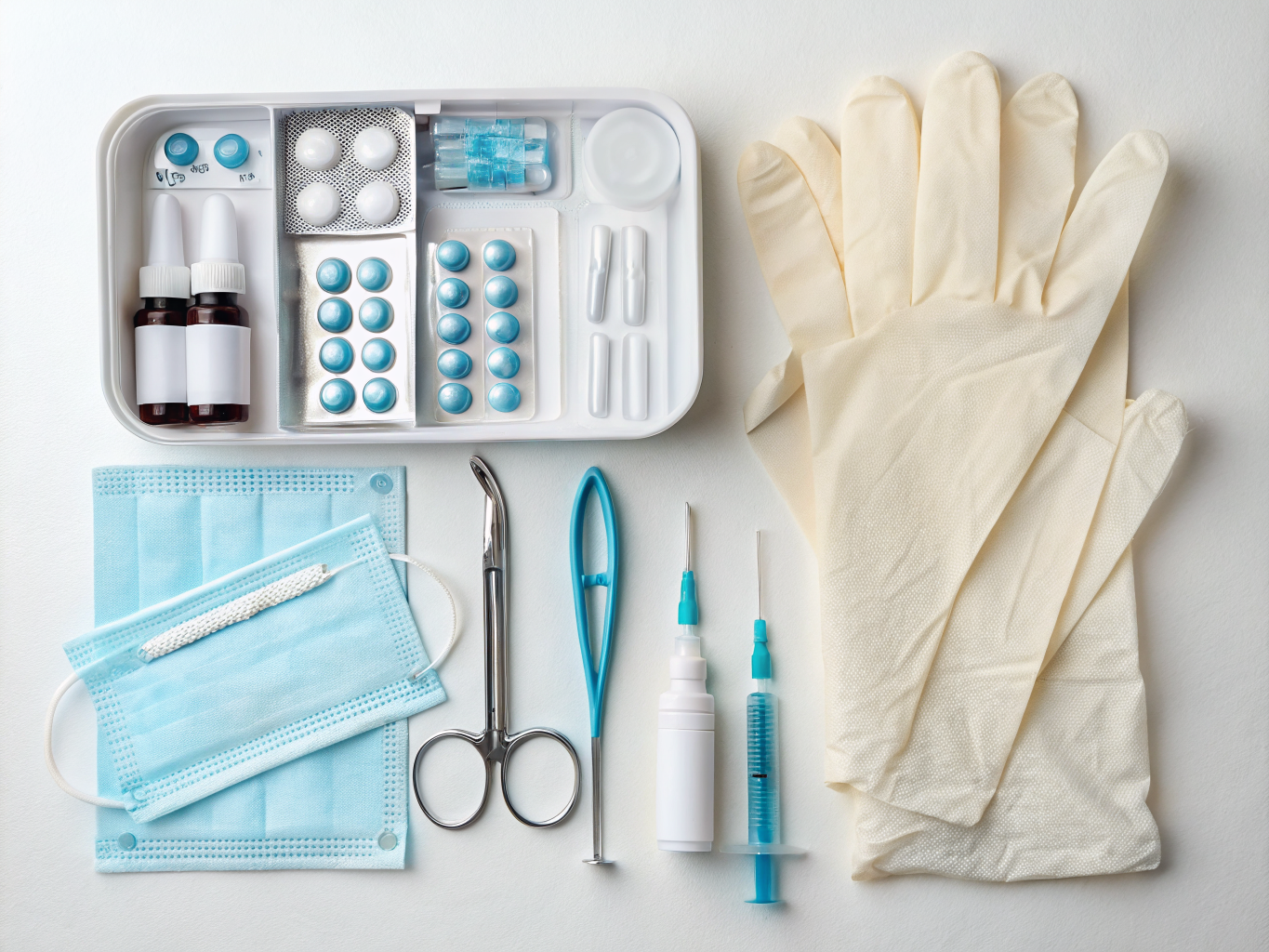
An emergency dental kit is a small, organized collection of supplies that helps you respond to a dental injury or sudden pain before you can see a dentist. Think of it as a bridge, not a solution. It buys you time, reduces immediate discomfort, and in some cases, saves a tooth that might otherwise be lost.
These kits differ from a general first-aid kit in one important way: they include items specific to teeth and oral tissue. A standard home kit might have bandages and antiseptic, but it likely does not have a tooth-preservation container or dental cement. That gap is worth closing, especially for families with children who play contact sports or adults who wear crowns or dentures.
Building one does not require a trip to a specialty store. Most items are available at a pharmacy or online, and the whole kit can fit in a small zip pouch.
Core Emergency Dental Kit Supplies Every Family Needs
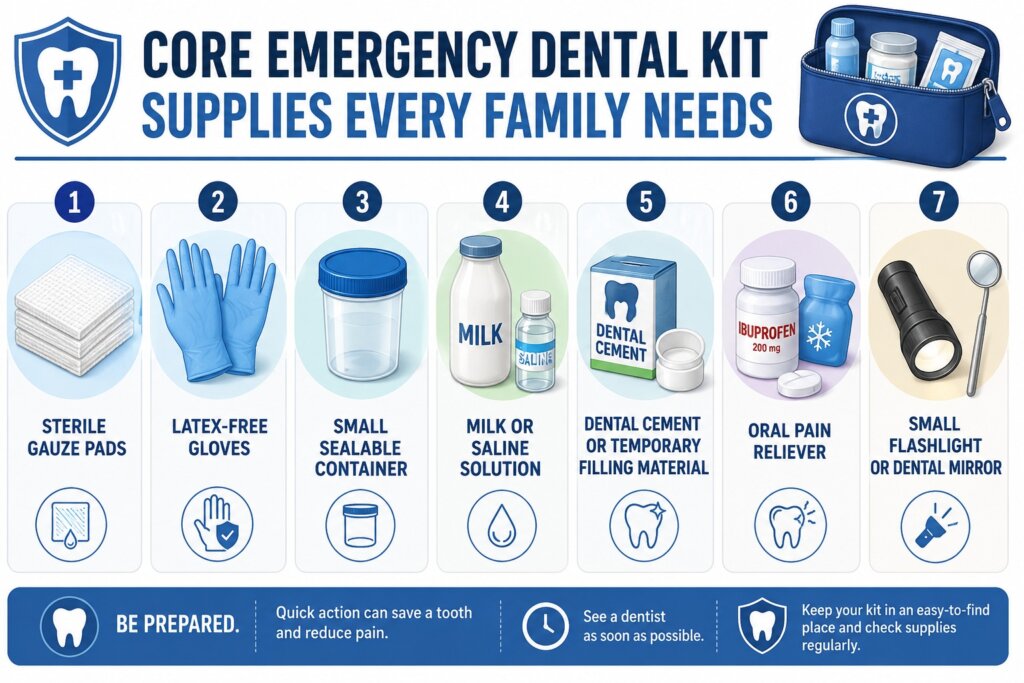
Before you start gathering items, it helps to understand what each one does and why it matters. The American Red Cross recommends that home first-aid kits include sterile gauze pads, latex-free gloves, a small flashlight, and oral pain relievers—all of which serve a direct purpose in dental emergencies too.
Here is what a well-stocked family emergency dental kit should contain.
1. Sterile Gauze Pads
Gauze is your first tool for controlling bleeding after a tooth is knocked out, a filling falls out, or soft tissue is cut. The American Dental Association recommends applying clean gauze with firm pressure to manage bleeding while you arrange urgent care. Keep at least six to eight pads in your kit.
2. Latex-Free Gloves
You should never handle an injured tooth or open wound with bare hands. Gloves protect both you and the person you are helping from cross-contamination. Latex-free options are safer for households where allergies may be unknown.
3. Small Sealable Container
If a tooth gets knocked out, it needs to stay moist to have any chance of being saved. A small container with a tight lid lets you store the tooth in milk, saline, or saliva while you travel to the dentist. The American Academy of Pediatric Dentistry recommends milk or a commercially prepared preservation solution as the preferred storage medium for avulsed permanent teeth.
4. Milk or Saline Solution
Plain whole milk is one of the best short-term storage media for a knocked-out tooth because it maintains the right pH and osmolarity for the tooth’s root cells. A small sealed bottle of sterile saline works as a close second. MedlinePlus advises getting to a dentist within 30 minutes of a tooth being knocked out for the best chance of replantation.
5. Dental Cement or Temporary Filling Material
Over-the-counter dental cement, available at most pharmacies, can temporarily reseal a lost filling or re-attach a crown that has come loose. It does not fix the underlying problem, but it reduces sensitivity and protects the exposed area until you can get professional care. Follow the package directions carefully and avoid chewing on that side.
6. Oral Pain Reliever
An over-the-counter pain reliever such as ibuprofen or acetaminophen can help manage discomfort while you wait. Do not place aspirin directly on the gum or tooth—this can cause a chemical burn to the soft tissue. A small ice pack or cold compress applied to the outside of the cheek may also reduce swelling.
7. Small Flashlight or Dental Mirror
A compact flashlight lets you look inside the mouth to assess what is happening. A small dental mirror, inexpensive and widely available, helps you see the back teeth or check for visible cracks. The ADA includes a flashlight among recommended items for dental trauma assessment.
Home Care Versus Professional Care: Knowing the Difference
One of the most common questions families have is whether they can manage a dental emergency at home or whether they need to go in right away. The honest answer depends on the situation. Some issues allow a short window for home management. Others require immediate professional attention.
The table below compares common dental emergencies by what you can do at home versus what requires a dentist visit.
| Situation | Home Kit Response | Professional Care Needed |
|---|---|---|
| Knocked-out permanent tooth | Store in milk, handle by crown only, go immediately | Yes — within 30 minutes if possible |
| Cracked or chipped tooth | Save fragments, avoid hard foods, rinse gently | Yes — same day for pain or sharp edges |
| Lost filling or crown | Apply temporary dental cement, keep area clean | Yes — within 24 hours to prevent further damage |
| Severe toothache | Cold compress, OTC pain reliever, salt-water rinse | Yes — if pain persists more than a few hours |
| Swelling with fever | Cold compress, do not lance or squeeze | Urgent — may indicate abscess or infection |
| Soft tissue cut or bleeding | Gauze with firm pressure for 10–15 minutes | Yes — if bleeding does not stop |
| Broken denture | Keep all pieces, do not attempt home repair with glue | Yes — same-day repair may be available |
The kit handles the first column. The second column is where professional care becomes necessary. The gap between the two is usually shorter than most people expect.
How to Pack and Store Your Emergency Dental Kit

Packing a kit is straightforward, but where you store it matters. You want it accessible during a stressful moment, not buried under other supplies in a cabinet.
- Use a labeled, waterproof zip pouch or small hard case.
- Keep one kit at home in a consistent, easy-to-find location.
- Pack a second, smaller version for travel, sports bags, or the car.
- Check expiration dates on medications and dental cement every six months.
- Include a card with emergency contact numbers, including your dentist’s after-hours line.
If you have children in sports, a travel kit in their gear bag is worth adding. Dental injuries account for a significant portion of sports-related injuries in school-age children, and having supplies on hand at the field can make a real difference in the outcome.
When the Kit Is Not Enough: Recognizing True Dental Emergencies
Your emergency dental kit is a temporary measure. There are situations where no amount of gauze or dental cement will substitute for professional care, and waiting can make things worse.
The CDC identifies dental emergencies as including traumatic dental injuries, severe toothache, and infections, and recommends seeking urgent professional care promptly. If you or a family member experience any of the following, stop managing at home and call a dentist immediately.
- A knocked-out permanent tooth — time is critical for replantation
- Swelling in the jaw, cheek, or neck — may signal a spreading infection
- Fever alongside dental pain — possible abscess requiring drainage and antibiotics
- Uncontrolled bleeding that does not stop after 15 minutes of pressure
- Severe pain that over-the-counter medication does not reduce
- A tooth that is cracked below the gum line
- Jaw locking or difficulty opening the mouth
You might be wondering whether a situation is serious enough to call after hours. If you are asking that question, it probably is. Dental infections in particular can escalate quickly, and waiting until Monday morning is not always the safe choice.
Emergency Dental San Francisco provides same-day, after-hours, and weekend urgent dental care across San Francisco and the greater Bay Area, including Oakland, Berkeley, Daly City, Fremont, and San Leandro. Whether it is a knocked-out tooth on a Saturday afternoon or a swollen jaw on a holiday evening, our team is available 24/7. Walk-ins are welcome, and same-day appointments are available by calling 415-230-2783 or booking online.
Emergency Dental Kits for Traveling Families
Travel changes the calculus of a dental emergency. You are away from your regular dentist, possibly in a different time zone, and your options are less familiar. A travel dental kit gives you a meaningful first response while you locate care.
A compact travel version of your emergency dental kit should include sterile gauze, latex-free gloves, a small sealable container with a packet of saline, dental cement, a pain reliever appropriate for each family member’s age and weight, and a dental mirror. Keep it in your carry-on, not checked luggage, so it is accessible on the plane or in the car.
It is also worth saving the contact information for an urgent dental provider before you leave home. If you are traveling within the Bay Area or returning to San Francisco, our clinic is open every day of the year. We accept most dental insurance plans and offer financing for patients who qualify, so cost does not have to be a barrier to getting care when you need it.
Pediatric Considerations for Your Family Emergency Dental Kit
Children’s dental emergencies follow slightly different rules than adult ones. A knocked-out baby tooth, for example, is generally not replanted the way a permanent tooth would be—reinserting it could damage the developing adult tooth underneath. A knocked-out permanent tooth in a child, on the other hand, should be treated with the same urgency as an adult tooth.
For families with school-age children, your kit should also include age-appropriate dosing information for pain relievers and a note about which teeth are primary versus permanent. If you are unsure, call a dentist before attempting replantation.
Our team provides gentle pediatric urgent care for common issues including knocked-out teeth, sports injuries, severe toothaches, and broken braces. We also recommend custom mouthguards for children who play contact sports—a simple preventive step that significantly reduces the risk of dental trauma. Ask about mouthguard options at your next visit or call us to discuss what fits your child’s activity level.
Conclusion
A family emergency dental kit is one of the simplest preparations you can make for a situation that is almost guaranteed to happen at some point. Stock it with the right supplies, store it somewhere accessible, and know when to use it versus when to call for professional care. When a dental emergency goes beyond what your kit can handle, Emergency Dental San Francisco is available same-day, after hours, and on weekends and holidays—call 415-230-2783 or book an appointment online for immediate, compassionate care.
Emergency Dental San Francisco offers same-day urgent dental care when your kit isn’t enough. We treat toothaches, cracked teeth, and more—fast. Call 415-230-2783 or get started today.
FAQs
What Should Be Included in an Emergency Dental Kit?
Include sterile gauze, dental floss, a small cold pack, ibuprofen/acetaminophen (as appropriate), orthodontic wax, a temporary filling/cement kit, salt (for warm rinses), a clean container with a lid (for a tooth), gloves, a small flashlight, and our number (415-230-2783) for same-day guidance and care.
Do Emergency Dental Kits Really Work?
They can help reduce pain, protect the area, and control minor bleeding temporarily—but they don’t treat the underlying problem. For safe, lasting relief (especially with swelling, fever, trauma, or severe pain), see an urgent dentist as soon as possible.
How Do You Temporarily Fix a Broken Tooth at Home?
Rinse with warm salt water, apply a cold compress for swelling, and cover sharp edges with orthodontic wax or temporary dental cement. Avoid chewing on that side and don’t use superglue—then arrange prompt evaluation to prevent infection or further cracking.
What Is the Best Temporary Filling Material for a Tooth?
An over-the-counter temporary dental filling material (often labeled “temporary filling” or “temporary cement”) is best for short-term coverage. Use it only as directed and schedule a professional repair quickly, since temporary materials can loosen and the tooth may still be infected.
Where Can I Buy an Emergency Dental Kit?
You can find emergency dental kits at most pharmacies, big-box retailers, and online. If you’re unsure what to get—or you need after-hours help—call Emergency Dental San Francisco at 415-230-2783 for quick, practical guidance and same-day treatment options.

Emergency Dental San Francisco is a dental office focused on providing same-day dental appointments to patients in San Francisco and the surrounding area. We provide urgent dental care services during weekends, evenings and holidays.
We accept several forms of payment and have financing options available to those who qualify. We accept most dental insurance.