

04 May After Hours Emergency Dental Care: What to Do When Tooth Pain Strikes at Night
Tooth pain has a cruel way of striking at the worst possible moments. When severe dental discomfort hits at night, weekends, or holidays, finding immediate relief becomes your top priority. Emergency Dental San Francisco understands that dental emergencies don’t follow business hours, which is why we provide 24/7 urgent care for patients throughout the Bay Area.
This guide will walk you through immediate steps to manage nighttime dental pain, help you identify true emergencies, and provide clear direction for accessing professional after hours emergency dental care when you need it most.
Key Takeaways
- Severe tooth pain at night often signals infection, trauma, or advanced decay requiring immediate professional attention.
- Temporary pain relief measures include salt water rinses, cold compresses, and over-the-counter medications as directed.
- True dental emergencies include knocked-out teeth, uncontrolled bleeding, facial swelling with fever, and jaw trauma.
- After hours emergency dental care is available 24/7 through specialized urgent care practices like Emergency Dental San Francisco.
- Quick professional intervention can save teeth and prevent complications from spreading infections.
- Having an emergency dentist contact ready before you need it ensures faster access to care.
When tooth pain strikes in the middle of the night, your first instinct might be panic.
Understanding After Hours Emergency Dental Care and When to Seek Help
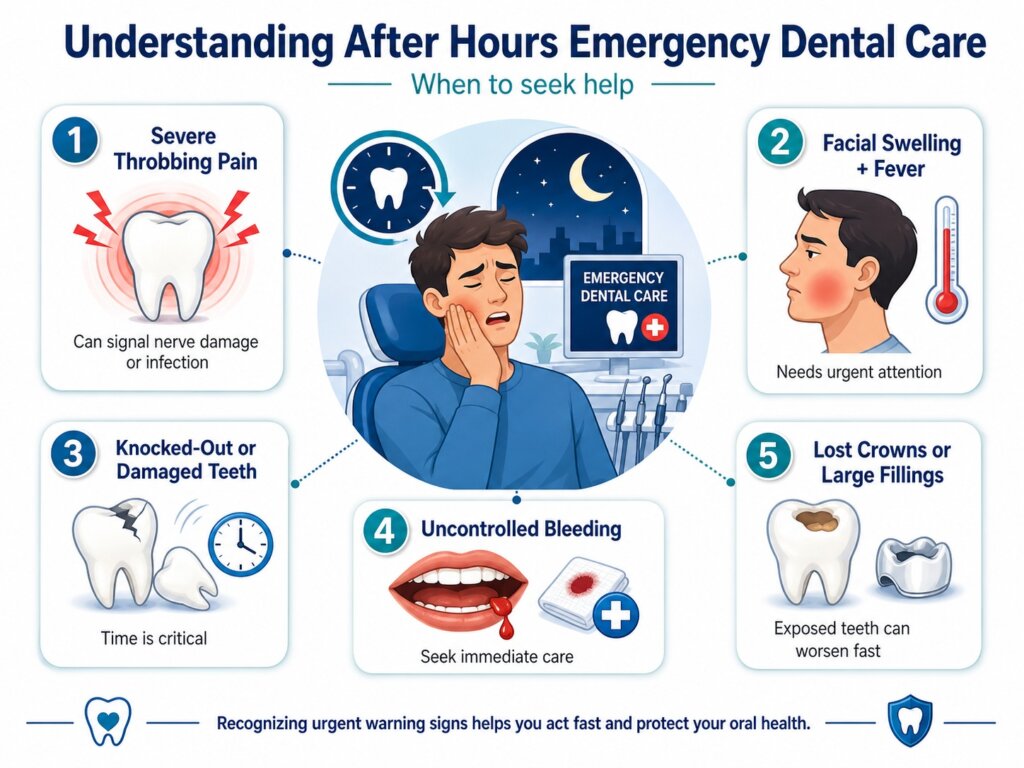
Not all dental pain requires immediate emergency intervention, but certain symptoms demand urgent attention regardless of the hour. Severe, throbbing pain that prevents sleep often indicates nerve involvement or infection. Facial swelling, especially when accompanied by fever, suggests a serious infection that could spread to other areas of your body.
Recognizing the difference between manageable discomfort and true emergencies helps you make informed decisions about seeking care.
1. Severe Throbbing Pain That Worsens
Intense, pulsating tooth pain that increases in severity typically signals nerve damage or infection. This type of pain often becomes unbearable at night when lying down increases blood flow to the head.
2. Facial Swelling With Fever
Swelling around the jaw, cheek, or neck combined with fever indicates a potentially dangerous infection. These symptoms require immediate professional attention to prevent the infection from spreading.
3. Knocked-Out or Severely Damaged Teeth
Dental trauma from accidents or sports injuries needs urgent care within 30 minutes for the best chance of saving the tooth. Time is critical in these situations.
4. Uncontrolled Bleeding
Persistent bleeding from the mouth that doesn’t stop with direct pressure may indicate injury to major blood vessels or tissues requiring immediate intervention.
5. Lost Crowns or Large Fillings
While not always painful initially, exposed tooth structures can quickly become infected or suffer further damage without prompt professional restoration.
Understanding these warning signs helps you respond appropriately when dental emergencies occur.
Immediate Pain Management Strategies for Nighttime Dental Emergencies
When professional care isn’t immediately available, several safe methods can help manage dental pain temporarily. These approaches provide relief while you arrange for urgent dental treatment. Remember that these are temporary measures and don’t replace professional diagnosis and treatment.
Over-the-counter pain medications can be effective when used properly and according to package directions.
1. Salt Water Rinses
Mix half a teaspoon of salt in warm water and gently rinse for 30 seconds. This natural antiseptic helps reduce bacteria and inflammation around the affected area.
2. Cold Compress Application
Apply a cold compress to the outside of your cheek for 15-20 minutes at a time. Cold helps numb pain and reduce swelling, providing temporary relief.
3. Over-the-Counter Pain Relief
Ibuprofen works particularly well for dental pain because it reduces inflammation. Follow package directions and never exceed recommended dosages.
4. Clove Oil for Numbing
A small amount of clove oil applied to the affected tooth can provide temporary numbing. Use sparingly as too much can irritate surrounding tissues.
5. Elevation During Sleep
Keep your head elevated with extra pillows to reduce blood flow to the affected area. This position often helps decrease throbbing pain during rest.
These methods provide temporary relief but should never delay seeking professional emergency dental care for serious conditions.
What to Expect During Your After Hours Emergency Dental Visit
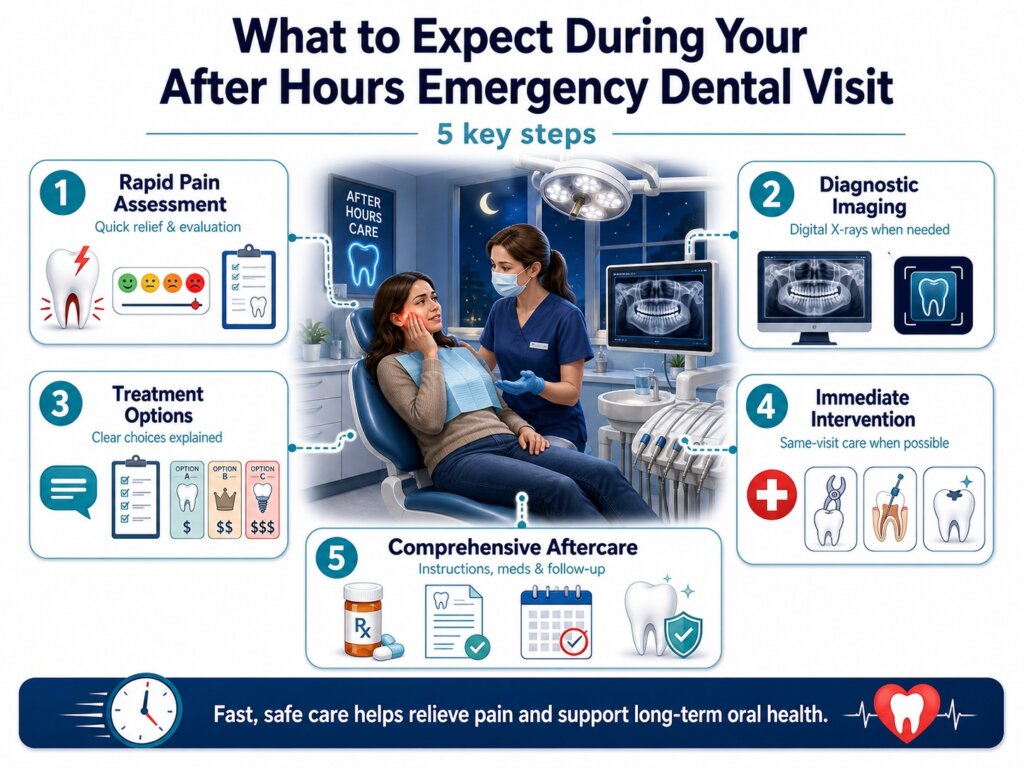
Understanding the emergency dental care process helps reduce anxiety during an already stressful situation. Most urgent dental visits follow a systematic approach designed to provide quick pain relief while addressing the underlying problem. Our team prioritizes immediate comfort while maintaining thorough diagnostic standards.
Emergency appointments typically move faster than routine visits, but we never compromise on safety or quality of care.
1. Rapid Pain Assessment
Our team begins with immediate pain evaluation and provides relief measures while preparing for examination. This approach ensures your comfort throughout the visit.
2. Diagnostic Imaging When Needed
Digital X-rays help identify hidden problems like infections, fractures, or impacted teeth. Our modern equipment provides clear images within minutes.
3. Clear Treatment Options
We explain all available treatments in plain language, including costs and expected outcomes. You’ll understand exactly what each option involves before making decisions.
4. Immediate Intervention
When possible, we provide same-visit treatment including extractions, root canal therapy, or temporary restorations. This approach minimizes return visits and ongoing discomfort.
5. Comprehensive Aftercare
Written instructions, prescription medications when needed, and clear follow-up plans ensure proper healing and prevent complications.
Our goal is to resolve your emergency completely while setting you up for successful long-term oral health.
Preparing for Emergency Dental Care: What to Bring
Being prepared for dental emergencies reduces stress and speeds up your treatment process. Having essential items readily available means you can focus on getting the care you need rather than searching for important documents. We recommend keeping these items easily accessible, especially if you have ongoing dental issues or participate in high-risk activities.
Proper preparation also helps our team provide more accurate diagnoses and appropriate treatment recommendations.
1. Government-Issued Photo ID
Valid identification is required for all dental procedures and prescription medications. Keep your driver’s license or state ID easily accessible.
2. Current Insurance Information
Bring your dental insurance card if you have coverage. We accept most plans and can verify benefits quickly to minimize out-of-pocket costs.
3. Complete Medication List
Include all prescription medications, supplements, and over-the-counter drugs you’re currently taking. This information prevents dangerous drug interactions and helps guide treatment decisions.
4. Known Allergies Documentation
List any known allergies to medications, latex, or other substances. This critical safety information guides our choice of anesthetics and treatment materials.
5. Recent Dental Records
Previous X-rays, treatment notes, or dental appliances provide valuable context for your current condition. Bring any relevant dental history when available.
6. Emergency Contact Information
Provide contact details for someone who can assist you after treatment, especially if you receive sedation or pain medications that affect driving ability.
Arriving prepared allows our team to focus immediately on addressing your pain and dental emergency.
Pediatric Emergency Dental Care After Hours
Children experience dental emergencies differently than adults, requiring specialized approaches to both treatment and communication. Common pediatric dental emergencies include knocked-out teeth from falls or sports, severe toothaches from untreated cavities, and orthodontic injuries. Our team provides gentle, age-appropriate care that helps children feel safe and comfortable during stressful situations.
Parents play a crucial role in managing pediatric dental emergencies by staying calm and providing reassurance while seeking appropriate care.
When searching for a pediatric dentist near me for emergency situations, choose providers experienced in treating children’s unique needs.
1. Knocked-Out Baby Teeth
Unlike permanent teeth, baby teeth should not be replanted. Focus on controlling bleeding and comforting your child while seeking professional evaluation.
2. Permanent Tooth Trauma
Handle permanent teeth by the crown only, rinse gently if dirty, and attempt to reinsert if possible. If reinsertion isn’t feasible, store the tooth in milk or the child’s saliva.
3. Severe Toothache Management
Use age-appropriate pain relief and gentle salt water rinses. Avoid placing aspirin directly on gums, which can cause chemical burns in children.
4. Orthodontic Emergencies
Broken braces or protruding wires can cause injury to soft tissues. Cover sharp edges with orthodontic wax and seek prompt professional adjustment.
5. Facial Trauma Assessment
Children who suffer facial injuries need evaluation for potential jaw fractures or tooth damage that may not be immediately visible.
Emergency Dental San Francisco provides compassionate pediatric emergency care with techniques designed to minimize fear and discomfort for young patients.
Prevention Strategies for Dental Emergencies
While not all dental emergencies can be prevented, many common urgent situations result from preventable causes. Regular dental checkups identify problems before they become emergencies, and protective measures reduce injury risks during sports and other activities. Understanding prevention strategies helps you avoid painful and expensive emergency situations.
Simple daily habits and safety measures significantly reduce your risk of experiencing dental emergencies.
1. Maintain Regular Dental Checkups
Routine examinations catch problems like cavities and gum disease before they progress to emergency situations. Early intervention prevents pain and more complex treatments.
2. Use Protective Mouthguards
Custom mouthguards protect teeth during sports and can prevent nighttime grinding damage. We provide properly fitted guards that offer superior protection compared to store-bought options.
3. Avoid Using Teeth as Tools
Never use your teeth to open packages, crack nuts, or hold objects. These habits frequently cause chips, cracks, and other damage requiring emergency repair.
4. Address Grinding and Clenching
Nighttime teeth grinding can cause severe damage over time. Professional evaluation and treatment prevent fractures and excessive wear that lead to emergencies.
5. Practice Good Oral Hygiene
Daily brushing and flossing prevent infections that can develop into painful abscesses requiring urgent treatment.
Investing in prevention saves money, pain, and inconvenience compared to treating dental emergencies after they occur.
Insurance and Payment Options for Emergency Dental Care
Financial concerns shouldn’t prevent you from seeking necessary emergency dental treatment. Understanding your payment options before emergencies occur helps you make informed decisions about care without the stress of financial uncertainty. Emergency Dental San Francisco works with patients to make urgent care accessible regardless of insurance status.
Many people avoid emergency dental care due to cost concerns, but delaying treatment often leads to more expensive and complex procedures later.
| Payment Option | Best For | Key Benefits |
|---|---|---|
| Dental Insurance | Covered patients | Reduced out-of-pocket costs |
| Financing Plans | Qualified applicants | Manageable monthly payments |
| Cash Payment | Uninsured patients | Often includes prompt pay discounts |
| Credit Cards | Immediate payment needs | Flexible repayment options |
Our financial team works with each patient to find payment solutions that fit their specific situation and needs.
Conclusion
Nighttime dental emergencies require prompt, professional attention to prevent complications and provide lasting relief. Emergency Dental San Francisco offers comprehensive 24/7 urgent care throughout the Bay Area with transparent pricing and compassionate treatment. Don’t let dental pain control your life – call 415-230-2783 for immediate assistance when tooth pain strikes at any hour.
When tooth pain strikes at night, Emergency Dental San Francisco provides 24/7 after-hours emergency care for immediate relief. Our licensed clinicians prioritize fast pain management and clear treatment plans. Call 415-230-2783 to get started.
FAQs
Can I Go to the ER for a Dental Emergency After Hours?
Yes—go to the ER for trouble breathing or swallowing, uncontrolled bleeding, facial swelling affecting your eye or airway, high fever, or serious trauma. For most urgent dental problems (toothache, abscess, broken tooth), an after-hours emergency dentist can usually treat the cause faster and more directly; Emergency Dental San Francisco offers same-day and after-hours care—call 415-230-2783.
What Counts as a Dental Emergency That Needs Immediate Care?
Severe tooth pain, facial swelling, an abscess or pus, a knocked-out or loose tooth, a broken/cracked tooth with pain, uncontrolled bleeding, or signs of infection (fever, spreading swelling) should be treated promptly to prevent complications.
How Much Does an After-Hours Emergency Dentist Cost?
Costs vary by the exam, X-rays, and needed treatment, but we aim to keep emergency care clear and affordable. Emergency Dental San Francisco accepts most insurance, offers financing for those who qualify, and welcomes cash and major credit cards—call for a quick estimate based on your symptoms.
What Should I Do If I Have a Toothache at Night?
Rinse with warm salt water, take OTC pain relief as directed (avoid aspirin on the gums), use a cold compress for swelling, and keep your head elevated. If pain is severe, swelling is present, or you suspect infection, contact an after-hours dentist right away—our team is available 24/7 by phone at 415-230-2783.
How Can I Find an Emergency Dentist Open Now Near Me?
Look for an urgent-care dental practice that offers after-hours/weekend availability, clear pricing, and same-day appointments, then call to confirm they can see you now. If you’re in San Francisco or the Bay Area, Emergency Dental San Francisco offers walk-ins and same-day care—call 415-230-2783 or book online.

Emergency Dental San Francisco is a dental office focused on providing same-day dental appointments to patients in San Francisco and the surrounding area. We provide urgent dental care services during weekends, evenings and holidays.
We accept several forms of payment and have financing options available to those who qualify. We accept most dental insurance.