

10 Apr Emergency Dental Care: Which Symptoms Need Same-Day Treatment and Which Can Safely Wait?
Emergency dental care addresses urgent oral health situations that require immediate professional attention to prevent serious complications. These situations typically involve severe pain, uncontrolled bleeding, trauma to teeth or facial bones, or infections that could compromise your airway or overall health.
Understanding when your dental situation qualifies as a true emergency can help you decide whether to seek immediate care. This guide will help you identify emergency situations, understand what to expect from urgent dental treatment, and know when to call for same-day care versus visiting a hospital emergency room.
Key Takeaways
- Emergency dental care treats life-threatening conditions, severe pain, and trauma requiring immediate attention.
- True dental emergencies include knocked-out teeth, uncontrolled bleeding, facial bone fractures, and airway-compromising infections.
- Most urgent dental situations can be treated in a dental clinic rather than a hospital emergency room.
- Quick action within the first 30 minutes significantly improves outcomes for knocked-out teeth.
- 24/7 emergency dental services provide same-day relief for severe toothaches, abscesses, and dental trauma.
- Proper preparation and knowing what to bring can streamline your emergency dental visit.
The distinction between routine dental problems and true emergencies often determines the urgency of your treatment needs.
What Qualifies as Emergency Dental Care
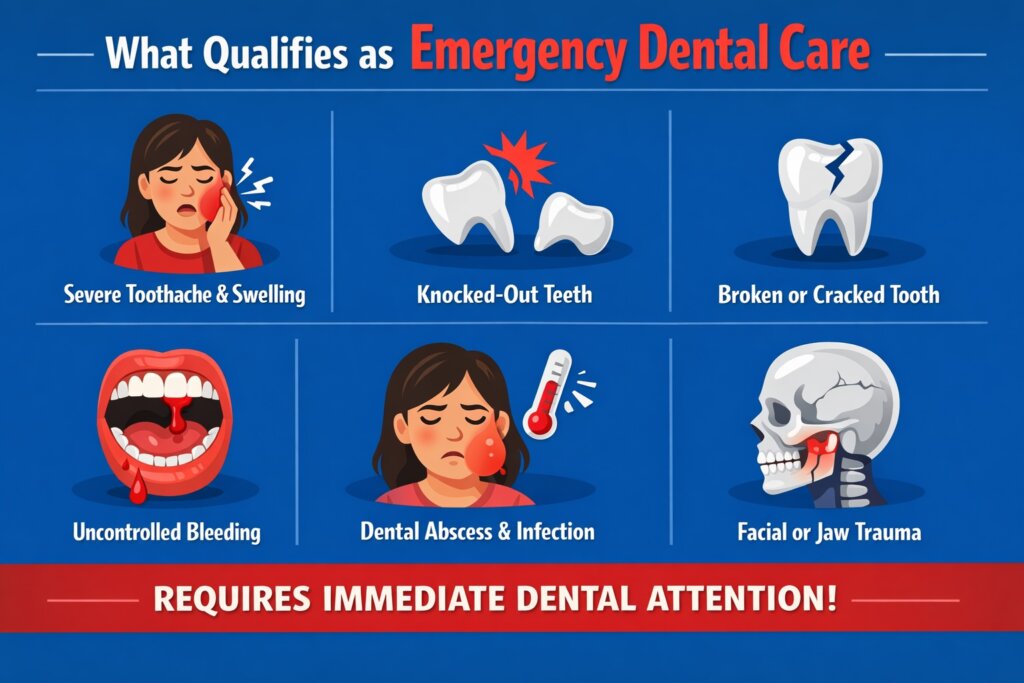
The American Dental Association defines dental emergencies as conditions that are “potentially life-threatening and require immediate treatment to stop ongoing tissue bleeding or alleviate severe pain or infection.” These situations demand prompt professional intervention to prevent complications and preserve your oral health. Emergency dental care encompasses both traumatic injuries and severe infections that cannot wait for regular office hours.
Life-threatening dental emergencies include uncontrolled bleeding from trauma or underlying health conditions. Soft-tissue infections with facial swelling that could compromise your breathing also require immediate attention.
1. Severe Toothache With Swelling
A persistent, throbbing toothache accompanied by facial swelling often indicates a serious infection or abscess. This combination of symptoms suggests bacteria have spread beyond the tooth root and may require emergency drainage and antibiotic treatment.
2. Knocked-Out or Completely Dislodged Teeth
Teeth that have been completely knocked out from trauma have the best chance of successful reimplantation if treated within 30 minutes. The supporting structures around the tooth remain viable for a limited time, making immediate care critical for saving the tooth.
3. Badly Cracked or Fractured Teeth
Deep cracks that extend below the gum line or fractures that expose the tooth’s nerve require urgent treatment. These injuries can lead to severe pain and increase the risk of infection if left untreated.
4. Uncontrolled Bleeding
Bleeding from the mouth that cannot be stopped with direct pressure may indicate trauma to major blood vessels or underlying medical conditions. This situation requires immediate professional evaluation and treatment.
5. Dental Abscesses and Facial Infections
Swelling of the face, jaw, or neck accompanied by fever indicates a spreading infection that could become life-threatening. These infections may compromise your ability to swallow or breathe if not treated promptly.
6. Trauma Involving Facial Bones
Injuries that may have fractured facial bones or damaged the jaw require immediate evaluation. These traumas can affect your bite, breathing, and overall facial structure if not properly treated.
Emergency Dental San Francisco provides immediate care for all these urgent situations with same-day appointments available 24/7. Our clinic specializes in rapid pain relief and emergency procedures that can save damaged teeth and prevent complications.
Recognizing these emergency situations helps you decide whether to seek immediate dental care or visit a hospital emergency room.
When to Seek Emergency Dental Care Immediately
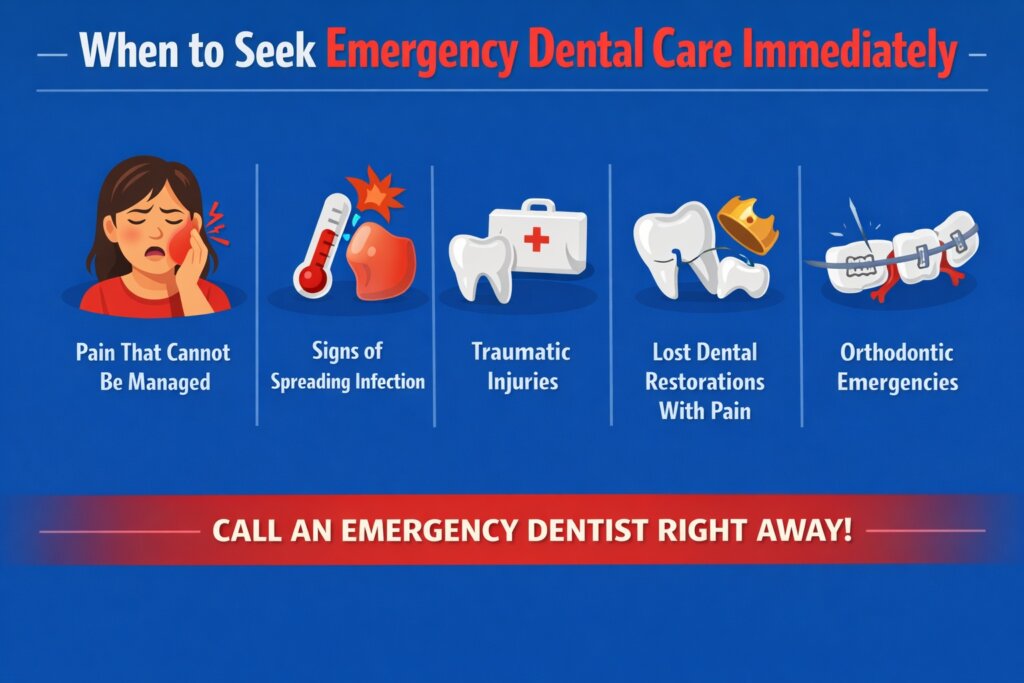
Timing plays a crucial role in emergency dental treatment outcomes, particularly for traumatic injuries and the spread of infections. Certain warning signs indicate you should seek immediate professional care rather than waiting for regular office hours. Understanding these red flags can help you make quick decisions that may save your teeth or prevent serious health complications.
Most dental emergencies benefit from prompt treatment within hours rather than days. Pain that interferes with sleep, eating, or daily activities typically requires same-day attention.
1. Pain That Cannot Be Managed
Severe dental pain that does not respond to over-the-counter pain medications indicates significant inflammation or infection. This level of discomfort often prevents normal function and requires professional pain management and treatment of the underlying cause.
2. Signs of Spreading Infection
Fever, difficulty swallowing, or swelling that extends beyond the immediate tooth area suggests an infection that could become systemic. These symptoms require immediate antibiotic therapy and possible drainage procedures.
3. Traumatic Injuries
Any dental injury resulting from accidents, sports, or falls should be evaluated promptly. Even teeth that appear undamaged may have internal injuries that worsen without treatment.
4. Lost Dental Restorations With Pain
When crowns, fillings, or other restorations fall out and cause significant pain, the exposed tooth structure may be vulnerable to further damage. Emergency replacement or temporary protection prevents complications.
5. Orthodontic Emergencies
Broken braces, loose wires, or orthodontic appliances that cause soft-tissue injury require prompt adjustment. These situations can interfere with treatment progress and cause unnecessary discomfort.
You might be wondering whether your situation truly requires emergency care or can wait for a regular appointment. When in doubt, calling an emergency dentist for guidance helps you make an informed decision about the urgency of your situation.
Emergency dental care differs significantly from routine dental treatment in both its approach and the procedures available.
Emergency Dental Care vs. Regular Dental Visits
Emergency dental care focuses on immediate pain relief, infection control, and stabilizing urgent conditions rather than comprehensive treatment planning. The primary goal is to address the immediate problem and prevent complications, with follow-up care scheduled for complete restoration. This approach differs from regular dental visits, which emphasize prevention, routine maintenance, and elective procedures.
Regular dental appointments allow time for thorough examinations, detailed treatment planning, and multiple options discussion. Emergency visits prioritize rapid assessment and immediate intervention to resolve urgent problems.
1. Treatment Approach and Goals
Emergency dental care prioritizes stopping pain, controlling bleeding, and preventing infection spread. Regular dental care focuses on prevention, early detection of problems, and comprehensive treatment planning with multiple appointment options.
2. Available Procedures
Emergency clinics offer urgent extractions, emergency root canals, temporary restorations, and infection drainage. Routine dental offices provide comprehensive exams, cleanings, elective procedures, and cosmetic treatments with extended appointment times.
3. Appointment Scheduling
Emergency dental services operate 24/7 with same-day appointments and walk-in availability. Regular dental practices typically schedule appointments weeks in advance during standard business hours.
4. Cost and Insurance Coverage
Emergency dental treatment often costs more due to after-hours availability and urgent nature of care. Many insurance plans cover emergency procedures but may have different copayments or deductibles compared to routine care.
5. Follow-up Care Requirements
Emergency treatment usually requires follow-up appointments for permanent restorations or continued monitoring. Regular dental care includes ongoing maintenance schedules and preventive care recommendations.
Our clinic bridges the gap between emergency relief and comprehensive care by providing immediate treatment and coordinating follow-up care with your regular dentist when needed.
Understanding what to expect during an emergency dental visit helps reduce anxiety and ensures you receive appropriate care.
What to Expect During Emergency Dental Care
Emergency dental visits follow a streamlined process designed to quickly assess your condition, provide immediate relief, and stabilize urgent problems. The visit typically begins with rapid triage to determine the severity of your situation and prioritize treatment needs. Pain control often takes precedence, followed by diagnostic procedures and definitive treatment or temporary stabilization.
Most emergency dental appointments last 30 to 90 minutes, depending on the complexity of your condition and required procedures. The focus remains on resolving immediate problems rather than comprehensive treatment planning.
1. Initial Triage and Pain Assessment
The dental team will quickly evaluate your pain level, symptoms, and medical history to prioritize your treatment needs. This rapid assessment helps determine whether you require immediate intervention or can wait briefly for more thorough evaluation.
2. Diagnostic Procedures
Emergency X-rays and clinical examination help identify the source of your problem and determine appropriate treatment options. Digital imaging provides immediate results, allowing for quick diagnosis and treatment planning.
3. Pain Management and Stabilization
Local anesthesia and appropriate medications provide immediate pain relief while the underlying problem is addressed. Temporary measures may be used to stabilize your condition until comprehensive treatment can be completed.
4. Treatment Options Discussion
The dentist will explain available treatment options, expected outcomes, and associated costs in clear, understandable terms. Emergency situations may limit options, but you will understand the recommended approach and alternatives.
5. Immediate Treatment or Temporary Relief
Depending on your condition, you may receive definitive treatment such as extraction or emergency root canal, or temporary measures to control pain and prevent complications until comprehensive care can be provided.
6. Aftercare Instructions and Follow-up Planning
Clear written instructions for home care, prescription medications, and follow-up appointments ensure proper healing and prevent complications. You will know what to expect during recovery and when to seek additional care.
Emergency Dental San Francisco follows strict infection control protocols and uses modern equipment to ensure safe, hygienic treatment even during urgent situations. Our licensed clinicians provide professional care with transparent communication about your treatment options and expected outcomes.
Knowing when to visit an emergency dental clinic versus a hospital emergency room can save valuable time and ensure appropriate care.
Preparing for Your Emergency Dental Visit
Proper preparation for an emergency dental visit can significantly improve your treatment experience and outcomes, even when you are dealing with severe pain or trauma. Gathering essential information and items before your visit helps the dental team provide more efficient and effective care. Taking appropriate first aid measures can also help preserve damaged teeth and reduce complications.
Most emergency dental clinics can provide better care when you arrive with relevant medical information and any damaged tooth fragments. Simple preparation steps can make a significant difference in your treatment success.
1. Gather Essential Documents
Bring a government-issued photo ID, your dental insurance card if available, and a list of current medications including dosages and allergies. Having recent dental X-rays or records from your regular dentist can help speed diagnosis and treatment planning.
2. Preserve Damaged Teeth or Restorations
For knocked-out teeth, handle them by the crown only, rinse gently, and keep them moist in milk or between your cheek and gum. Save any broken tooth fragments or dental restorations in a clean container to bring with you.
3. Manage Pain and Swelling
Use over-the-counter pain medications as directed and apply cold compresses to reduce swelling, but avoid placing aspirin directly on your gums. Warm salt water rinses can help with minor bleeding and discomfort.
4. Prepare for Payment
Emergency dental treatment often requires immediate payment, so bring your insurance information, credit cards, or cash. Many clinics offer financing options, but having payment methods available prevents delays in treatment.
5. Arrange Transportation
Some emergency dental procedures may require sedation or strong pain medications that impair your ability to drive safely. Having someone available to drive you home ensures your safety after treatment.
6. Document Your Symptoms
Write down when your symptoms started, what triggered them, and what makes them better or worse. This information helps the dental team understand your condition and provide appropriate treatment.
You might be wondering about insurance coverage and payment options for emergency dental care. Most dental insurance plans cover emergency procedures, and many clinics offer financing options to make urgent care accessible regardless of your insurance status.
Conclusion
Emergency dental care provides immediate relief for severe pain, trauma, and infections that cannot wait for regular dental appointments. Recognizing true dental emergencies and seeking prompt professional treatment can save teeth, prevent complications, and restore your comfort quickly. When dental emergencies strike, specialized emergency dental clinics offer the expertise, equipment, and availability needed for effective urgent care.
Emergency Dental San Francisco provides same-day emergency care for severe toothaches, abscesses, and dental trauma. Our urgent-care practice offers immediate pain relief with compassionate, professional treatment. Learn more about when to seek emergency dental care.
FAQs
What Is Considered a Dental Emergency?
A dental emergency is any mouth or tooth problem that needs prompt care to stop severe pain, control bleeding, or prevent infection or permanent damage—such as a severe toothache, facial swelling, abscess, knocked-out tooth, broken/cracked tooth, or uncontrolled bleeding. If you’re unsure, call us 24/7 at 415-230-2783 and we’ll help you decide next steps.
When Should I Go to the ER for a Dental Problem?
Go to the ER (or call 911) if you have trouble breathing or swallowing, rapid facial/neck swelling, high fever with worsening swelling, uncontrolled bleeding, or signs of a serious infection spreading. For most urgent dental issues (toothaches, abscesses, broken teeth, lost fillings/crowns), an emergency dentist can treat the cause and provide same-day relief.
What Does Emergency Dental Care Include?
Emergency dental care typically includes an exam, needed X-rays, diagnosis, and same-day treatment to relieve pain and stabilize the problem—such as infection treatment, draining an abscess when appropriate, temporary or definitive restorations, splinting a loose tooth, or tooth extraction when necessary—plus clear aftercare and follow-up planning.
How Much Does Emergency Dental Care Cost?
Cost depends on the exam, imaging, and the treatment needed (for example, medication, a filling, drainage, root canal, or extraction). We explain options and pricing before treatment whenever possible, accept most dental insurance plans, and offer financing options for those who qualify.
Can I Get Emergency Dental Care Without Insurance?
Yes. We treat patients with or without insurance, and we accept cash and all major credit cards; financing options may also be available for those who qualify. Our goal is to get you safe, effective relief quickly with transparent next steps.

Emergency Dental San Francisco is a dental office focused on providing same-day dental appointments to patients in San Francisco and the surrounding area. We provide urgent dental care services during weekends, evenings and holidays.
We accept several forms of payment and have financing options available to those who qualify. We accept most dental insurance.