

09 Sep What Classifies as a Dental Emergency? Common Examples Explained
Dental pain rarely arrives at a convenient time. It shows up on a Sunday afternoon, during a holiday dinner, or in the middle of a work week when your regular dentist is fully booked. Knowing what classifies as a dental emergency can mean the difference between saving a tooth and losing it, or in serious cases, between a manageable infection and one that spreads. The American Dental Association defines dental emergencies as conditions that are potentially life-threatening or that require immediate care to stop tissue bleeding, address infection, or relieve severe pain.
This article breaks down the most common dental emergencies, explains how to recognize them, and walks you through what to do before you reach a clinic. You will also find a comparison table, triage steps, and guidance on when to call a dentist versus when to go to an emergency room.
Key Takeaways
- A dental emergency involves severe pain, infection, trauma, or uncontrolled bleeding that needs immediate attention.
- Knocked-out adult teeth have the best chance of survival if treated within 30 minutes of the incident.
- Facial swelling with fever may signal a spreading infection that can become life-threatening without prompt care.
- Not every toothache is a dental emergency, but persistent or worsening pain should never be ignored.
- Emergency Dental San Francisco offers same-day, after-hours, weekend, and holiday urgent care across the Bay Area.
- Knowing what to do before you arrive at a dental clinic near me can protect your tooth and reduce treatment complexity.
Understanding the difference between urgent and non-urgent dental issues helps you act faster and more confidently when something goes wrong.
What Classifies as a Dental Emergency: The Core Definition
The term “dental emergency” gets used loosely, but clinically it carries a specific meaning. According to the ADA and peer-reviewed literature, a dental emergency is any condition involving pain, infection, trauma, or functional loss that poses a risk to life or requires immediate intervention to prevent serious health consequences. A scoping review published in peer-reviewed dental literature confirms that emergencies typically fall into four categories: severe pain, active infection, traumatic injury, and significant loss of function.
Some conditions are clear-cut emergencies. Others sit in a gray zone where urgency depends on how quickly symptoms are progressing.
You might be wondering where a bad toothache falls on that spectrum. A toothache alone is generally classified as urgent rather than a true emergency, according to NHS dental guidance. But if that toothache comes with swelling, fever, or difficulty swallowing, the situation escalates quickly into emergency territory.
Common Examples of What Classifies as a Dental Emergency Near a Dental Clinic
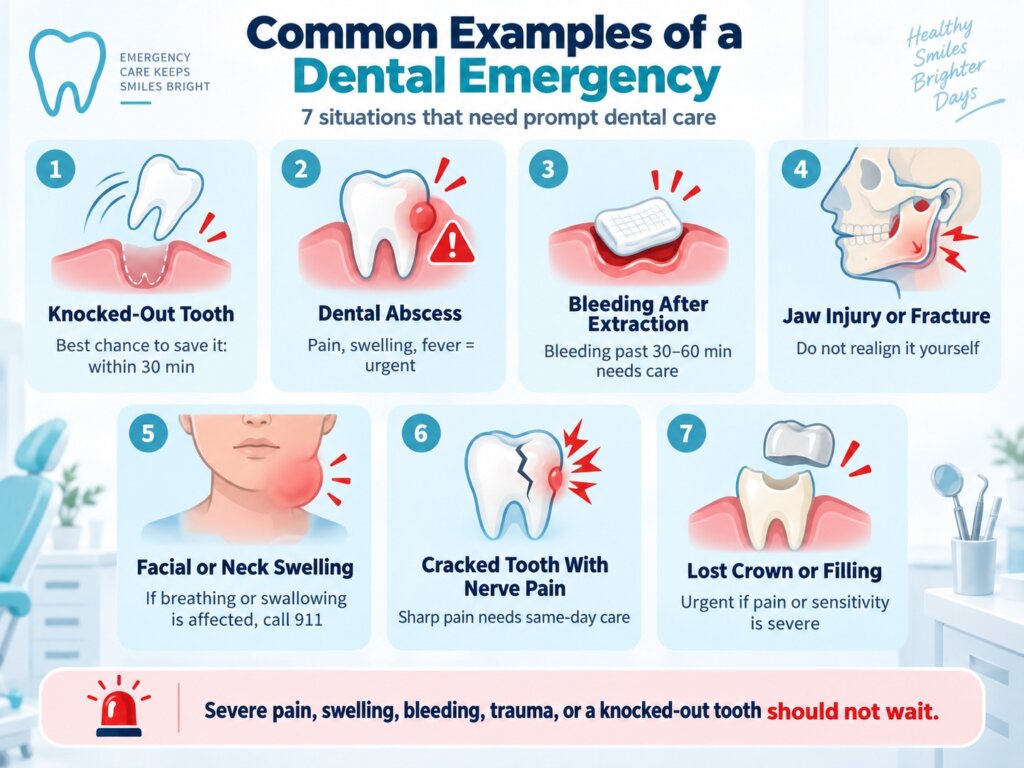
Recognizing specific scenarios helps you triage your own situation before calling for help. Below are the most frequently seen dental emergencies, along with what makes each one time-sensitive.
1. Knocked-Out Adult Tooth
An avulsed, or knocked-out, tooth is one of the clearest examples of what classifies as a dental emergency. The tooth has the best chance of being saved if you reach a dental provider within 30 minutes. Handle the tooth by the crown only, rinse it gently without scrubbing, and either reinsert it into the socket or keep it moist in milk or between your cheek and gum while you travel to the clinic.
2. Severe Dental Abscess or Spreading Infection
A dental abscess is a pocket of infection that forms at the root of a tooth or in the surrounding gum tissue. When left untreated, the infection can spread to the jaw, neck, or airway, which is when it becomes life-threatening. Signs that an abscess has moved beyond a localized problem include facial swelling, fever, difficulty opening your mouth, and pain when swallowing.
Pediatric emergency oral care policies specifically list facial cellulitis and diffuse soft-tissue infections with systemic involvement as conditions requiring immediate intervention. Adults face the same risks.
3. Uncontrolled Bleeding After Extraction
Some bleeding after a tooth extraction is expected. If bleeding continues beyond 30 to 60 minutes despite firm pressure with gauze, that crosses into emergency territory. Uncontrolled post-extraction bleeding can indicate a clotting issue or a disrupted socket, both of which need clinical evaluation right away.
4. Severe Orofacial Trauma or Jaw Fracture
Facial and jaw fractures from accidents, falls, or sports injuries are classified as serious dental emergencies that may require hospital admission. If you suspect a jaw fracture, do not attempt to realign it yourself. Immobilize the jaw as best you can and seek care immediately, either at an urgent dental clinic or an emergency room depending on the severity.
5. Significant Facial or Neck Swelling Affecting Breathing
Swelling that extends to the throat, neck, or floor of the mouth can compromise your airway. NHS guidance classifies this as a dental emergency requiring immediate care. If swelling is affecting your ability to breathe or swallow, call 911 first and then contact a dental provider.
6. Cracked or Fractured Tooth With Exposed Nerve
A cracked tooth that exposes the inner pulp causes sharp, intense pain, especially when biting or when exposed to temperature changes. This is not a situation where waiting a few days is safe. Bacteria can enter the pulp chamber quickly, leading to infection. Save any fragments, avoid chewing on that side, and get to an emergency dentist the same day.
7. Lost Crown or Filling With Acute Pain
Losing a crown or filling is not always a dental emergency on its own. It becomes urgent when the exposed tooth causes significant pain or sensitivity that interferes with eating, sleeping, or daily function. Temporary dental cement from a pharmacy can protect the area briefly, but a same-day appointment is the right move to prevent further damage.
Each of these scenarios calls for prompt action. Waiting, hoping the pain subsides, or searching for a dental clinic near me at 2 a.m. without a plan adds unnecessary risk.
Dental Emergency vs. Urgent Dental Issue: A Practical Comparison
Not every dental problem needs immediate care, but it can be hard to tell the difference when you are in pain. The table below outlines how to distinguish a true emergency from an urgent but non-emergency situation.
| Condition | Emergency | Urgent (Not Emergency) |
|---|---|---|
| Knocked-out adult tooth | Yes — act within 30 minutes | No |
| Severe toothache with fever and swelling | Yes — possible spreading infection | No |
| Toothache without swelling or fever | No | Yes — schedule same day |
| Uncontrolled bleeding after extraction | Yes | No |
| Chipped tooth, no pain | No | Yes — schedule within a few days |
| Lost crown with sharp pain | No | Yes — same-day preferred |
| Jaw fracture or facial trauma | Yes — may need ER | No |
| Swelling affecting breathing or swallowing | Yes — call 911 first | No |
This comparison is a starting point, not a substitute for clinical judgment. When in doubt, call a provider and describe your symptoms. A trained team can help you triage over the phone.
How to Handle a Dental Emergency Before You Reach the Clinic
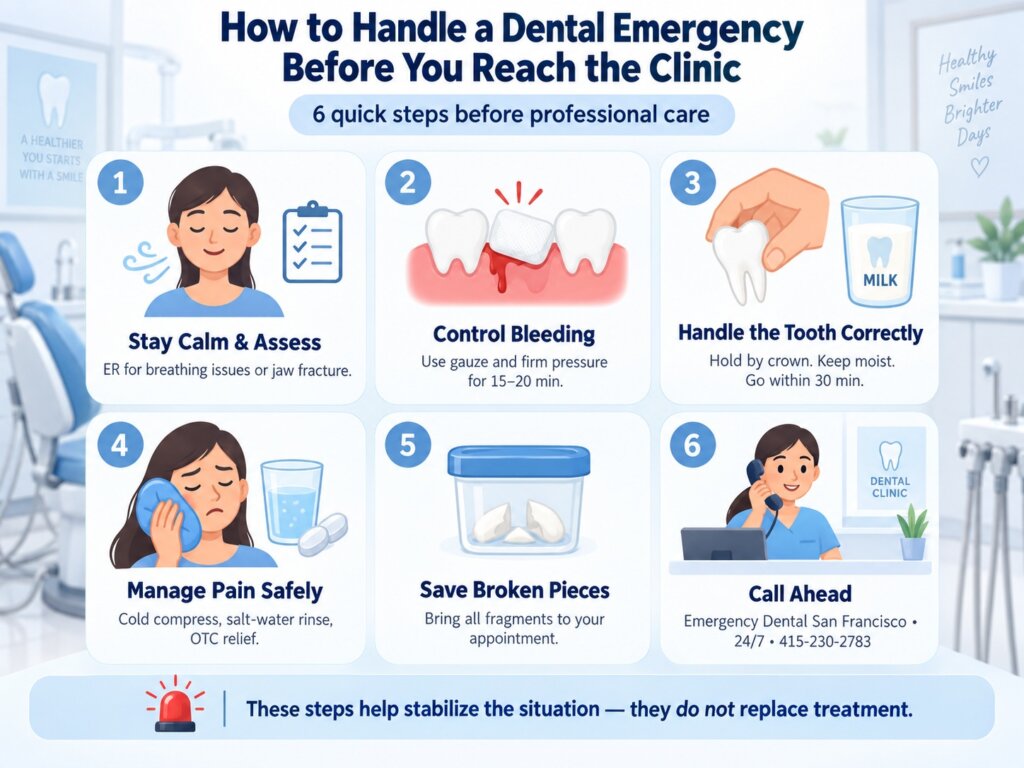
What you do in the first few minutes after a dental emergency can affect the outcome of your treatment. These steps apply to the most common situations and are meant to stabilize your condition until you receive professional care.
1. Stay Calm and Assess the Situation
Panic makes pain feel worse and clouds decision-making. Take a breath, identify your main symptom, and decide whether you need a dentist or an emergency room. Breathing difficulty or suspected jaw fracture points to the ER. Everything else points to an urgent dental clinic.
2. Control Bleeding With Gauze and Pressure
For bleeding from the mouth or socket, fold a clean piece of gauze, place it directly on the site, and apply firm pressure for 15 to 20 minutes without lifting to check. Repeat if needed. Do not rinse aggressively, as this can dislodge a clot.
3. Handle a Knocked-Out Tooth Correctly
Pick it up by the crown, not the root. Rinse gently with water if it is dirty. Try to place it back in the socket if you can do so without force. If reinsertion is not possible, keep it in a small container of milk or hold it between your cheek and gum. Get to a provider within 30 minutes for the best chance of saving the tooth.
4. Manage Pain Safely Before Your Appointment
For a severe toothache or swelling, a warm salt-water rinse may provide mild relief. A cold compress applied to the outside of your cheek can reduce swelling. Do not place aspirin directly on gum tissue, as it can cause a chemical burn. Over-the-counter pain relievers taken as directed are acceptable for temporary relief.
5. Save Broken Fragments and Bring Them With You
If a tooth has cracked or broken, save any pieces in a clean container. Bring them to your appointment. In some cases, fragments can be bonded back to the tooth, depending on the size and location of the break.
6. Call Ahead So the Clinic Can Prepare
Calling before you arrive allows the team to triage your case, prepare a treatment room, and have the right equipment ready. Emergency Dental San Francisco is available 24/7 at 415-230-2783. Same-day appointments and walk-ins are welcome, and the team can advise you over the phone while you are on your way.
These steps do not replace treatment. They reduce the window of harm and give your clinician the best starting point when you arrive.
When to Go to the ER vs. an Emergency Dentist
This is a question that comes up often, and the answer matters. Hospital emergency rooms are not equipped to perform most dental procedures. They can manage airway emergencies, stabilize facial fractures, and administer IV antibiotics for spreading infections, but they generally cannot perform extractions, root canals, or restorations.
Go to the ER if you have suspected jaw or facial fractures, swelling that is affecting your ability to breathe or swallow, uncontrolled bleeding that is not responding to pressure, or signs of a systemic toxic state such as high fever with confusion or rapid pulse.
For everything else, including severe toothaches, abscesses without airway involvement, knocked-out teeth, cracked teeth, lost crowns, and post-extraction complications, an emergency dental clinic is the right first stop. Our clinic handles all of these situations with same-day imaging, diagnosis, and treatment. If you are searching for a dental clinic near me at an unusual hour, we are open every day including holidays.
Patients who use our services also appreciate that we accept most dental insurance plans and offer financing for those who qualify. If you have MetLife dental coverage, you can verify your benefits before your visit through the MetLife dental provider login portal. We work with a wide range of carriers to make urgent care accessible, and for those without insurance, we accept cash and all major credit cards.
What to Expect During Your Emergency Dental Visit
Walking into an urgent dental appointment when you are in pain can feel overwhelming. Knowing the process ahead of time helps. Your visit typically follows this sequence.
- Triage and pain control come first. The team assesses your symptoms and takes steps to manage your discomfort before anything else.
- Diagnostic imaging, including X-rays, helps identify the source and extent of the problem.
- Your clinician explains the findings in plain language and presents treatment options with a cost estimate before proceeding.
- Treatment is performed the same day when clinically appropriate. This may include an extraction, root canal therapy, abscess drainage, temporary restoration, or repair of a broken tooth.
- You leave with written aftercare instructions, any necessary prescriptions, and a follow-up plan.
Watch for warning signs after your visit. Rising pain or swelling, fever, or bleeding that does not slow down are reasons to call back immediately. Our team remains available after your appointment to answer questions and address complications.
Conclusion
Knowing what classifies as a dental emergency gives you the clarity to act quickly when it counts. Emergency Dental San Francisco provides same-day, after-hours, and weekend urgent care across San Francisco and the greater Bay Area. Call 415-230-2783 or book an appointment online to get the relief and answers you need, without delay.
Emergency Dental San Francisco specializes in same-day urgent dental care for toothaches, abscesses, and cracked teeth. We provide fast, compassionate relief any day, including weekends and holidays. Call 415-230-2783 or book online—get started today.
FAQs
What Is Considered a Dental Emergency?
A dental emergency is any mouth or tooth problem that needs urgent care to stop severe pain, control bleeding, treat infection, or prevent permanent damage—such as intense toothache, swelling/abscess, a knocked-out or loose tooth, a broken tooth with pain, or facial swelling. If you’re unsure, call 415-230-2783 for guidance and same-day care.
When Should You Go to the ER for a Dental Problem?
Go to the ER (or call 911) for trouble breathing or swallowing, rapidly spreading facial/neck swelling, uncontrolled bleeding, high fever with severe swelling, signs of an allergic reaction, or major facial/jaw trauma. For most dental pain, broken teeth, and abscesses without airway issues, an urgent dental visit is usually the fastest way to get targeted relief.
What Dental Issues Are Not Emergencies?
Issues that can typically wait a short time include minor chips without pain, a lost filling or crown with little sensitivity, mild tooth sensitivity, a small canker sore, or a dull ache without swelling or fever. If symptoms worsen, pain becomes severe, or swelling develops, it may become an emergency—call us anytime for triage.
How Do You Know If a Toothache Is an Emergency?
A toothache is more likely an emergency if it’s severe or worsening, wakes you up, doesn’t improve with over-the-counter pain relief, or comes with swelling, pus/bad taste, fever, a cracked tooth, or pain when biting. These can signal infection or nerve involvement and should be evaluated promptly.
What Should I Do If I Have a Broken or Knocked-Out Tooth?
For a broken tooth, rinse gently, save any pieces, apply a cold compress, and avoid chewing on that side—then seek same-day care. For a knocked-out adult tooth, hold it by the crown (not the root), rinse briefly if dirty, place it back in the socket if possible or store it in milk/saline, and get urgent dental care immediately—time matters for saving the tooth.

Emergency Dental San Francisco is a dental office focused on providing same-day dental appointments to patients in San Francisco and the surrounding area. We provide urgent dental care services during weekends, evenings and holidays.
We accept several forms of payment and have financing options available to those who qualify. We accept most dental insurance.