

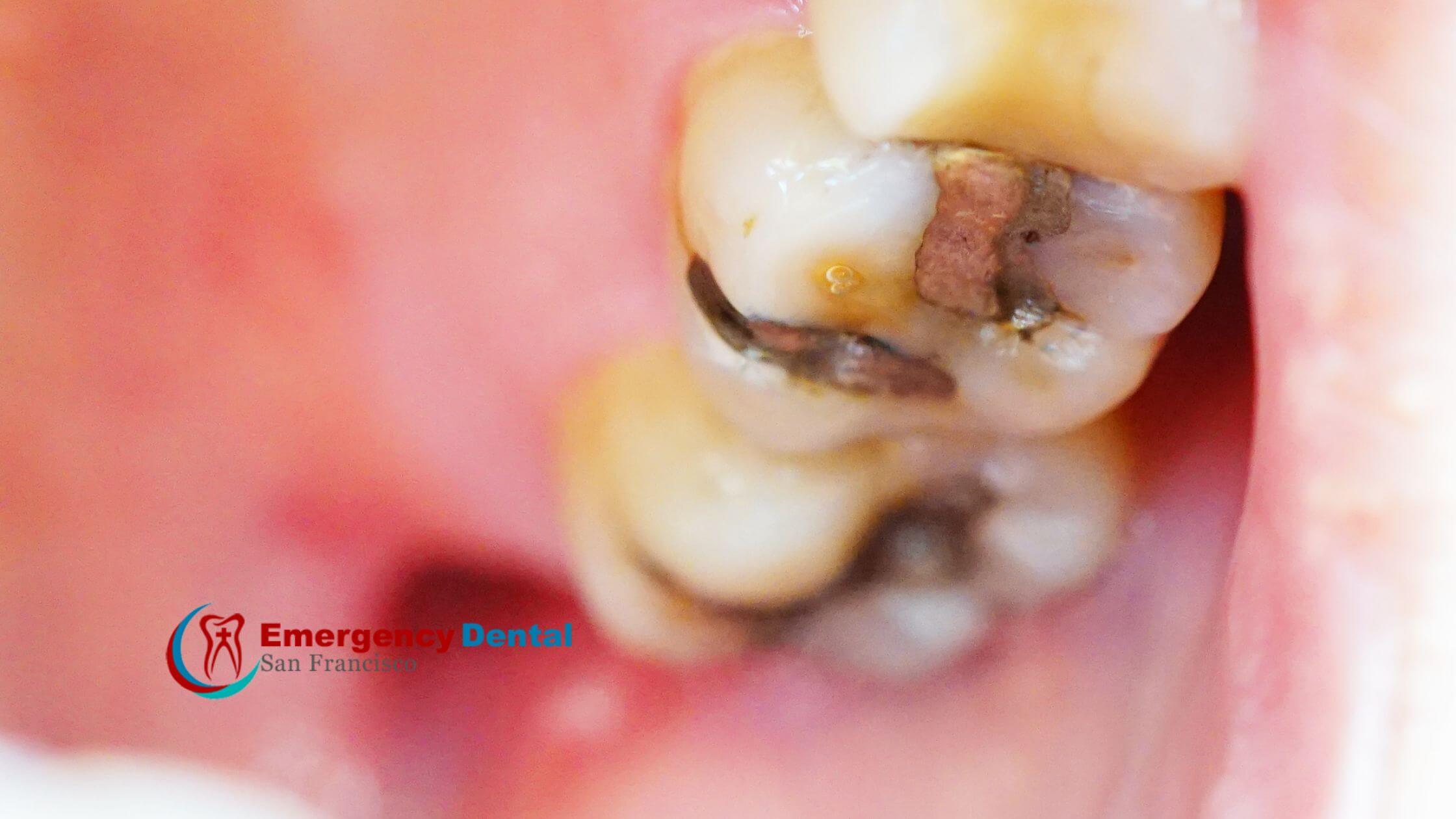
09 Jul Is a Filling Falling Out a Dental Emergency?
You bite into something and feel that familiar, unsettling shift. Something is off. You run your tongue across your tooth and realize your filling is gone. It happens more often than most people expect, and the first question that comes to mind is usually some version of: is a filling falling out a dental emergency?
This article walks you through what a lost filling actually means for your tooth, which symptoms signal something more serious, and what steps you can take right now. You will also learn when to seek same-day care, how to manage discomfort at home, and how to know if you need a root canal rather than a simple replacement.
Key Takeaways
- A lost filling is usually urgent but not always a true dental emergency.
- Severe pain, swelling, or fever after losing a filling means you need same-day care.
- Exposed tooth structure can decay quickly without a protective covering.
- Temporary filling material can help manage sensitivity until you are seen.
- A dentist needs to evaluate the tooth to rule out deeper decay or fracture.
- Knowing how to tell if you need a root canal can help you act faster.
Understanding where your situation falls on the urgency scale is the first step toward protecting your tooth and ending any discomfort.
Is a Filling Falling Out a Dental Emergency? Here Is the Honest Answer

The short answer is: it depends on what else is happening. A filling that falls out without pain or swelling is generally considered urgent rather than a full dental emergency. That said, the tooth is now exposed and vulnerable, and leaving it untreated for days or weeks can lead to faster decay, increased sensitivity, or even a fracture.
If you are wondering whether a dental filling can fall out on its own, the answer is yes. Fillings fail over time due to normal wear, biting forces, recurrent decay forming underneath, or a small crack in the tooth or the restoration itself. None of these causes are unusual, and none of them mean you did something wrong.
What matters most right now is the symptoms you are experiencing alongside the lost filling.
No Pain, Mild Sensitivity
If the tooth feels a little sensitive to air or temperature but you are not in significant pain, this is the least urgent scenario. The exposed dentin is reacting to stimulation, which is expected. You can use over-the-counter temporary filling material from a pharmacy and call for a same-day or next-day appointment.
Sharp or Throbbing Pain
Ongoing or intense pain after losing a filling is a sign that the pulp inside the tooth may be irritated or affected. This level of discomfort warrants prompt evaluation. Do cavity fillings hurt this much normally? Not usually. Persistent or escalating pain is a signal that something deeper may be going on.
Swelling Near the Tooth or Gum
Swelling alongside a lost filling suggests possible infection. This moves the situation into emergency territory. Dental infections can spread, and swelling with fever should never be left unaddressed overnight or over a weekend.
Fever and General Discomfort
A fever combined with a lost filling and tooth pain points toward a possible abscess or spreading infection. This requires same-day urgent dental care. Do not wait to see if it improves on its own.
Visible Crack or Broken Tooth Structure
Sometimes a filling falls out because the tooth underneath has fractured. If you can see or feel jagged edges, or if the tooth looks broken, the situation is more complex than a simple lost restoration. A dentist will need X-rays to assess the full extent of the damage.
Pain When Biting or Chewing
If biting down causes a sharp, shooting pain, the nerve may be involved. This symptom, combined with a lost filling, often prompts a dentist to evaluate whether a root canal is needed rather than just a new filling.
No Symptoms at All
Some people lose a filling and feel nothing. This can happen if the filling was small or if the tooth had a previous root canal and no longer has a live nerve. Even without symptoms, the tooth still needs to be evaluated and restored to prevent decay from progressing.
Can a Dental Filling Fall Out and Cause Long-Term Damage If Ignored?
Yes, and this is where people sometimes underestimate the situation. A tooth without a filling is an open space where bacteria, food, and moisture can collect. The National Institute of Dental and Craniofacial Research notes that untreated decay continues to progress, moving deeper into the tooth structure over time.
The longer a lost filling goes untreated, the more likely the tooth is to develop new decay, structural weakness, or pulp involvement. What might have been a straightforward filling replacement can become a more involved procedure if ignored for weeks.
This is especially true if the original cavity was deep to begin with. Deeper fillings sit closer to the pulp, and an exposed tooth in that situation is at higher risk of sensitivity and nerve irritation.
| Symptom After Lost Filling | Urgency Level | Recommended Action |
|---|---|---|
| No pain, mild air sensitivity | Routine urgent | Temporary filling, call for appointment within 1-2 days |
| Moderate pain or cold sensitivity | Urgent | Same-day evaluation recommended |
| Severe or throbbing pain | Emergency | Call for immediate same-day care |
| Swelling or visible gum changes | Emergency | Seek care today, possible infection |
| Fever with dental pain | Emergency | Immediate urgent dental visit required |
| Broken tooth under filling | Emergency | Same-day X-ray and evaluation needed |
The table above gives you a quick reference, but when in doubt, calling a dental professional to describe your symptoms is always the right move.
Does a Tooth Filling Hurt, and How to Know If You Need a Root Canal

One of the most common questions people have after losing a filling is whether their pain level is normal or a warning sign. Does a tooth filling hurt after it falls out? Some sensitivity is expected because the dentin layer is now exposed. But there is a difference between mild sensitivity and pain that lingers, worsens, or wakes you up at night.
Knowing how to tell if you need a root canal can save you time and prevent a more serious outcome. Here are the signs that suggest the tooth may need more than a new filling.
- Pain that persists for more than a few seconds after exposure to hot or cold
- Spontaneous pain that occurs without any trigger
- Swelling or a small pimple-like bump on the gum near the tooth
- Darkening of the tooth compared to surrounding teeth
- Deep aching that radiates to the jaw or ear
- Significant pain when biting or applying any pressure to the tooth
These symptoms suggest pulp inflammation or infection, which a dentist will assess through an exam and X-rays. A root canal removes the affected pulp tissue, relieves the pain, and preserves the tooth structure. It sounds intimidating, but the procedure itself is typically no more uncomfortable than getting a filling placed.
If you are in the San Francisco Bay Area and experiencing any of these symptoms after losing a filling, Emergency Dental San Francisco offers same-day urgent exams and X-rays for exactly this kind of situation. You can call 415-230-2783 or book an appointment online. The team triage your symptoms, explains your options clearly, and provides treatment the same day whenever possible.
What to Do Right Now If Your Filling Just Fell Out
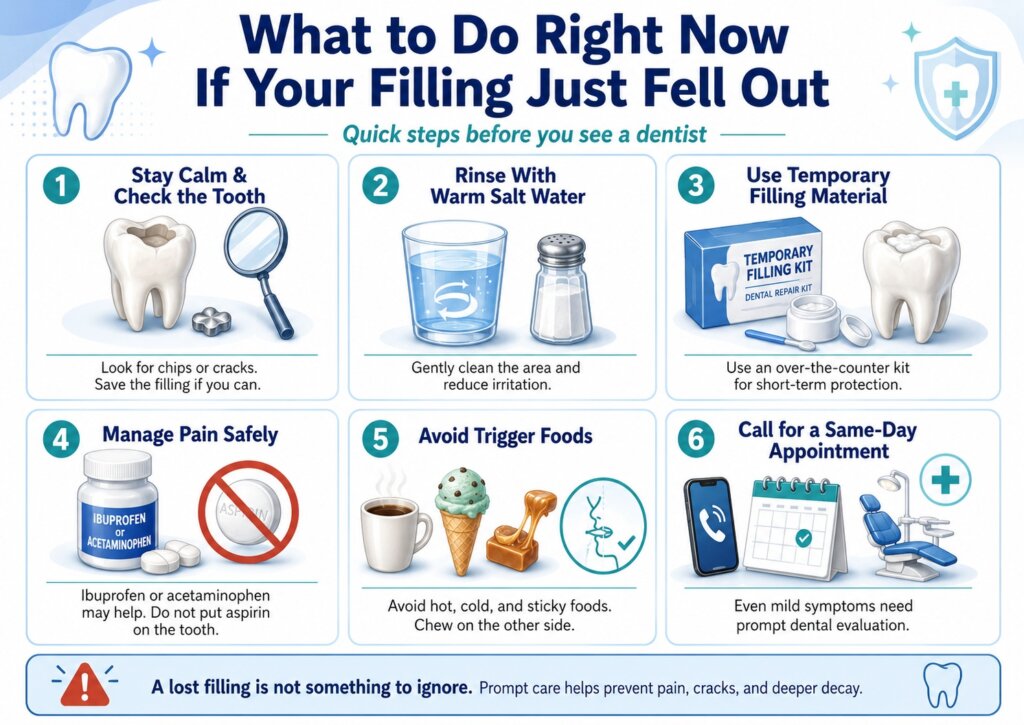
Acting quickly and calmly is the best approach. Here is a practical step-by-step guide to managing a lost filling before you are seen by a dentist.
1. Stay Calm and Check the Tooth
Look at the tooth in a mirror if you can. Note whether the tooth looks chipped or broken, and check whether the filling came out in one piece. Save it if possible, though it typically cannot be reused.
2. Rinse Gently With Warm Salt Water
A warm salt water rinse helps clean the area and reduce irritation. Use about half a teaspoon of salt in a cup of warm water and rinse gently. Do not swish aggressively if the area is sore.
3. Apply Temporary Filling Material
Pharmacies carry over-the-counter temporary filling kits. These are not a permanent fix, but they can protect the exposed tooth surface and reduce sensitivity until your appointment. Follow the package instructions carefully.
4. Manage Pain With Over-the-Counter Medication
Ibuprofen or acetaminophen may help manage discomfort. Do not place aspirin directly on the gum or tooth, as this can irritate the tissue and cause additional problems.
3. Avoid Certain Foods and Temperatures
Stay away from very hot, very cold, or sticky foods until the tooth is restored. Chewing on the opposite side of your mouth can also reduce discomfort and prevent further damage.
6. Call for a Same-Day Appointment
Even if your symptoms are mild, the tooth needs professional evaluation. Do not wait weeks hoping it will resolve on its own. A dentist can assess the extent of any underlying decay, check for fractures, and determine whether a new filling, crown, or root canal is the right next step.
When a Lost Filling Becomes a True Dental Emergency
Most lost fillings fall into the urgent category rather than a full emergency. But some situations require immediate care, and recognizing them matters.
You should seek same-day emergency dental care if you experience any of the following alongside a lost filling.
- Swelling of the face, jaw, or gum that is visibly spreading
- Fever above 101 degrees Fahrenheit
- Difficulty swallowing or breathing
- Uncontrolled or persistent bleeding from the tooth area
- Severe pain that does not respond to over-the-counter pain relief
- A visibly cracked or broken tooth beneath the filling
Swelling with fever is the most serious combination. It can indicate an abscess, which is a pocket of infection that may spread to surrounding tissue if not treated. This is not a situation to manage at home or wait out over a weekend.
Our clinic is open every day, including weekends and holidays, specifically for situations like this. Emergency Dental San Francisco serves patients across San Francisco, Oakland, Berkeley, Daly City, Fremont, Alameda, and San Leandro. Walk-ins are welcome, and same-day appointments are available. Call 415-230-2783 any time, day or night.
What to Expect at Your Appointment
Knowing what happens at the visit can reduce anxiety, especially if you are already in pain. When you come in, the process is straightforward and focused on your comfort first.
The team starts with triage and pain control. From there, an exam and X-rays help identify exactly what is happening with the tooth. You will receive a clear explanation of your options, whether that is a new filling, a crown, a root canal, or temporary relief while a longer-term plan is arranged. Treatment happens the same day in most cases, and you leave with written aftercare instructions and a follow-up plan.
We accept most dental insurance plans and offer financing for qualified patients. For those without insurance, we accept cash and all major credit cards. Up-front estimates are provided so you know what to expect before any treatment begins.
Final Thoughts on Lost Fillings and When to Act
A lost filling is not always a full emergency, but it is always worth addressing promptly. The exposed tooth is at risk, and waiting too long can turn a manageable situation into a more complex one. Pay attention to your symptoms, use temporary measures to protect the tooth, and get evaluated as soon as possible. If pain, swelling, or fever are part of the picture, do not wait. Same-day care is available, and getting seen quickly is the most straightforward way to protect your tooth and end your discomfort.
Emergency Dental San Francisco specializes in same-day emergency dental care to relieve pain fast. We treat fallen fillings, cracks, and more—same day, evenings, and weekends. Call 415-230-2783 or book online to get started.
FAQs
Is It an Emergency if a Filling Falls Out?
It can be—especially if you have severe pain, swelling, bleeding, a cracked tooth, or sensitivity that makes it hard to eat or sleep. Even without major symptoms, a lost filling should be treated promptly to prevent infection or further tooth damage; Emergency Dental San Francisco can often see you same-day.
What Should I Do Immediately if My Filling Falls Out?
Rinse gently with warm salt water, avoid chewing on that side, and keep the area clean. If it’s sharp, cover it with dental wax (or sugar-free gum in a pinch), and use over-the-counter pain relief as directed. Call Emergency Dental San Francisco at 415-230-2783 for guidance and a same-day plan.
How Long Can I Wait to See a Dentist After a Filling Falls Out?
Ideally, be seen within 24–48 hours, sooner if you have pain or sensitivity. Waiting increases the risk of decay, fracture, or infection, and the tooth may become harder to restore.
Can I Leave a Lost Filling Untreated?
No—leaving it untreated can allow bacteria to reach deeper tooth structure, leading to worsening decay, nerve irritation, abscess, or a broken tooth. A quick evaluation helps confirm whether you need a new filling, a crown, or other treatment.
Can I Eat or Drink if My Filling Fell Out?
Yes, but stick to soft foods and chew on the opposite side. Avoid very hot/cold items, sugary foods, and anything hard or sticky, and keep the tooth clean until you’re treated.

Emergency Dental San Francisco is a dental office focused on providing same-day dental appointments to patients in San Francisco and the surrounding area. We provide urgent dental care services during weekends, evenings and holidays.
We accept several forms of payment and have financing options available to those who qualify. We accept most dental insurance.