
26 Feb Where Can I Get Emergency Dental Work Done Today?
When severe tooth pain strikes or a dental emergency happens, you need immediate care—not tomorrow, not next week, but today. Finding where to get emergency dental work done today can feel overwhelming when you’re in pain, but several options exist to provide fast relief and professional treatment.
This guide covers your immediate options for emergency dental care, what to expect during urgent visits, and how to access same-day treatment. You’ll learn about different types of emergency dental providers, when to seek immediate care, and practical steps to take before your appointment.
Key Takeaways
- Emergency dental clinics offer same-day appointments and walk-in services for urgent dental issues.
- Hospital emergency rooms handle life-threatening dental emergencies but cannot perform most dental procedures.
- Many general dentists reserve time slots for emergency patients and provide after-hours contact numbers.
- Urgent care centers can prescribe pain medication and antibiotics, but typically cannot perform dental procedures.
- Dental schools often provide emergency services at reduced costs with supervised student treatment.
- 24/7 emergency dental hotlines can connect you with available dentists in your area.
The fastest path to emergency dental care depends on your specific situation and location.
Emergency Dental Clinics Provide Immediate Same-Day Care
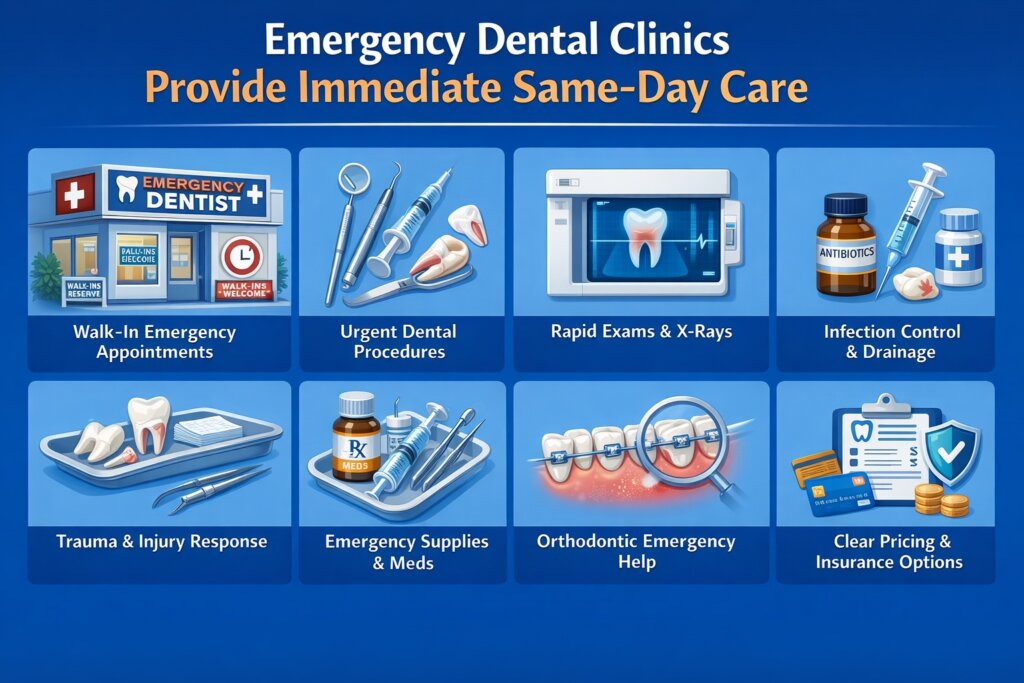
Dedicated emergency dental clinics focus on urgent dental problems and are often the fastest path to same-day treatment. Many offer extended hours, weekend availability, and appointment blocks reserved for emergencies, so you can be seen quickly instead of waiting days for a standard slot. These clinics are typically equipped to handle extractions, root canal therapy, infection management, and dental trauma in a single visit when clinically appropriate.
- Specialized same-day emergency access: Clinics reserve time for urgent cases and can often see walk-ins or schedule immediate appointments.
- Comprehensive on-site urgent procedures: Many can perform extractions, emergency root canal therapy, temporary restorations, and trauma stabilization the same day.
- Fast diagnosis and pain relief: Rapid exams and X-rays help identify the cause of pain, while anesthesia and medications quickly reduce discomfort.
- Infection-focused treatment: Abscesses and advanced infections can be treated with drainage, antibiotics, and source control to reduce the risk of complications.
- Trauma and injury capability: Knocked-out teeth, fractures, and soft tissue injuries can be assessed and stabilized immediately to improve outcomes.
- Emergency meds and equipment ready: Clinics often keep emergency supplies on hand for urgent dental procedures and post-visit care.
- Orthodontic emergency help: Loose wires, broken brackets, and painful appliance issues can be addressed to prevent cuts or worsening damage.
- Clearer pricing and insurance options: Many emergency clinics provide straightforward estimates and accept a range of insurance plans to reduce surprises.
If you’re in severe pain, dealing with swelling, bleeding, or dental trauma, an emergency dental clinic is designed to move quickly and treat the problem at its source. Getting evaluated early can prevent infections from spreading and can increase the chance of saving a damaged tooth. The key is to seek care as soon as symptoms feel urgent—same-day treatment often makes the biggest difference in comfort and outcome.
Hospital Emergency Rooms Handle Life-Threatening Dental Emergencies
Hospital emergency rooms serve as the appropriate choice for dental emergencies that threaten your overall health or involve serious trauma. While ERs cannot perform most dental procedures, they excel at managing infections that affect breathing, uncontrolled bleeding, and facial fractures. Emergency room physicians can prescribe strong pain medications and antibiotics to stabilize your condition until you receive definitive dental care.
You should head to the emergency room immediately if you experience difficulty swallowing or breathing due to facial swelling, uncontrolled bleeding from dental trauma, or suspected jaw fractures. ERs also handle severe infections that cause high fever, facial cellulitis, or signs of sepsis.
| Emergency Room | Emergency Dental Clinic |
|---|---|
| Life-threatening infections | Severe toothaches |
| Uncontrolled bleeding | Knocked-out teeth |
| Facial fractures | Broken teeth |
| Breathing difficulties | Lost fillings/crowns |
| High fever from dental infection | Dental abscesses |
Emergency rooms typically provide pain management and antibiotic therapy, but will refer you to a dentist for actual dental treatment. This means you may need to seek additional care after your ER visit to address the underlying dental problem.
General Dentists Often Accommodate Emergency Dental Patients
Many general dental practices reserve appointment slots for emergency patients and provide after-hours contact information for urgent situations. Your regular dentist knows your dental history and can provide continuity of care during emergencies. Even if your dentist cannot see you immediately, their office may recommend trusted colleagues who accept emergency patients.
Calling your regular dentist first often yields faster appointments than searching for new providers. Established patients typically receive priority scheduling, and your dentist can access previous X-rays and treatment records to make informed decisions quickly.
Some general practices participate in emergency call services, with multiple dentists rotating after-hours coverage. These arrangements ensure patients can reach a dentist outside normal business hours for guidance and urgent appointments.
Urgent Care Centers Offer Limited Emergency Dental Support
Urgent care centers can provide valuable support for dental emergencies, particularly for pain management and infection control. While these facilities cannot perform dental procedures, they can prescribe antibiotics for dental infections and provide stronger pain medications than over-the-counter options. Urgent care centers also offer extended hours and weekend availability when dental offices are closed.
These centers work best as a bridge to definitive dental care. They can help manage your symptoms and prevent complications until you can see a dentist for actual treatment.
Urgent care physicians can also evaluate whether your dental emergency requires immediate hospital care or can wait for dental treatment. This triage function helps ensure you receive appropriate care at the right level.
Dental Schools Provide Emergency Care at Reduced Costs
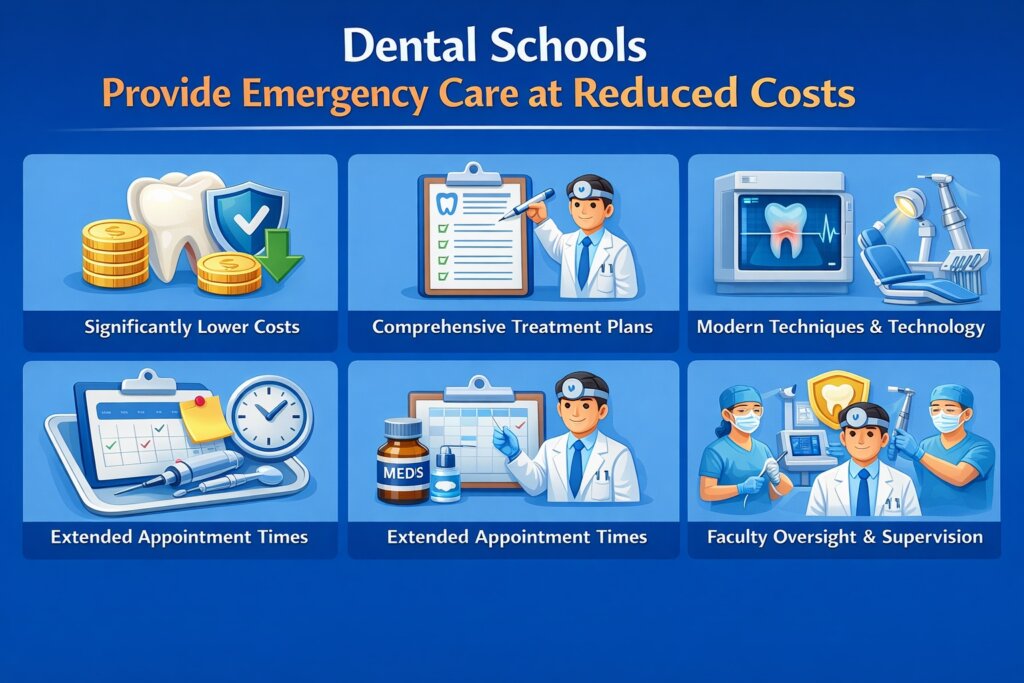
Dental schools often run emergency clinics where care is provided by dental students under the direct supervision of licensed faculty dentists. Because these programs are part of an educational setting, fees are usually lower than those in private practices, making treatment more accessible for patients on a tight budget. Visits can take longer due to the teaching environment and required check-ins, but quality standards stay high because every step is monitored and approved.
- Significantly lower costs: Many dental school clinics charge less than private practices, helping patients without insurance or with limited financial flexibility.
- Comprehensive treatment planning: Exams are often detailed, with a step-by-step plan reviewed and confirmed by supervising faculty.
- Modern techniques and technology: Dental schools frequently teach current best practices and use updated diagnostic tools and equipment.
- Extended appointment times: Students typically spend more time on evaluation, explanations, and careful execution—helpful for anxious patients or complex cases.
- Faculty oversight for safety and quality: Licensed dentists supervise the work and double-check decisions, which adds a strong layer of quality control.
Dental school emergency clinics can be a practical option when cost is the main barrier to getting help quickly. The tradeoff is usually time—appointments may be longer, and scheduling can be tighter during peak periods. If you’re facing a true emergency, it’s still smart to call ahead, explain symptoms clearly, and ask about priority scheduling so you’re directed to the safest, fastest option.
Preparing for Your Emergency Dental Visit
Proper preparation can streamline your emergency dental visit and improve treatment outcomes. Gathering essential information and items before leaving home saves time during triage and helps your dentist make informed treatment decisions. Most emergency dental visits follow a predictable pattern, and being prepared reduces stress during an already difficult situation.
We recommend arriving 15 minutes early for emergency appointments at Emergency Dental San Francisco to complete necessary paperwork and provide medical history information. This preparation allows our team to focus immediately on pain relief and treatment rather than administrative tasks.
Bringing the right items and information helps emergency dentists provide faster, more effective care. Missing information can delay treatment or require additional appointments to complete procedures safely.
Conclusion
Emergency dental care is available today through multiple channels, including dedicated emergency clinics, hospital ERs, general dentists, and urgent care centers. The key is choosing the right provider for your specific situation and acting quickly to prevent complications. Professional emergency dental care provides immediate relief and protects your long-term oral health.
Emergency Dental San Francisco provides same-day emergency dental care throughout the Bay Area. We’re available after hours, on weekends, and on holidays for immediate pain relief. Get started with fast, compassionate treatment today.
FAQs
Where Can I Go for emergency dental care without insurance?
You can go to an urgent-care dental office that accepts self-pay and offers transparent pricing or financing. Emergency Dental San Francisco welcomes uninsured patients, accepts cash and major credit cards, and offers financing options for those who qualify—call 415-230-2783 or book online for same-day care.
Can the ER Treat a Dental Emergency?
An ER can help with severe swelling, uncontrolled bleeding, fever, or trouble breathing, but they usually can’t perform dental procedures like extractions, root canals, or repairs. For most dental emergencies, a licensed emergency dentist can diagnose the cause and provide same-day treatment to relieve pain and address the problem.
How Much Does Emergency Dental Work Cost?
Costs vary based on the exam, X-rays, and the treatment needed (like a filling, extraction, or infection care). The fastest way to get an accurate estimate is an in-person evaluation; Emergency Dental San Francisco accepts most insurance plans and can review options and pricing before treatment.
What Qualifies as a Dental Emergency?
Severe tooth pain, facial swelling, a suspected abscess or infection, a knocked-out or loose tooth, a cracked/broken tooth, uncontrolled bleeding, or trauma to the mouth or jaw are dental emergencies. If you’re unsure, call 415-230-2783 for guidance and next steps.
Are There 24-Hour Emergency Dentists Near Me?
Some practices offer 24/7 phone support and after-hours appointments, but true in-office 24-hour availability varies by location. Emergency Dental San Francisco is reachable by phone 24/7 and provides same-day, after-hours, weekend, and holiday urgent-care dental visits across San Francisco and the Bay Area.

Emergency Dental San Francisco is a dental office focused on providing same-day dental appointments to patients in San Francisco and the surrounding area. We provide urgent dental care services during weekends, evenings and holidays.
We accept several forms of payment and have financing options available to those who qualify. We accept most dental insurance.