

19 Feb Emergency Dental Crown Repair: How Dentists Decide Whether to Reattach or Replace a Damaged Crown
When a dental crown breaks, cracks, or falls out unexpectedly, the sharp pain and exposed tooth create an urgent situation requiring immediate professional attention. Emergency dental crown repair involves a systematic approach to assess the damage, control pain, and restore your tooth’s protection and function as quickly as possible. The process typically includes emergency triage, X-rays for damage assessment, temporary or permanent crown placement, and clear aftercare instructions to prevent complications.
This guide walks you through each step of emergency crown repair, from the moment you arrive at the dental clinic to your follow-up care. You’ll learn what to expect during the procedure, typical costs, and when to seek immediate treatment versus scheduling a regular appointment.
Key Takeaways
- Emergency crown repair starts with pain control and damage assessment through clinical examination and X-rays.
- Same-day temporary crowns protect exposed teeth while permanent restorations are fabricated.
- Treatment costs range from $915 to $3,254, depending on crown material and complexity.
- Most emergency crown repairs can be completed within 2-3 hours during a single visit.
- Immediate care prevents further tooth damage, infection, and severe complications.
Understanding the emergency crown repair process helps reduce anxiety and ensures you know what steps to take when dental emergencies strike.
Initial Emergency Assessment and Pain Management
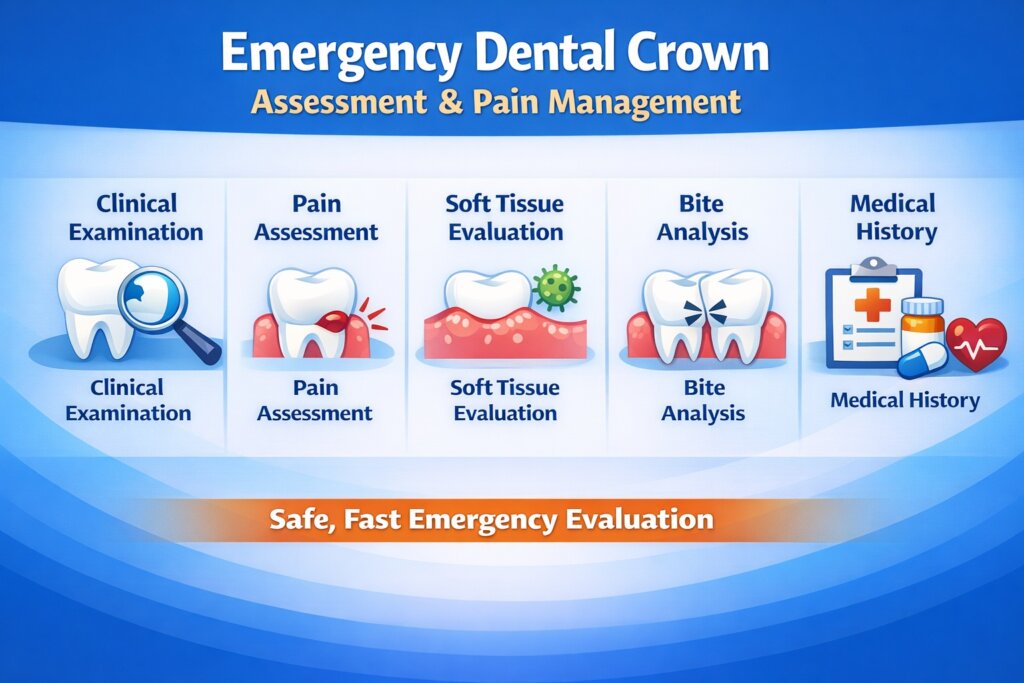
The first step in an emergency dental crown repair is to relieve pain quickly and to evaluate the extent of damage to the crown, tooth, and surrounding tissues. Your emergency dentist will examine whether the crown is still partially attached, fully dislodged, or broken, and check for signs of infection or trauma that require urgent attention. This initial assessment also identifies sharp edges, bite changes, and risks to the underlying tooth, so the next step can be chosen safely.
1. Clinical Examination Process
The dentist examines the affected tooth, checking for cracks in the underlying tooth structure and assessing the condition of any remaining cement or crown fragments. This step determines whether the original crown can be recemented or if a new restoration is required.
2. Pain Level Assessment
Your comfort level is evaluated using a standard pain scale to determine the appropriate level of anesthesia and pain management needed during the repair process. Severe pain often indicates nerve involvement or infection and may require additional treatment.
3. Soft Tissue Evaluation
The gums and surrounding tissues are checked for cuts, swelling, or signs of infection that may have resulted from the crown damage. Any bleeding or soft-tissue trauma is addressed before proceeding with crown repair.
4. Bite Analysis
The dentist evaluates how your teeth come together to identify any bite irregularities caused by the crown loss. This analysis ensures the replacement crown will restore proper function and prevent future complications.
5. Medical History Review
Your current medications, allergies, and medical conditions are reviewed to ensure safe treatment and appropriate material selection for the new crown. This information guides anesthesia choices and restoration materials.
Once these checks are complete, your dentist can recommend the safest, fastest way to protect the tooth and restore comfort. In many cases, that means smoothing sharp edges, placing a temporary solution, or recementing the crown if the fit is stable and the tooth is healthy. If the tooth is cracked, decayed, or infected, the evaluation ensures you get the right next-step treatment immediately rather than a quick fix that fails later.
Diagnostic Imaging and Damage Assessment
Digital X-rays help your dentist see what can’t be confirmed with a visual exam, including the health of the root, the amount of remaining tooth structure, and signs of hidden cracks or infection. This imaging step determines whether the tooth can safely support a replacement crown or if other treatment (such as a root canal) is needed first. In most emergency crown visits, the diagnostic phase takes about 15–20 minutes and guides all subsequent decisions.
| Diagnostic Finding | Treatment Approach | Time Required |
|---|---|---|
| Intact tooth structure | Direct crown replacement | 1–2 hours |
| Minor tooth fracture | Repair then crown placement | 2–3 hours |
| Root canal needed | Endodontic treatment first | Multiple visits |
| Severe damage | Extraction consideration | 30–60 minutes |
Once imaging confirms what’s happening below the surface, your dentist can recommend the safest, most durable path forward. If the tooth is stable, the repair can move quickly toward recementing or replacing the crown with proper bite alignment. If more serious damage is present, addressing it first prevents repeat emergencies and protects your long-term oral health.
Treatment Options and Decision Making

Based on the examination and X-ray findings, your emergency dentist presents clear treatment options, transparent cost estimates, and expected outcomes. The goal is to provide immediate relief while creating a long-term solution that restores your tooth’s function and appearance. Treatment decisions consider factors like the extent of damage, your pain level, budget constraints, and time availability.
Most patients prefer same-day solutions when possible, though complex cases may require temporary measures followed by definitive treatment at a later appointment.
1. Temporary Crown Placement
A temporary crown protects the exposed tooth while a permanent restoration is fabricated, typically taking 1-2 weeks. This option provides immediate relief and prevents further damage to the underlying tooth structure.
2. Same-Day Permanent Crown
Digital crown technology enables immediate fabrication and placement of a permanent crown during a single visit. This approach eliminates the need for temporary restorations and multiple appointments.
3. Crown Recementation
If the original crown is intact and the tooth structure is undamaged, the existing crown may be cleaned and recemented. This cost-effective option works best when the crown failure was due to cement breakdown rather than damage.
4. Root Canal and Crown
When X-rays reveal nerve damage or infection, root canal therapy is performed before crown placement to eliminate pain and prevent abscess formation. Emergency root canal prices range from $700 to $1,200 per tooth, with front teeth typically costing less than molars.
5. Extraction and Replacement Planning
Severely damaged teeth that cannot support a crown may require extraction, followed by implant or bridge planning. This option prevents ongoing pain and infection while preserving overall oral health.
At Emergency Dental San Francisco, we provide immediate, same-day urgent dental care across the Bay Area with transparent pricing and financing options for qualified patients. Our 24/7 availability ensures you receive prompt treatment when crown emergencies occur, including nights, weekends, and holidays.
Crown Repair Procedure Steps
The actual crown repair procedure follows a systematic approach to restore your tooth’s protection and function while ensuring your comfort throughout. Local anesthesia is administered to eliminate pain, followed by careful preparation of the tooth surface and precise crown placement or adjustment. The entire procedure typically takes 1-3 hours, depending on the complexity of the repair and whether a temporary or permanent solution is chosen.
Each step is explained clearly so you understand what’s happening and what to expect next.
1. Anesthesia Administration
Local numbing medication is injected around the affected tooth to ensure complete comfort during the repair process. The anesthesia takes effect within 5-10 minutes and lasts 2-4 hours after the procedure.
2. Tooth Preparation
Any remaining crown material or cement is carefully removed from the tooth surface using specialized instruments. The tooth is then cleaned and shaped as needed to properly receive the new or existing crown.
3. Impression Taking
Digital scans or traditional impressions capture the exact shape and size needed for crown fabrication. This step ensures proper fit and bite alignment for optimal function and comfort.
4. Crown Fabrication or Adjustment
New crowns are created using digital technology or laboratory processes, while existing crowns are cleaned and adjusted for proper fit. Same-day crowns can be completed within 2-3 hours using advanced CAD/CAM technology.
5. Final Placement and Cementation
The crown is carefully positioned and secured using dental cement designed for long-term durability. Bite adjustments ensure comfortable chewing and prevent excessive pressure on surrounding teeth.
6. Final Inspection and Polish
The completed restoration is inspected for proper fit, appearance, and function before final polishing. Any necessary adjustments are made to ensure optimal comfort and aesthetics.
Post-Treatment Care and Follow-Up
Proper aftercare following emergency crown repair ensures optimal healing and long-term success of your restoration. You’ll receive detailed written instructions covering pain management, eating restrictions, oral hygiene modifications, and warning signs that require immediate attention. Most patients experience minimal discomfort after the anesthesia wears off, though some sensitivity is normal for the first few days.
Follow-up appointments may be scheduled to check healing progress and make any necessary adjustments to your new crown.
1. Immediate Post-Procedure Care
Avoid eating or drinking hot beverages until the numbness has completely worn off to prevent accidental injury. Stick to soft foods for the first 24 hours and avoid chewing on the treated side initially.
2. Pain Management Protocol
Over-the-counter pain relievers like ibuprofen effectively manage any discomfort, while ice packs applied for 15-20 minutes help reduce swelling. Prescription pain medication is rarely needed for routine crown repairs.
3. Oral Hygiene Adjustments
Gentle brushing and flossing around the new crown maintain oral health without damaging the restoration. Special flossing techniques may be recommended to clean effectively around the crown margins.
4. Activity Restrictions
Avoid hard, sticky, or chewy foods for the first week to allow proper crown settling and prevent dislodgement. Sports activities should include mouthguard protection to prevent trauma to the new restoration.
5. Warning Signs Monitoring
Contact your emergency dentist immediately if you experience worsening pain, swelling, fever, or loosening of your crown. These symptoms may indicate complications requiring prompt treatment.
Prevention and Long-Term Crown Care
Proper crown maintenance significantly extends the lifespan of restorations and prevents emergencies that require urgent repair. Regular dental checkups allow early detection of crown problems, such as loose cement, wear patterns, or underlying tooth decay, which could lead to sudden failure. Most crowns last 10-15 years with appropriate care, though emergency repairs may be needed occasionally due to trauma or normal wear.
Simple daily habits protect your investment in crown restoration and maintain optimal oral health.
1. Daily Oral Hygiene
Brush twice daily with fluoride toothpaste and floss carefully around crown margins to prevent decay at the tooth-crown junction. Special floss threaders or water flossers may be recommended for thorough cleaning.
2. Dietary Considerations
Limit hard, sticky, or extremely hot foods that can damage or dislodge crowns over time. Avoid using crowned teeth to open packages or bite non-food items, as this can cause excessive stress.
3. Regular Professional Monitoring
Schedule routine dental checkups every six months for professional cleaning and crown evaluation. Early detection of problems allows preventive treatment rather than emergency repairs.
4. Protective Measures
Wear custom mouthguards during sports activities and consider night guards if you grind your teeth during sleep. These appliances prevent trauma and excessive wear that can damage crown restorations.
5. Prompt Problem Resolution
Address minor crown issues, such as sensitivity or slight looseness, before they become emergencies requiring urgent treatment. Early intervention is typically less expensive and more conservative than emergency repairs.
Conclusion
Emergency dental crown repair follows a systematic process designed to provide immediate pain relief and restore tooth function safely. Understanding each step helps reduce anxiety and ensures you receive appropriate care when crown emergencies occur. Professional treatment prevents complications and preserves your oral health in the long term.
Emergency Dental San Francisco provides same-day emergency crown repairs with fast, professional care. Our experienced clinicians prioritize your comfort as they restore damaged crowns quickly and safely. Learn more about our emergency crown services today.
FAQs
Can a Dentist Do an Emergency Crown the Same Day?
Often, yes. If your crown is loose, broken, or causing pain, we can typically see you the same day to evaluate the tooth, take any needed X-rays, and place a secure temporary crown or re-cement the existing crown when appropriate. Call 415-230-2783 for immediate scheduling.
What Should I Do if My Dental Crown Falls Off in an Emergency?
Keep the crown in place, avoid chewing on that side, and gently rinse the area with warm water. If you have tooth sensitivity, you can cover the tooth with temporary dental cement from a pharmacy—avoid super glue. Contact us right away so we can assess the tooth and safely re-cement or replace the crown.
How Much Does an Emergency Dental Crown Cost?
Cost depends on what’s needed (re-cementing a crown, building up the tooth, a temporary crown, or a new crown). If you have insurance, we’ll verify your benefits and explain your estimated out-of-pocket cost before treatment. We also accept cash/credit and offer financing options for those who qualify.
Can I Get a Temporary Crown for a Broken Tooth?
Yes. If a tooth is cracked or broken and needs protection, we can often place a temporary crown the same day to reduce pain, prevent further damage, and stabilize the tooth while planning the next step.
How Long Does an Emergency Temporary Crown Last?
Temporary crowns are designed to last a short time—typically a few weeks to a couple of months—depending on your bite, the condition of the tooth, and how well it’s cared for. We’ll give clear instructions and schedule follow-up so you’re not relying on a temporary crown longer than needed.

Emergency Dental San Francisco is a dental office focused on providing same-day dental appointments to patients in San Francisco and the surrounding area. We provide urgent dental care services during weekends, evenings and holidays.
We accept several forms of payment and have financing options available to those who qualify. We accept most dental insurance.