

24 Mar What Counts as an Overnight Dental Emergency (And What to Do)
When dental pain strikes at 2 AM or your tooth gets knocked out during a weekend game, knowing what counts as an overnight dental emergency can save your tooth and reduce your suffering. Nearly 2 million Americans visit emergency rooms annually for dental issues, with 45% of dental practice calls occurring outside regular business hours. Understanding which situations require immediate attention versus those that can wait until morning helps you make the right decision when pain and panic cloud your judgment.
This guide will walk you through the most common overnight dental emergencies, provide clear action steps for each situation, and help you understand when to seek immediate care versus when home remedies can provide temporary relief until professional help is available.
Key Takeaways
- Severe toothache with swelling and fever requires immediate overnight dental care.
- Knocked-out teeth have the best chance of survival when treated within 30 minutes.
- Uncontrolled bleeding from the mouth needs urgent attention regardless of the hour.
- Dental abscesses can become life-threatening if left untreated overnight.
- Emergency Dental San Francisco provides 24/7 care for all urgent dental situations.
- Knowing proper first aid steps can preserve teeth until professional treatment.
Understanding what truly constitutes an overnight dental emergency helps you respond appropriately when time matters most.
Severe Pain That Qualifies as an Overnight Dental Emergency
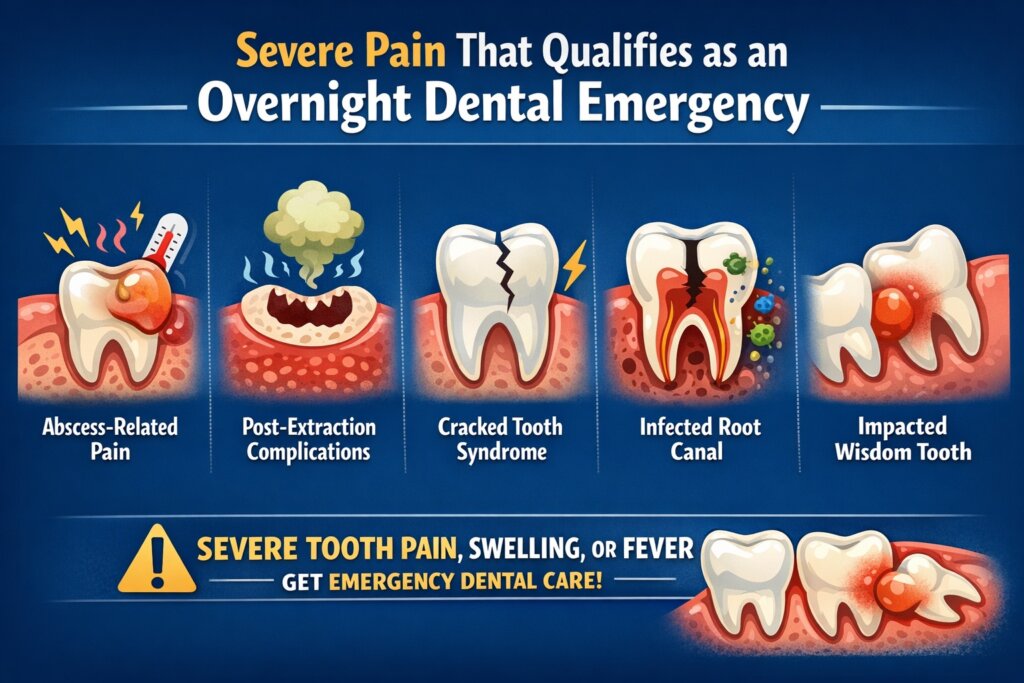
Not all dental pain requires middle-of-the-night treatment, but certain types of discomfort signal serious problems that need immediate attention. Throbbing pain that prevents sleep, especially when accompanied by swelling or fever, indicates an active infection that can spread rapidly. Pain that worsens when you lie down or bend over often points to an abscess requiring urgent drainage.
Emergency dentist situations also include pain following recent dental work that becomes unbearable overnight.
1. Abscess-Related Pain
A dental abscess creates intense, constant pain that often radiates to your jaw, neck, or ear. The infected area typically swells noticeably, and you may develop a fever or feel generally unwell.
2. Post-Extraction Complications
Severe pain developing 2-3 days after a tooth extraction, especially with a bad taste or odor, may indicate dry socket. This condition exposes nerve endings and requires immediate professional cleaning and medication.
3. Cracked Tooth Syndrome
Sharp, shooting pain when biting down or releasing pressure can signal a cracked tooth that may split completely without prompt treatment. The pain often comes and goes, making it easy to dismiss until it becomes constant.
4. Infected Root Canal
Previously treated teeth can develop new infections, causing severe pain and swelling. These situations require immediate attention as the infection can spread to surrounding tissues.
5. Impacted Wisdom Tooth
Sudden, severe pain from wisdom teeth, especially with swelling that affects your ability to open your mouth or swallow, needs urgent evaluation. The infection can spread to your throat and compromise your airway.
When pain interferes with sleep or daily activities, it typically requires professional intervention regardless of the hour.
Trauma and Injury Requiring Emergency Dental Care
Dental trauma from accidents, sports injuries, or falls often happens outside business hours and requires immediate response. The first 30 minutes after tooth trauma are critical for saving knocked-out teeth, while other injuries may need urgent care to prevent complications. Quick action can mean the difference between saving and losing a tooth permanently.
At Emergency Dental San Francisco, we see these trauma cases regularly and provide immediate stabilization and treatment.
1. Completely Knocked-Out Tooth
A fully avulsed tooth has the best chance of successful reimplantation when treated within 30 minutes. Handle the tooth by the crown only, rinse gently if dirty, and try to reinsert it in the socket if possible.
2. Partially Displaced Teeth
Teeth pushed into the gum, pulled partially out, or moved sideways need immediate repositioning and stabilization. Delaying treatment can result in nerve death and the need for root canal therapy.
3. Fractured Teeth
Large chips or breaks that expose the inner tooth structure cause severe sensitivity and pain. Save any broken pieces in milk or saliva and seek immediate care to prevent infection.
4. Jaw Injuries
Difficulty opening your mouth, misaligned bite, or numbness in your lip or chin may indicate jaw fracture. These injuries require immediate evaluation and often coordination with medical emergency services.
5. Soft Tissue Lacerations
Deep cuts to the tongue, lips, or inside of the mouth that won’t stop bleeding need immediate suturing. Clean the area gently and apply pressure with gauze while seeking care.
Sports-related dental trauma accounts for a significant portion of overnight dental emergencies, particularly on weekends.
Infections and Swelling That Need Immediate Attention

Dental infections can spread rapidly and become life-threatening if left untreated overnight. Swelling that affects your ability to swallow or breathe requires immediate medical attention, while localized infections need prompt dental care to prevent spread. Fever accompanying dental pain almost always indicates an active infection requiring antibiotic therapy and often drainage.
The key is recognizing when swelling poses a serious threat versus manageable discomfort.
1. Facial Cellulitis
Infection spreading beyond the tooth area into facial tissues creates firm, warm swelling that may close your eye or distort your face. This condition can progress rapidly and affect your airway.
2. Ludwig’s Angina
Infection in the floor of the mouth creates a hard, woody swelling under the tongue that can push the tongue upward. This is a medical emergency requiring immediate hospital treatment.
3. Pericoronitis
Infection around partially erupted wisdom teeth causes swelling that may limit mouth opening. The infection can spread to the throat muscles and affect swallowing.
4. Periodontal Abscess
Gum infections cause localized swelling and pain, often with drainage of pus. While less immediately dangerous than tooth abscesses, they still require prompt treatment to prevent spread.
5. Post-Surgical Infections
Increasing pain, swelling, and fever after dental surgery may indicate infection at the surgical site. These situations require immediate evaluation and antibiotic adjustment.
Any infection accompanied by fever, difficulty swallowing, or breathing problems needs immediate emergency room evaluation followed by dental care.
Bleeding Emergencies in Overnight Dental Situations
Uncontrolled bleeding from dental procedures, trauma, or spontaneous gum bleeding requires immediate attention when it persists despite pressure and standard first aid measures. Normal bleeding should slow significantly within 30 minutes of injury or procedure, while persistent bleeding may indicate complications. Heavy bleeding can lead to significant blood loss and requires professional intervention to identify and treat the source.
Understanding what constitutes normal versus abnormal bleeding helps you respond appropriately.
1. Post-Extraction Bleeding
Continued heavy bleeding more than 4-6 hours after tooth extraction, especially if it soaks through gauze every 15-20 minutes, requires immediate attention. The extraction site may need additional suturing or hemostatic agents.
2. Spontaneous Gum Bleeding
Sudden, heavy bleeding from gums without obvious cause, especially in patients taking blood thinners, needs urgent evaluation. The bleeding may indicate medication interactions or underlying health issues.
3. Tongue or Lip Lacerations
Deep cuts that gape open or won’t stop bleeding within 15 minutes of direct pressure require suturing. The rich blood supply to these areas can cause significant bleeding if not properly controlled.
4. Medication-Related Bleeding
Patients on anticoagulants who experience dental bleeding may have difficulty achieving normal clotting. These cases often require coordination between dental and medical providers.
5. Trauma-Related Hemorrhage
Bleeding following facial trauma may involve multiple sources, including teeth, gums, and soft tissues. A comprehensive evaluation is needed to identify and treat all bleeding sites.
When standard pressure and gauze don’t control bleeding within 30 minutes, professional intervention becomes necessary.
What to Do Before Reaching an Emergency Dentist
Taking appropriate first aid steps before reaching professional care can significantly impact the outcome of your overnight dental emergency. Proper immediate care can reduce pain, prevent complications, and sometimes save teeth that might otherwise be lost. Having a basic understanding of dental first aid helps you stay calm and take effective action during stressful situations.
These steps provide temporary relief while you arrange for professional treatment.
1. Pain Management
Use over-the-counter pain relievers as directed, alternating ibuprofen and acetaminophen for maximum effect. Apply cold compresses to the outside of your face for 15 minutes at a time to reduce swelling and numb pain.
2. Bleeding Control
Apply firm, direct pressure with clean gauze or cloth to bleeding areas. Bite down on gauze placed over extraction sites or use pressure on external wounds until bleeding slows significantly.
3. Tooth Preservation
For knocked-out teeth, keep them moist in milk, saliva, or emergency tooth preservation solution. Never scrub the root surface or let the tooth dry out completely.
4. Infection Prevention
Rinse gently with warm salt water to clean the area without disturbing clots. Avoid aggressive rinsing that might dislodge protective blood clots or spread infection.
5. Swelling Reduction
Keep your head elevated when lying down to reduce blood flow to the affected area. Ice packs applied for 15 minutes on, 15 minutes off help control swelling in the first 24 hours.
6. Activity Modification
Avoid hot foods, alcohol, and smoking which can worsen bleeding and delay healing. Stick to soft, cool foods and avoid the affected side when chewing.
Emergency Dental San Francisco provides 24/7 phone support to guide you through these first aid steps while you’re en route to our clinic.
When to Choose Emergency Dental Care Over the Hospital
Understanding whether your overnight dental emergency requires a dental clinic or hospital emergency room can save time and ensure appropriate treatment. Most dental emergencies are best handled by emergency dental services, while certain conditions require hospital-level medical intervention. Emergency rooms typically provide pain medication and antibiotics but cannot perform definitive dental treatment, often leaving patients with temporary relief and instructions to see a dentist.
Making the right choice initially prevents delays in getting the specific care you need.
| Condition | Best Treatment Location | Reason |
|---|---|---|
| Severe toothache | Emergency Dental Clinic | Definitive treatment available |
| Facial fracture | Hospital ER | May require surgery |
| Knocked-out tooth | Emergency Dental Clinic | Time-sensitive reimplantation |
| Breathing difficulty | Hospital ER | Airway management needed |
When in doubt about the appropriate level of care, calling an emergency dentist first can help you determine the best course of action.
Conclusion
Recognizing overnight dental emergencies and responding quickly can save teeth and prevent serious complications. Emergency Dental San Francisco provides 24/7 care for all urgent dental situations across the Bay Area. Call 415-230-2783 immediately when dental pain, trauma, or infection strikes outside regular hours.
Emergency Dental San Francisco provides same-day emergency care for overnight dental crises. We’re available 24/7 for severe pain, trauma, and urgent situations. Call 415-230-2783 to get started.
FAQs
What Is Considered a Dental Emergency?
A dental emergency is any oral health problem that involves severe pain, uncontrolled bleeding, significant swelling, or damage that needs immediate attention to protect your tooth or overall health. Common examples include knocked-out teeth, cracked or broken teeth with pain, abscesses, severe infections, and injuries to the gums or jaw. If the problem affects your ability to eat, sleep, speak, or function normally, it may require urgent dental care.
Can I Go to the ER for a Dental Emergency at Night?
Yes, you can go to the ER for a dental emergency at night, especially if you have facial swelling, difficulty breathing, heavy bleeding, fever, or trauma involving the jaw or face. Emergency rooms can help manage pain, infection, or serious complications, but they usually do not provide full dental treatment such as fillings, root canals, or extractions. For tooth-specific problems without life-threatening symptoms, an emergency dentist is often the better option.
How Can I Relieve Severe Tooth Pain Overnight?
To relieve severe tooth pain overnight, you can rinse your mouth with warm salt water, take an over-the-counter pain reliever as directed, and apply a cold compress to the outside of your cheek. Avoid very hot, cold, sugary, or hard foods that may worsen the pain. Keeping your head elevated may also help reduce pressure and throbbing until you can see a dentist.
What Should I Do If I Knock Out a Tooth at Night?
If you knock out a tooth at night, pick it up by the crown and avoid touching the root. Gently rinse it with water if it is dirty, then try to place it back in the socket if possible, or keep it in milk or saliva until you get emergency dental care. Acting quickly is very important because the best chance of saving the tooth often depends on getting treatment as soon as possible.
How Much Does an Emergency Dentist Visit Cost?
The cost of an emergency dentist visit depends on the exam, X-rays, treatment needed, and the location of the clinic. A basic emergency exam may cost much less than a visit that includes procedures such as an extraction, temporary repair, or infection treatment. Final costs can increase if the problem requires more complex care or after-hours service.

Emergency Dental San Francisco is a dental office focused on providing same-day dental appointments to patients in San Francisco and the surrounding area. We provide urgent dental care services during weekends, evenings and holidays.
We accept several forms of payment and have financing options available to those who qualify. We accept most dental insurance.