

12 Oct When a Dental Emergency Requires Surgery Instead of a Routine Procedure
Dental pain rarely follows a schedule. A cracked tooth on a Saturday night, a swollen jaw on a holiday morning, a knocked-out tooth after a cycling fall in Oakland—these situations demand immediate care, not a two-week wait. Emergency dental surgeries are more common than most people realize, and knowing what they involve can make a stressful moment feel a lot more manageable.
This article walks you through the most common types of emergency dental surgeries, what triggers each one, what the procedure typically involves, and what to expect during your visit. You will also find guidance on insurance coverage through plans like Delta Dental, Guardian Dental, and MetLife Dental, along with practical steps to take before you arrive at our clinic.
Key Takeaways
- Emergency dental surgeries address conditions that cannot wait for a scheduled appointment without risking serious harm.
- The most common procedures include emergency extractions, root canal therapy, abscess drainage, and soft-tissue repair.
- Acting quickly—within hours, not days—often determines whether a tooth can be saved.
- Most dental insurance plans, including Delta Dental, Guardian Dental, and MetLife Dental, cover at least a portion of emergency procedures.
- Emergency Dental San Francisco offers same-day surgical care, walk-in availability, and 24/7 phone access at 415-230-2783.
What Are Emergency Dental Surgeries and When Do You Need One?
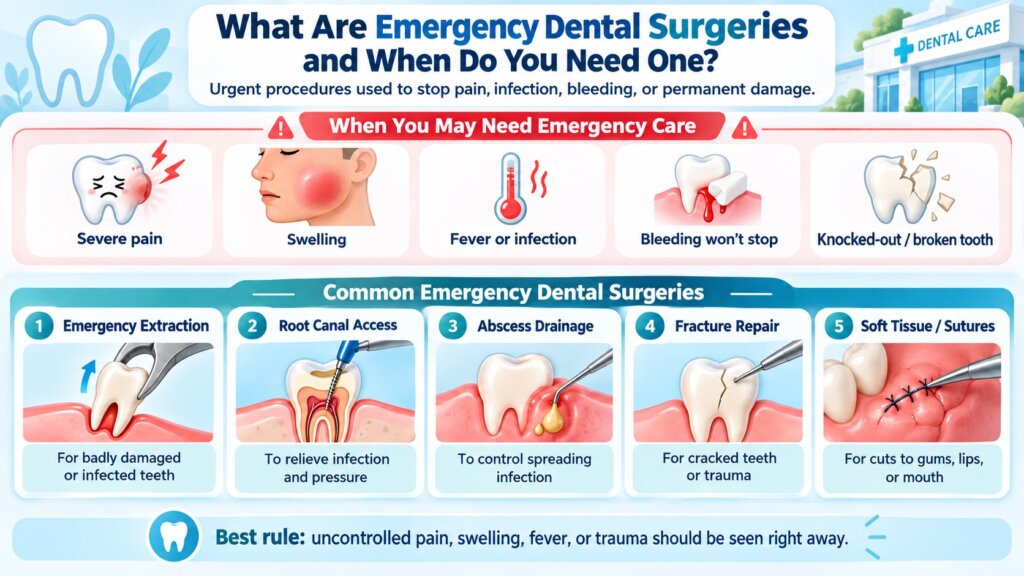
Emergency dental surgeries are clinical procedures performed to relieve acute pain, stop the spread of infection, or prevent permanent damage to teeth, bone, or surrounding tissue. They differ from routine dental work because the urgency is real—waiting even a day or two can worsen the outcome. According to research published in the British Dental Journal (Pau et al., 2004), dental pain is one of the most commonly reported reasons patients seek unplanned medical care, often because they underestimated how quickly conditions escalate.
You might be wondering what separates a dental emergency from general discomfort. The clearest signals are uncontrolled pain, visible swelling, fever, bleeding that does not stop, or a tooth that has been knocked out or fractured below the gumline. These are not situations to manage with over-the-counter pain relief alone.
The American Dental Association classifies dental emergencies as conditions requiring immediate attention to relieve pain, treat infection, or address trauma (ADA, 2020). That clinical definition maps directly to the procedures described below.
The Most Common Types of Emergency Dental Surgeries Covered by Dental Insurance
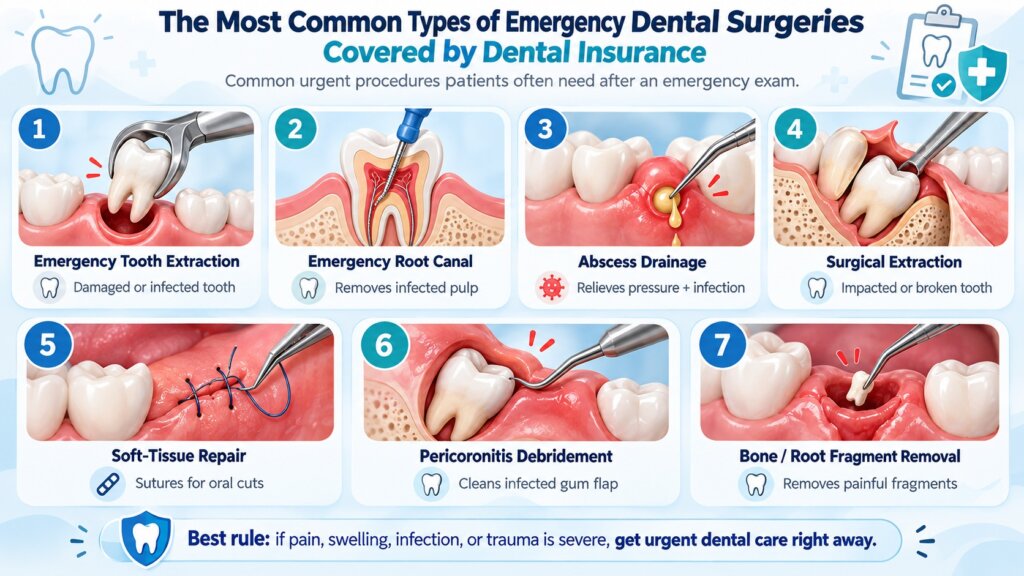
Understanding which procedures fall under emergency dental surgeries helps you communicate clearly with your provider—and with your insurance plan. Whether you carry Delta Dental, Guardian Dental, MetLife Dental, or another policy, most plans distinguish between emergency exams and the surgical interventions that follow. Here are the procedures our team performs most often.
1. Emergency Tooth Extraction
An emergency extraction removes a tooth that is too damaged, infected, or structurally compromised to save. This is one of the most frequently performed emergency dental surgeries, particularly for severely decayed molars or teeth fractured below the gumline. The procedure involves local anesthesia, loosening the tooth with an elevator instrument, and removing it cleanly to prevent further infection.
Wisdom teeth are a common reason for emergency extractions. When a partially erupted wisdom tooth becomes impacted or infected, it can cause rapid swelling and intense pain that requires same-day intervention.
After extraction, our team provides written aftercare instructions, prescriptions if needed, and a clear follow-up plan. Most patients are surprised by how manageable the recovery is when the procedure is done promptly and correctly.
2. Emergency Root Canal Therapy
Root canal therapy becomes a surgical emergency when the pulp inside a tooth—the nerve and blood vessel tissue—becomes infected or dies. Left untreated, pulp infections spread to the jawbone and surrounding teeth. Research from the Journal of Endodontics confirms that pulpal necrosis with periapical abscess is among the leading causes of acute dental pain requiring urgent intervention (Seltzer et al., 1963, as cited in PMC1071467).
The procedure involves numbing the area thoroughly, accessing the pulp chamber, removing infected tissue, cleaning and shaping the canals, and sealing the tooth. Most patients feel relief within hours of the procedure starting.
Emergency Dental San Francisco performs same-day root canal therapy for patients across the Bay Area, including those coming from Berkeley, Fremont, and Daly City. Call 415-230-2783 to confirm same-day availability before you drive in.
3. Abscess Incision and Drainage
A dental abscess is a localized pocket of bacterial infection. It can form at the root tip (periapical abscess) or in the gum tissue alongside a tooth (periodontal abscess). Both types are painful, both can spread, and both require surgical drainage to resolve. Incision and drainage—often abbreviated as I&D—is the procedure used to release that pressure and clear the infection.
The clinician numbs the area, makes a small incision in the swollen tissue, and allows the abscess to drain. The site is then irrigated and, depending on severity, a small rubber drain may be placed temporarily to keep the wound open.
Fever alongside dental swelling is a warning sign. If you have both, do not wait. Contact us immediately—this combination suggests the infection may be spreading beyond the tooth.
4. Surgical Tooth Extraction (Impacted or Fractured Teeth)
Some extractions require more than a simple pull. When a tooth is broken at the gumline, impacted beneath the surface, or has curved roots that complicate removal, a surgical extraction is necessary. This procedure involves making a small incision in the gum, sometimes removing a small amount of bone, and extracting the tooth in sections if needed.
Surgical extractions are more involved than simple ones, but they are performed routinely under local anesthesia. Recovery typically involves a few days of soft foods and careful oral hygiene, with follow-up as directed by our team.
5. Soft-Tissue Laceration Repair
Trauma to the mouth—from a fall, a sports injury, or an accident—can tear the gums, the inside of the cheek, the tongue, or the lip. These injuries bleed heavily and are alarming to experience. Soft-tissue laceration repair involves cleaning the wound, assessing depth, and placing sutures to close the tissue properly.
Leaving lacerations untreated increases the risk of infection and poor healing. Our clinic manages soft-tissue injuries as part of our emergency oral surgery services, with sterile technique and appropriate wound closure materials.
6. Pericoronitis Surgical Debridement
Pericoronitis is inflammation of the gum tissue surrounding a partially erupted tooth, most often a lower wisdom tooth. Bacteria accumulate under the gum flap covering the tooth, causing pain, swelling, and sometimes difficulty opening the mouth. In acute cases, surgical debridement—removing the infected tissue and irrigating the area—provides immediate relief.
If the condition recurs, extraction of the offending tooth is usually recommended. Our team will assess the situation and give you a clear recommendation after examining the area.
7. Emergency Bone or Root Fragment Removal
After a traumatic injury or a previous extraction, small fragments of bone or root can remain in the socket. These fragments cause persistent pain, swelling, and delayed healing. Removing them requires a minor surgical procedure under local anesthesia to locate and extract the fragment cleanly.
This procedure is less common than the others on this list, but it is a genuine surgical emergency when the fragment is causing active infection or preventing healing.
What to Expect During Emergency Dental Surgeries at Our Clinic

Knowing the process ahead of time reduces anxiety. Here is the typical flow when you come to us for an emergency surgical procedure.
- Triage and Pain Control: The moment you arrive, our team assesses your pain level and chief complaint. If you are in acute distress, pain management begins before anything else.
- Exam and Imaging: We take digital X-rays to evaluate the tooth, surrounding bone, and any signs of infection. This step is fast and essential for accurate diagnosis.
- Treatment Options and Estimate: We explain what we found, what your options are, and what each will cost. We provide an up-front estimate and verify your dental insurance—whether that is Delta Dental, Guardian Dental, MetLife Dental, or another carrier—before proceeding.
- Procedure: With your consent, we begin the surgical procedure. Local anesthesia is used in all cases. You will feel pressure but not sharp pain.
- Aftercare Instructions: Before you leave, you receive written aftercare instructions, any necessary prescriptions, and a scheduled or recommended follow-up appointment.
The entire visit, from check-in to discharge, typically takes one to two hours depending on the complexity of the procedure.
Emergency Dental Surgeries and Dental Insurance: What Is Usually Covered
One of the first questions patients ask is whether their dental insurance covers emergency procedures. The short answer is: usually yes, at least in part. Coverage depends on your specific plan, but most major carriers—including Delta Dental, Guardian Dental, and MetLife Dental—cover emergency exams, X-rays, and a portion of surgical procedures like extractions and root canals.
| Procedure | Typical Insurance Coverage | Notes |
|---|---|---|
| Emergency Exam and X-Ray | 80–100% (most plans) | Usually classified as diagnostic |
| Simple Extraction | 70–80% after deductible | Covered under basic services by Delta Dental, MetLife Dental |
| Surgical Extraction | 50–80% after deductible | Guardian Dental and others classify as major service |
| Root Canal Therapy | 50–80% after deductible | Major service category; annual maximums apply |
| Abscess Drainage | Varies; often 50–70% | May require pre-authorization depending on plan |
| Soft-Tissue Repair | Varies by plan | Trauma-related; some plans cover under medical benefit |
If you are unsure about your coverage, bring your insurance card and we will verify your benefits at check-in. For patients without dental insurance, we accept cash and all major credit cards, and financing options are available for those who qualify.
Before You Arrive: Steps That Can Help
What you do in the time between the injury and your appointment can affect the outcome. These steps apply to the most common emergency situations.
- Knocked-out tooth: Handle it by the crown, not the root. Rinse gently with water. Reinsert it into the socket if you can, or keep it moist in milk or between your cheek and gum. Come in within 30 minutes for the best chance of saving it.
- Severe toothache or swelling: Use a warm saltwater rinse and apply a cold compress to the outside of your cheek. Do not place aspirin directly on the gum tissue—it causes chemical burns.
- Broken or fractured tooth: Save any fragments in a clean container. Avoid hard or sticky foods. Cover any sharp edges with dental wax if available.
- Uncontrolled bleeding: Apply firm, steady pressure with clean gauze. If bleeding does not slow after 20 minutes, call us immediately or go to the nearest emergency room.
- Lost crown or filling: Keep the area clean. Bring any intact restoration with you. Avoid chewing on that side.
Bring a government-issued ID, your insurance card, a list of current medications and allergies, and any recent dental records or X-rays. Arriving 15 minutes early helps us start your care without delay.
Why Timing Matters in Emergency Dental Surgeries
Dental infections do not plateau—they progress. A periapical abscess that starts as localized pain can spread to the jaw, neck, and in rare cases the airway if left untreated. Research published in the Journal of Oral and Maxillofacial Surgery (Rega et al., 2006, as cited in PMC7346801) found that delays in treating odontogenic infections significantly increased the complexity of surgical management required.
This is not meant to alarm you. It is meant to be direct: if something feels wrong in your mouth—pain that is worsening, swelling that is spreading, a fever that is climbing—do not wait until Monday. Call 415-230-2783 now. We are available around the clock, including weekends and holidays, across San Francisco and the greater Bay Area.
Emergency Dental San Francisco handles the full range of urgent oral surgical procedures described in this article. Our team follows CDC and OSHA infection-control standards, uses modern imaging equipment, and works with most major dental insurance carriers. Walk-ins are welcome. Same-day appointments are available. Book online or call us directly to confirm availability before you head in.
Conclusion
Emergency dental surgeries—from extractions and root canals to abscess drainage and soft-tissue repair—exist because some dental conditions simply cannot wait. Acting fast protects your health and often saves the tooth. If you are in pain right now, call Emergency Dental San Francisco at 415-230-2783 or book a same-day appointment online—we are here when you need us most.
Emergency Dental San Francisco specializes in same-day emergency dental procedures to relieve pain fast. We serve the Bay Area seven days a week, including holidays. Call 415-230-2783 or book online—get started today.
FAQs
What Is Considered a Dental Emergency?
A dental emergency is any mouth or tooth problem that needs urgent care to stop severe pain, control bleeding, treat infection (like an abscess), or save a tooth—such as facial swelling, a knocked-out tooth, a broken/cracked tooth, or uncontrolled bleeding. If you’re unsure, call us at 415-230-2783 for guidance and same-day options.
Can I Go to the ER for Emergency Dental Care?
You can go to the ER for life-threatening issues like trouble breathing/swallowing, rapidly spreading facial swelling, high fever, or uncontrolled bleeding. For most dental emergencies (toothaches, abscesses, broken teeth), an urgent-care dentist can treat the cause faster with dental X-rays, drainage, and same-day procedures.
How Much Does Emergency Dental Surgery Cost?
Costs vary based on the problem, imaging, and the procedure (such as extraction, incision and drainage, or repair). We accept most dental insurance, offer financing for those who qualify, and provide clear, upfront estimates so you can decide on the next step confidently.
What Should I Do If I Have a Severe Toothache or Swelling?
Call for same-day evaluation—severe pain or swelling can signal infection that needs urgent treatment. Until you’re seen, use a cold compress, take OTC pain relievers as directed (if safe for you), avoid heat, and don’t place aspirin on the gums; if swelling is spreading or you have fever or trouble swallowing/breathing, seek emergency medical care immediately.
Do Emergency Dentists Do Extractions the Same Day?
Yes, same-day extractions are often possible when it’s safe to proceed and we’ve confirmed the diagnosis with an exam and X-rays. Our clinicians prioritize fast pain relief, sterile technique, and clear aftercare instructions so you know exactly what to expect.

Emergency Dental San Francisco is a dental office focused on providing same-day dental appointments to patients in San Francisco and the surrounding area. We provide urgent dental care services during weekends, evenings and holidays.
We accept several forms of payment and have financing options available to those who qualify. We accept most dental insurance.