

02 Mar Pediatric Emergency Dental Care: How Urgent Treatment Differs by a Child’s Age and Tooth Development
When your child experiences a dental emergency, every minute counts. Understanding what qualifies as a pediatric emergency dental situation and knowing how to respond can make the difference between saving and losing a tooth. Parents across the Bay Area face these frightening moments, often unsure whether to rush to the emergency room or seek specialized dental care.
This comprehensive guide provides essential information about pediatric emergency dental care, helping you recognize urgent situations, take immediate action, and connect with professional help when your child needs it most.
Key Takeaways
- Pediatric dental emergencies require immediate professional attention to prevent permanent damage.
- Common emergencies include knocked-out teeth, severe toothaches, facial swelling, and dental trauma from falls or sports.
- Quick response within the first 30 minutes significantly improves treatment outcomes for knocked-out teeth.
- Emergency dental clinics offer specialized pediatric care that hospital emergency rooms typically cannot provide.
- Prevention through regular checkups and protective gear reduces emergency visits by up to 80%.
- Knowing what to bring and how to prepare streamlines emergency treatment for your child.
Understanding pediatric emergency dental situations helps parents respond effectively when their children face urgent oral health crises.
Recognizing Pediatric Emergency Dental Situations
Parents often struggle to determine when their child’s dental issue requires immediate attention versus waiting for regular office hours. True pediatric emergency dental situations involve severe pain, trauma, or conditions that threaten your child’s oral health or overall well-being. Time-sensitive emergencies demand professional intervention within hours, not days.
The distinction between urgent and non-urgent dental problems can help prevent unnecessary pain and complications. Emergency situations typically involve active bleeding, severe swelling, or trauma that affects tooth structure or surrounding tissues.
| Emergency Type | Time Sensitivity | Immediate Action |
|---|---|---|
| Knocked-out tooth | 30 minutes | Keep moist, handle by crown only |
| Severe infection | Same day | Cold compress, pain relief |
| Fractured tooth | 24 hours | Save fragments, avoid hard foods |
| Bleeding | Immediate | Apply direct pressure |
California data shows that 351,000 children missed school in 2022 due to dental issues, with emergency room visits costing over $2,000 per visit when specialized pediatric emergency dental care could have provided more appropriate treatment.
Immediate First Aid for Common Pediatric Emergency Dental Issues
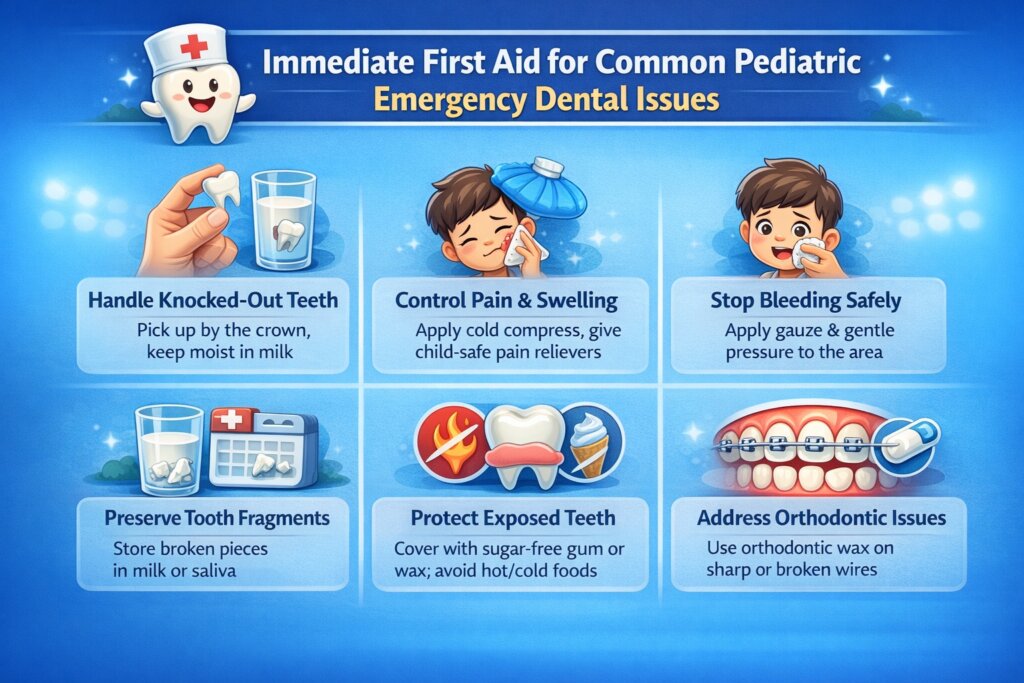
Your response within the first few minutes after your child’s dental emergency can significantly impact treatment outcomes. Proper first aid stabilizes the situation and preserves your child’s oral health until professional care becomes available. These techniques focus on pain management, preventing further damage, and maintaining the best conditions for successful treatment.
Remember that first aid serves as a temporary bridge to professional care, not a replacement for emergency dental treatment.
1. Handle Knocked-Out Teeth Properly
Pick up the tooth by the crown only, never touching the root surface. Gently rinse with clean water if dirty, then attempt to reinsert it into the socket or keep it moist in milk.
2. Control Pain and Swelling
Apply a cold compress to the outside of your child’s face for 15-20 minutes at a time. Give age-appropriate doses of children’s acetaminophen or ibuprofen following package directions.
3. Stop Bleeding Safely
Use clean gauze or a soft cloth to apply gentle, direct pressure to bleeding areas. Have your child bite down on the gauze if the bleeding comes from the tooth sockets or gum tissue.
4. Preserve Tooth Fragments
Collect any broken tooth pieces and store them in milk or your child’s saliva. These fragments may help with reconstruction during emergency treatment.
5. Protect Exposed Teeth
Cover sensitive areas with sugar-free gum or dental wax if available. Avoid extremely hot or cold foods and beverages, as they may cause additional pain.
6. Address Orthodontic Issues
Use orthodontic wax to cover sharp wire ends or brackets. If a wire breaks completely, save the pieces and contact your emergency dentist near me for guidance.
These first aid measures provide temporary relief while you arrange professional pediatric emergency dental care for your child.
When to Choose Emergency Dental Clinics Over Hospital Emergency Rooms
Many parents automatically head to hospital emergency rooms when their children experience dental emergencies, but specialized dental clinics often provide more appropriate and effective treatment. Hospital emergency departments typically lack the specialized equipment, materials, and expertise needed for complex pediatric emergency dental procedures. Emergency dental clinics focus specifically on oral health crises and maintain the necessary tools for tooth reimplantation, root canal therapy, and other urgent treatments.
Understanding when each facility serves your child’s needs best helps you make informed decisions during stressful emergency situations.
1. Dental Trauma Without Facial Fractures
Emergency dental clinics excel at treating knocked-out teeth, dental fractures, and soft tissue injuries confined to the mouth. They maintain specialized solutions for preserving teeth and performing immediate repairs.
2. Severe Toothaches and Infections
Dental clinics can perform root canals, drain abscesses, and provide targeted antibiotic therapy. Hospital emergency rooms typically offer only pain medication and general antibiotics, without addressing the underlying problem.
3. Lost Restorations and Orthodontic Issues
Open dental clinics stock replacement materials and have the expertise to recement crowns, replace fillings, and repair orthodontic appliances. Emergency rooms cannot provide these specialized services.
4. Time-Sensitive Procedures
Dental clinics prioritize cases based on dental urgency and can often see patients immediately. Hospital emergency rooms may have longer wait times for non-life-threatening dental issues.
5. Pediatric-Specific Care
Specialized pediatric emergency dental providers understand child psychology, use appropriate pain management techniques, and create comfortable environments for young patients experiencing trauma.
Choose hospital emergency rooms only for suspected facial fractures, uncontrolled bleeding that doesn’t respond to direct pressure, or breathing difficulties related to facial swelling.
What to Expect During Your Child’s Emergency Dental Visit
Understanding the emergency dental treatment process helps reduce anxiety for both you and your child during an already stressful situation. Professional pediatric emergency dental care follows a systematic approach designed to address pain quickly while ensuring comprehensive treatment. The process prioritizes immediate relief followed by thorough evaluation and definitive care planning.
Emergency Dental San Francisco follows a streamlined protocol that gets children comfortable and pain-free as quickly as possible.
1. Immediate Triage and Pain Assessment
The clinical team evaluates your child’s pain level and addresses immediate discomfort through appropriate pain management techniques. This may include topical anesthetics or other comfort measures before the full examination.
2. Comprehensive Examination and Imaging
Digital X-rays and clinical examination determine the extent of damage and identify any underlying issues. Modern imaging equipment provides detailed views while minimizing radiation exposure for pediatric patients.
3. Treatment Options Discussion
The dentist explains available treatment options in clear, understandable terms, including immediate interventions and longer-term care plans. Cost estimates and insurance coverage information are provided upfront.
4. Emergency Treatment Procedures
Immediate treatment may include tooth reimplantation, temporary restorations, drainage of an infection, or other urgent procedures. All treatments prioritize your child’s comfort and safety.
5. Pain Management and Medications
Appropriate pain medications and antibiotics are prescribed based on your child’s age, weight, and specific condition. Clear instructions ensure safe administration at home.
6. Follow-Up Care Planning
Detailed aftercare instructions and follow-up appointments ensure proper healing and long-term success. Emergency treatment often requires additional visits for complete restoration.
We accept most dental insurance plans and offer financing options to make emergency care accessible when your child needs immediate attention.
Preventing Pediatric Emergency Dental Situations
Prevention remains the most effective strategy for avoiding pediatric emergency dental situations, with research showing that up to 80% of dental emergencies in children are preventable through proper precautions and regular care. Proactive measures protect your child’s oral health while reducing the likelihood of traumatic dental experiences. Simple prevention strategies can save your family from emergency situations and associated costs.
CDC data indicate that 34 million school hours are lost yearly due to emergency dental care, highlighting the importance of preventive approaches.
1. Regular Dental Checkups and Cleanings
Routine visits to your dental clinic identify potential problems before they become emergencies. Professional cleanings and examinations every six months catch issues early and maintain optimal oral health.
2. Protective Sports Equipment
Custom-fitted mouthguards prevent 25% of pediatric dental emergencies resulting from falls and sports-related injuries. These devices protect teeth, gums, and jaw structures during physical activities.
3. Childproofing and Safety Measures
Remove or secure items that pose a risk of dental injury, such as hard toys, furniture with sharp edges, and small objects that children might chew. Safety gates and padding reduce fall-related dental trauma.
4. Proper Nutrition and Oral Hygiene
Limit sugary snacks and beverages that contribute to tooth decay and potential infections. Establish consistent brushing and flossing routines to prevent cavities from progressing to emergencies.
5. Education About Dental Safety
Teach children not to use their teeth as tools, to avoid chewing ice or hard objects, and to report dental pain immediately. Early communication prevents minor issues from becoming major emergencies.
These prevention strategies work together to create a comprehensive approach to protecting your child’s oral health and reducing emergency dental visits.
Finding Reliable Pediatric Emergency Dental Care in San Francisco
Access to quality pediatric emergency dental care can make the difference between successful treatment and long-term complications for your child. San Francisco families need reliable providers who offer 24/7 availability, specialized pediatric experience, and comprehensive emergency services. The right emergency dental clinic combines clinical expertise with child-friendly approaches that reduce anxiety during traumatic situations.
Emergency Dental San Francisco provides immediate, same-day urgent dental care across the Bay Area, including specialized pediatric emergency services tailored to children’s unique needs.
Our clinic serves San Francisco and surrounding communities, including South San Francisco, Alameda, Berkeley, Daly City, Fremont, Oakland, and San Leandro, with 24/7 availability for true dental emergencies. We accept most dental insurance plans and offer financing options to ensure that cost never prevents your child from receiving necessary emergency care.
When choosing pediatric emergency dental care, look for providers who maintain strict sterilization protocols, use modern equipment, and employ licensed professionals experienced in treating children. Our practice follows California state dental regulations and adheres to CDC and OSHA infection-control standards, ensuring the highest level of safety for your child.
To streamline your emergency visit, bring your child’s insurance card, a list of current medications and allergies, and any recent dental records or X-rays. Arriving 15 minutes early helps complete necessary paperwork while managing your child’s discomfort.
For immediate pediatric emergency dental care, call 415-230-2783 or book online for same-day appointments. Our team prioritizes pain relief, clearly explains treatment options, and provides comprehensive follow-up care so your child returns to normal activities with confidence.
Conclusion
Pediatric dental emergencies require immediate professional attention and proper first aid to ensure the best outcomes for your child. Quick recognition of emergency situations, appropriate immediate care, and access to specialized pediatric emergency dental services protect your child’s oral health during critical moments. Prevention through regular care and safety measures remains your best defense against dental emergencies.
Emergency Dental San Francisco provides same-day emergency care for children’s dental injuries and severe pain. Our compassionate team prioritizes comfort and clear communication during pediatric emergencies. Learn more about protecting your child’s smile today.
FAQs
What Is Considered a Dental Emergency for a Child?
A child’s dental emergency includes a severe toothache, facial swelling, bleeding that won’t stop, a knocked-out or loose tooth after injury, a broken/cracked tooth with pain, signs of infection (gum boil, fever, pus), or trouble swallowing/breathing. When in doubt, call—our team can help you decide what needs same-day care.
Where Can I Take My Child for Emergency Dental Care?
For most dental emergencies, an urgent-care dental office is the best place because we can diagnose with X-rays and treat the tooth directly. Emergency Dental San Francisco offers same-day, after-hours, weekend, and holiday visits—call 415-230-2783 or book online for fast pediatric-friendly care.
What Should I Do If My Child Knocks Out a Tooth?
Stay calm and call us right away. If it’s a permanent tooth, pick it up by the crown (not the root), gently rinse it if it’s dirty, and try to place it back in the socket, or keep it in milk/saline while you come in urgently. If it’s a baby tooth, don’t reinsert it—seek prompt evaluation to protect the developing adult tooth.
How Much Does a Pediatric Emergency Dentist Cost?
Cost depends on the exam, X-rays, and the treatment needed (such as a filling, drainage, or extraction). We accept most insurance, offer financing for those who qualify, and provide clear, upfront estimates so you understand options before treatment.
Can I Take My Child to the ER for a Dental Emergency?
Yes—go to the ER or call 911 for trouble breathing/swallowing, rapidly spreading facial/neck swelling, uncontrolled bleeding, high fever with severe swelling, or major trauma. For most toothaches, broken teeth, or localized swelling, an emergency dentist is usually faster and more definitive for dental treatment; we’re available 24/7 by phone.

Emergency Dental San Francisco is a dental office focused on providing same-day dental appointments to patients in San Francisco and the surrounding area. We provide urgent dental care services during weekends, evenings and holidays.
We accept several forms of payment and have financing options available to those who qualify. We accept most dental insurance.