

19 Mar Is a Loose Dental Implant an Emergency?
A loose dental implant should always be treated as a dental emergency, even without pain. Any movement in your implant indicates potential complications that require immediate professional evaluation. Quick action can often save the implant and prevent more extensive treatment.
This article explains the warning signs of implant failure, when to seek emergency care, and how to protect your investment in dental health. You’ll learn practical steps to take before reaching the dentist and understand treatment options available.
Key Takeaways
- Any implant movement requires immediate dental evaluation, regardless of pain levels.
- Warning signs include wobbling, pain, swelling, difficulty chewing, and gum recession.
- Early intervention often prevents complete implant failure and costly replacement.
- Emergency dental care for implant complications is available 24/7 in San Francisco.
- Financing options make emergency implant treatment accessible and affordable.
Is a Loose Dental Implant an Emergency? Understanding the Urgency
Yes, a loose dental implant constitutes a true dental emergency requiring prompt attention. The implant post should remain completely stable once properly integrated with your jawbone. Any detectable movement signals potential failure of the osseointegration process or mechanical complications that demand immediate assessment.
Delaying treatment for a loose implant often leads to complete failure. The bone around a failing implant continues to deteriorate, making future implant placement more difficult and expensive.
Emergency Dental San Francisco provides 24/7 urgent care for implant complications across the Bay Area. Our experienced team can evaluate your implant, determine the cause of loosening, and provide immediate stabilization when possible.
Warning Signs That Require Immediate Attention
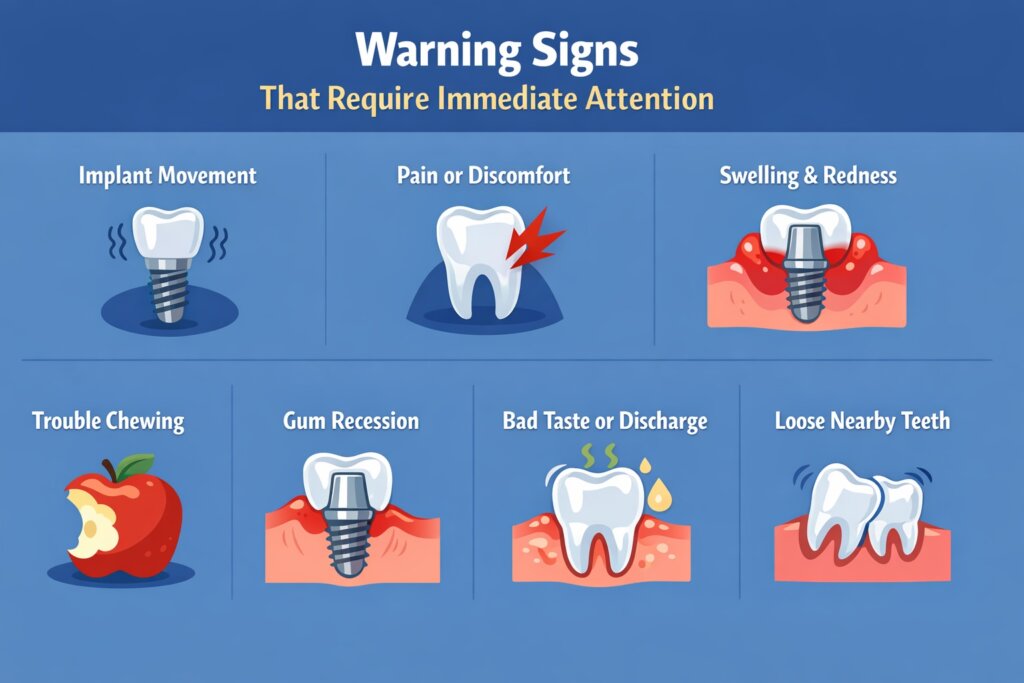
Several symptoms indicate your dental implant needs emergency evaluation. These signs often appear gradually but can worsen rapidly without professional intervention. Recognizing these warning signals helps you seek timely care that may save your implant.
1. Noticeable Movement or Wobbling
The most obvious sign is feeling the implant shift when eating, brushing, or applying gentle pressure. Even slight movement indicates the implant is no longer securely anchored in the bone.
2. Pain or Discomfort Around the Implant
While mild soreness after surgery is normal, persistent or increasing pain suggests complications. Sharp, throbbing, or constant discomfort requires immediate evaluation.
3. Swelling and Redness of Surrounding Tissues
Inflammation around the implant site often indicates infection or tissue rejection. These symptoms typically worsen without professional treatment and antibiotics.
4. Difficulty Chewing or Biting
Problems with normal chewing function suggest the implant is not properly supporting the crown. This instability can damage adjacent teeth if left untreated.
5. Gum Recession Exposing the Implant
Visible implant threads or metal components indicate tissue loss around the implant. This exposure increases infection risk and compromises long-term stability.
6. Unusual Taste or Discharge
A metallic taste or pus around the implant suggests an active infection requiring immediate antibiotic therapy and professional cleaning.
7. Changes in Adjacent Teeth
Loosening or discomfort in neighboring teeth may indicate the implant is affecting surrounding structures through infection or mechanical stress.
Common Causes of Loose Surgical Dental Implants
Understanding why implants become loose helps prevent future complications and guides treatment decisions. Most implant failures result from biological or mechanical factors that develop over time. Identifying the underlying cause determines the most appropriate treatment approach.
1. Failed Osseointegration
The implant may not properly fuse with the jawbone due to poor bone quality, inadequate healing, or surgical complications. This typically occurs within the first few months after placement.
2. Peri-Implantitis
Bacterial infection around the implant destroys supporting bone tissue, similar to gum disease around natural teeth. Poor oral hygiene and smoking significantly increase this risk.
3. Mechanical Overload
Excessive biting forces from teeth grinding, clenching, or chewing hard objects can damage the implant-bone interface. Night guards help protect against grinding-related damage.
4. Loose Abutment Screw
The connection between the implant and crown may loosen over time, causing movement that can feel like implant failure. This is often the easiest problem to fix.
5. Inadequate Bone Support
Insufficient bone volume or density at the implant site can lead to gradual loosening as the implant lacks a proper foundation for long-term stability.
6. Systemic Health Issues
Conditions like diabetes, autoimmune disorders, or medications that affect bone healing can compromise implant integration and long-term success.
Surgical dental implants can fail for various reasons, from poor initial integration to long-term complications.
Immediate Steps to Take Before Emergency Treatment
Taking appropriate action before reaching the emergency dentist can help protect your implant and manage discomfort. These steps focus on preventing further damage while maintaining oral hygiene around the affected area. Avoid actions that could worsen the situation or cause additional complications.
Quick response and proper care can make the difference between saving and losing your implant.
1. Stop Using the Affected Area
Avoid chewing on the side with the loose implant to prevent further loosening or damage. Stick to soft foods and use the opposite side of your mouth when eating.
2. Maintain Gentle Oral Hygiene
Continue brushing and flossing carefully around the implant area using a soft-bristled toothbrush. Gentle cleaning prevents bacterial buildup that could worsen infection.
3. Rinse with Warm Salt Water
Use a mild salt water rinse (1/2 teaspoon salt in warm water) to reduce bacteria and inflammation. Rinse gently without vigorous swishing that might disturb the implant.
4. Apply Cold Compress for Swelling
Use an ice pack wrapped in a thin towel for 15-20 minutes at a time to reduce swelling and discomfort. Never apply ice directly to the skin or implant area.
5. Take Over-the-Counter Pain Relief
Ibuprofen or acetaminophen can help manage pain and reduce inflammation while you await professional treatment. Follow package directions and avoid exceeding recommended doses.
6. Document Symptoms and Timeline
Note when the looseness started, pain levels, and any triggers that worsen symptoms. This information helps the emergency dentist diagnose the problem more quickly.
7. Contact Emergency Dental Services Immediately
Call for urgent care as soon as you notice implant movement, even if pain is minimal. Early intervention offers the best chance of saving the implant.
Treatment Options for Loose Dental Implants
Treatment approaches depend on the cause and severity of implant loosening, ranging from simple adjustments to complete replacement. Early intervention often allows for conservative treatments that preserve the existing implant. Advanced cases may require more extensive procedures to restore function and stability.
| Problem Type | Treatment Approach | Success Rate | Recovery Time |
|---|---|---|---|
| Loose Abutment Screw | Retightening or replacement | 95-98% | Same day |
| Early Integration Failure | Removal and replacement | 85-90% | 3-6 months |
| Peri-implantitis | Deep cleaning and antibiotics | 70-80% | 2-4 weeks |
| Complete Implant Failure | Removal and bone grafting | 80-85% | 4-8 months |
Emergency Dental San Francisco offers comprehensive emergency implant services, with transparent pricing and financing options for dental implants when extensive treatment is needed.
Cost Considerations and Financing Options for Dental Implants
Emergency implant treatment costs vary significantly based on the complexity of the problem and required interventions. Simple adjustments may cost a few hundred dollars, while a complete implant replacement can cost several thousand dollars. Understanding your options helps you make informed decisions about treatment timing and approach.
1. Emergency Consultation and Diagnosis
Initial evaluation, X-rays, and treatment planning typically range from $200 to $ 500. This investment provides crucial information about the extent of the problem and treatment options.
2. Simple Repairs and Adjustments
Abutment tightening or minor adjustments usually cost $300- $ 800. These procedures often resolve the problem immediately without extensive treatment.
3. Infection Treatment and Deep Cleaning
Peri-implantitis therapy ranges from $500-1500 depending on severity. Early treatment prevents more expensive complications and often saves the implant.
4. Implant Replacement Procedures
Complete implant replacement, including removal, healing time, and new implant placement, can cost $ 3,000 – $6,000. The cost of surgical dental implants includes all phases of treatment, from removal through final restoration.
5. Insurance Coverage Options
Many insurance plans cover emergency implant treatment, especially when medically necessary. Pre-authorization helps clarify coverage and out-of-pocket expenses before treatment begins.
6. Flexible Payment Plans
Financing options for dental implants make emergency treatment accessible without delaying necessary care. Payment plans often include interest-free periods for qualified patients.
7. Long-term Value Considerations
Prompt treatment often costs less than delayed care, which may require more extensive procedures. Saving an existing implant is typically more economical than complete replacement.
Most dental insurance for root canal and implant emergencies provides partial coverage, especially when the problem results from trauma or infection.
When to Seek Emergency Care vs. Regular Dental Visits
Distinguishing between urgent and routine implant concerns helps you respond appropriately to different situations. True emergencies require immediate attention to prevent implant loss, while minor issues can often wait for regular appointments. Understanding these differences prevents unnecessary panic while ensuring serious problems receive prompt treatment.
1. Immediate Emergency Situations
Visible implant movement, severe pain, significant swelling, or signs of infection require same-day treatment. These symptoms indicate active problems that worsen without professional intervention.
2. Urgent But Not Immediate Concerns
Mild discomfort, slight gum irritation, or food impaction around implants should be addressed within 24-48 hours. These issues can often wait for the next available appointment.
3. Routine Monitoring Situations
Gradual changes in gum appearance, minor sensitivity, or questions about implant care can be discussed at regular checkups. These concerns don’t typically require emergency intervention.
4. Trauma-Related Emergencies
Any facial trauma affecting the implant area requires immediate evaluation, even without obvious damage. Hidden complications may not become apparent for hours or days after injury.
5. Signs of Systemic Complications
Fever, facial swelling extending beyond the implant area, or difficulty swallowing may indicate serious infection requiring emergency medical attention.
Emergency Dental San Francisco provides 24/7 access for urgent implant complications, with same-day appointments available throughout the Bay Area including Oakland, Berkeley, and Fremont.
Recovery and Follow-up Care After Emergency Treatment
Successful recovery from implant emergencies depends on following post-treatment instructions and attending scheduled follow-up appointments. The healing process varies based on the type of intervention performed and individual patient factors. Proper aftercare significantly impacts the long-term success of emergency implant treatment.
Most patients experience gradual improvement over several days to weeks following emergency implant care.
1. Immediate Post-Treatment Care
Follow specific instructions for pain management, oral hygiene, and activity restrictions during the first 24-48 hours. These guidelines promote healing and prevent complications.
2. Medication Compliance
Complete prescribed antibiotic courses and use pain medications as directed to control infection and discomfort. Report any adverse reactions or worsening symptoms immediately.
3. Dietary Modifications
Stick to soft foods and avoid the treated area during the initial healing period. Gradually return to normal diet as comfort and stability improve over the following weeks.
4. Activity Restrictions
Limit strenuous activities that could increase bleeding or swelling during the first few days. Resume normal activities gradually as healing progresses.
5. Warning Signs to Monitor
Watch for increasing pain, swelling, fever, or discharge that may indicate complications requiring additional treatment. Contact your emergency dentist immediately if these symptoms develop.
6. Scheduled Follow-up Appointments
Attend all recommended follow-up visits to monitor healing and assess treatment success. These appointments allow early detection and management of any developing issues.
Conclusion
A loose dental implant always requires emergency dental evaluation to prevent complete failure and preserve your investment. Early intervention offers the best outcomes and most conservative treatment options. Emergency Dental San Francisco provides 24/7 urgent implant care with transparent pricing and financing options across the Bay Area.
Emergency Dental San Francisco provides urgent dental implant care when your implant becomes loose or painful. Our experienced team offers same-day emergency appointments to assess and treat implant complications quickly. Learn more about protecting your investment today.
FAQs
Is a Loose Dental Implant an Emergency?
It can be. A loose implant may signal infection, bone loss, or a failing component, and waiting can make treatment more complex—call for same-day evaluation so we can relieve discomfort and protect the implant and surrounding bone.
What Should I Do If My Dental Implant Feels Loose?
Avoid chewing on that side, don’t try to tighten or wiggle it, keep the area clean with gentle brushing and warm saltwater rinses, and contact an urgent dental office right away for an exam and X-rays.
Can a Loose Dental Implant Be Saved?
Often, yes—especially if it’s a loose crown or abutment screw rather than the implant itself. We’ll identify the cause, stabilize the parts, and treat any infection to give you the best chance of saving it.
How Long Can You Wait To Fix a Loose Dental Implant?
Ideally, don’t wait—get seen within 24–48 hours, or sooner if there’s pain, swelling, bleeding, pus, fever, or a bad taste. Prompt care can prevent bone loss and reduce the risk of implant failure.
What Causes a Dental Implant To Become Loose?
Common causes include a loosened screw, a damaged crown/abutment, excessive bite forces (grinding), gum infection (peri-implantitis), insufficient bone support, or implant integration failure—an exam and imaging are needed to pinpoint the issue.

Emergency Dental San Francisco is a dental office focused on providing same-day dental appointments to patients in San Francisco and the surrounding area. We provide urgent dental care services during weekends, evenings and holidays.
We accept several forms of payment and have financing options available to those who qualify. We accept most dental insurance.