

03 Mar How to Handle a Children’s Dental Emergency (Step-by-Step Guide for Parents)
When your child experiences a dental emergency, every minute counts. Knowing how to respond quickly and calmly can mean the difference between saving a tooth and facing more complex treatment later. The statistics are sobering: nearly 80% of over 200,000 annual child emergency department visits for dental issues stem from preventable conditions, with costs averaging $1,900-$2,600 per visit.
This comprehensive guide walks you through essential steps for handling common children’s dental emergencies, from knocked-out teeth to severe toothaches. You’ll learn when to seek immediate professional care, how to provide effective first aid, and what to expect during emergency treatment.
Key Takeaways
- Act quickly within the first 30 minutes to maximize the chances of successful reimplantation.
- Severe pain, swelling with fever, or uncontrolled bleeding requires immediate emergency dental care.
- Keep knocked-out teeth moist in milk or saliva while seeking professional treatment.
- Never place aspirin directly on gums or use ice directly against the skin.
- Emergency Dental San Francisco provides 24/7 pediatric urgent care across the Bay Area.
- Bring insurance cards, medication lists, and recent dental records to streamline emergency visits.
Understanding how to triage children’s dental emergencies helps you make informed decisions under pressure.
Identifying When Your Child Needs an Emergency Dentist
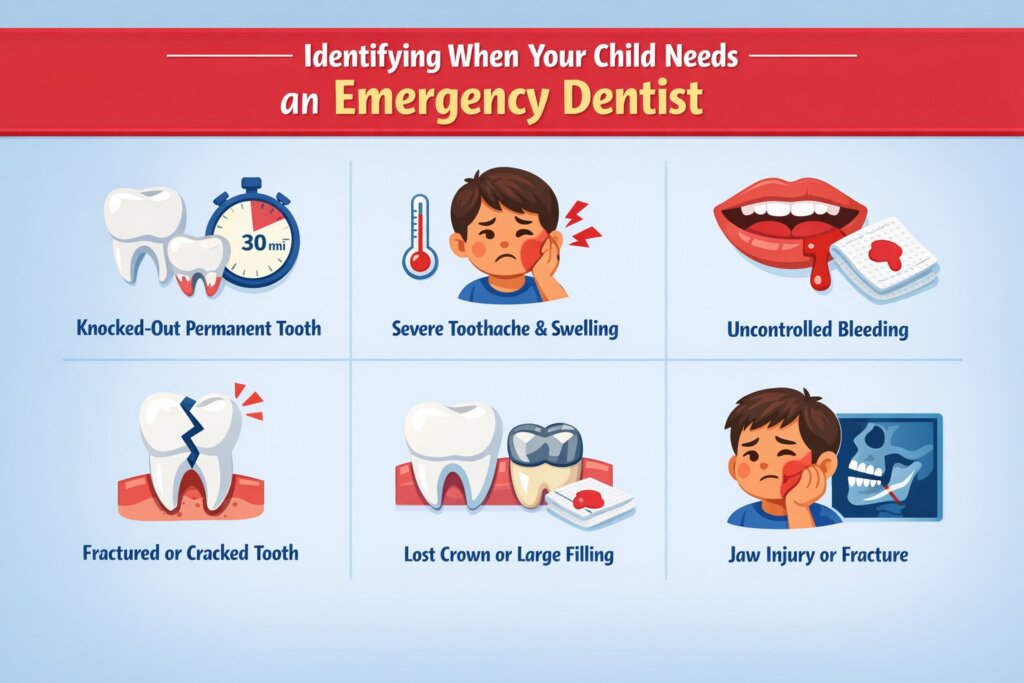
Recognizing true dental emergencies versus situations that can wait until regular office hours protects your child from unnecessary pain and complications. Certain symptoms demand immediate attention from an emergency dentist, while others may be managed with home care until morning. The key lies in understanding which signs indicate serious problems that could worsen without prompt treatment.
Emergency Dental San Francisco treats pediatric urgent care cases 24/7, but knowing when to call helps you act decisively. Time-sensitive situations require immediate professional intervention.
1. Knocked-Out Permanent Teeth
A completely knocked-out permanent tooth represents the most time-critical children’s dental emergency. You have roughly 30 minutes to maximize the success rate of reimplantation.
2. Severe Toothache With Swelling
Pain accompanied by facial swelling, especially with fever, suggests a serious infection requiring immediate antibiotic treatment. Untreated dental abscesses can spread to other areas of the head and neck.
3. Uncontrolled Bleeding
Bleeding that doesn’t stop after 10-15 minutes of direct pressure indicates trauma requiring professional assessment. This often occurs with sports injuries or accidents.
4. Fractured or Cracked Teeth
Visible cracks or breaks in teeth, particularly those that expose the inner pulp, require prompt attention to prevent infection. Sharp edges can also cut the tongue or cheeks.
5. Lost Crowns or Large Fillings
When substantial dental work comes loose, the exposed tooth becomes vulnerable to further damage and sensitivity. Quick replacement prevents complications.
6. Jaw Injury or Suspected Fracture
Difficulty opening the mouth, misaligned bite, or visible jaw deformity following trauma requires immediate evaluation. These injuries may affect breathing or eating.
Step-by-Step Emergency Response for Common Dental Injuries
Your immediate response to children’s dental emergencies can significantly impact treatment outcomes and your child’s comfort level. Each type of injury requires specific first-aid measures before reaching professional care. Following proper protocols helps preserve damaged teeth and prevents additional complications.
These step-by-step instructions guide you through the most frequent pediatric dental emergencies parents encounter.
1. Knocked-Out Tooth Protocol
Handle the tooth only by the crown, never touching the root surface. Gently rinse with water if dirty, but avoid scrubbing or removing attached tissue fragments.
Try to reinsert the tooth into its socket if the child is old enough to cooperate safely. If reimplantation isn’t possible, store the tooth in milk, saline solution, or between the child’s cheek and gum.
2. Severe Toothache Management
Rinse the mouth with warm salt water to reduce inflammation and remove food particles. Apply a cold compress to the outside of the cheek for 15-20 minutes to control swelling.
Give age-appropriate doses of ibuprofen or acetaminophen for pain relief. Never place aspirin directly on the gums, as this can cause chemical burns.
3. Broken or Chipped Tooth Care
Collect any tooth fragments and rinse them gently with water. Save pieces in milk or saline solution to bring to your emergency dentist appointment.
Cover sharp edges with dental wax, sugar-free gum, or gauze to protect the tongue and cheeks. Avoid hard or sticky foods until professional treatment.
4. Dental Bleeding Control
Apply firm, direct pressure using clean gauze or a cloth for 10-15 minutes. Have your child bite down gently on the gauze if they’re old enough to cooperate.
If bleeding continues after 15 minutes of pressure, seek emergency care immediately. Persistent bleeding may indicate deeper tissue damage requiring professional intervention.
5. Lost Crown or Filling Response
Keep the crown or filling if it comes out intact, and bring it to your dental appointment. Clean the area gently and avoid chewing on that side of the mouth.
Temporary dental cement from pharmacies can provide short-term protection, but professional replacement should happen within 24-48 hours to prevent complications.
Preventing Future Children’s Dental Emergencies
Prevention remains the most effective strategy for avoiding pediatric dental emergencies and their associated costs and trauma. Simple protective measures and good oral hygiene habits significantly reduce the risk of serious dental injuries in children. The data shows that 46% of children ages 2-19 have dental caries, with many cases progressing to emergency situations when left untreated.
Implementing these preventive strategies helps protect your child’s oral health and reduces emergency dental visits.
1. Custom Sports Mouthguards
Professional mouthguards provide superior protection compared to over-the-counter options for children participating in contact sports. We create custom-fitted guards that offer maximum protection while allowing comfortable breathing and speaking.
2. Regular Dental Checkups
Routine dental visits every six months help identify and treat problems before they become emergencies. Early intervention prevents small cavities from developing into painful abscesses requiring urgent care.
3. Proper Oral Hygiene Education
Teaching children effective brushing and flossing techniques establishes lifelong habits that prevent decay and gum disease. Fluoride treatments and dental sealants provide additional protection for developing teeth.
4. Dietary Modifications
Limiting sugary snacks and drinks reduces cavity formation, while avoiding hard candies and ice prevents tooth fractures. Encouraging water consumption helps neutralize acid-producing bacteria in the mouth.
5. Childproofing and Safety Measures
Securing furniture, using safety gates, and supervising young children during play reduces the risk of falls and facial injuries. Teaching older children about dental safety during sports and activities builds awareness.
When to Choose Emergency Dental Care Over Hospital Emergency Rooms
Many parents instinctively head to hospital emergency rooms for children’s dental emergencies, but dental clinics often provide more appropriate and cost-effective care. Hospital emergency departments typically focus on life-threatening conditions and may only offer pain medication and antibiotics for dental problems. Emergency Dental San Francisco specializes in comprehensive dental treatment that addresses the root cause of your child’s pain.
Understanding when to choose emergency dental care versus hospital care helps you make the best decision for your child’s specific situation.
1. Dental-Specific Equipment and Expertise
Emergency dental clinics maintain specialized equipment for procedures such as root canal therapy, extractions, and tooth reimplantation that hospitals typically don’t offer. Our dentists have specific training in pediatric emergency procedures.
2. Immediate Definitive Treatment
Rather than temporary pain management, we provide comprehensive treatment that resolves the underlying problem. This approach often prevents the need for multiple visits and reduces overall treatment costs.
3. Cost Considerations
Emergency room visits for dental problems average $1,900 to $2,600, often without definitive treatment. Our transparent pricing and insurance acceptance make emergency dental care more affordable than hospital alternatives.
4. Reduced Wait Times
Emergency dental clinics typically see patients more quickly than busy hospital emergency departments. We prioritize dental emergencies and maintain shorter wait times for urgent cases.
5. Child-Friendly Environment
Our clinic is designed specifically for dental procedures, with equipment sized appropriately and comfort measures for children. The familiar dental office setting often feels less intimidating than hospital emergency rooms.
Choose hospital emergency care only for facial fractures, difficulty breathing or swallowing, or uncontrolled bleeding that doesn’t respond to direct pressure.
Conclusion
Quick action and proper first aid can save your child’s tooth and prevent complications. Emergency Dental San Francisco provides 24/7 pediatric urgent care when you need it most. Call 415-230-2783 immediately for any children’s dental emergency.
When your child faces a dental emergency, Emergency Dental San Francisco provides immediate dental trauma care with compassionate, kid-friendly treatment. Our experienced team handles everything from knocked-out teeth to severe pain with same-day appointments. Learn more about protecting your child’s smile today.
FAQs
What Is Considered a Dental Emergency for a Child?
A child’s dental emergency includes uncontrolled bleeding, facial swelling, fever with tooth pain (possible infection), a knocked-out or very loose tooth, a broken tooth with pain or exposed nerve, trouble swallowing or breathing, or severe pain that won’t improve with appropriate children’s medication. If you’re unsure, call us 24/7 at 415-230-2783 for guidance and same-day care.
What Should I Do If My Child Knocks Out a Tooth?
First, check for head injury and control bleeding with gentle pressure. If it’s a permanent tooth, handle it by the crown (not the root), rinse briefly with clean water if dirty, and try to place it back in the socket; if that’s not possible, store it in milk or saline and come in immediately—time matters. If it’s a baby tooth, do not reinsert it; call us right away to evaluate and protect the developing adult tooth.
How Do I Know If My Child’s Toothache Is an Emergency?
It’s an emergency if the pain is severe, wakes them up, lasts more than a day, or is accompanied by swelling, fever, pus, a bad taste, or difficulty opening the mouth. Until you’re seen, use a cold compress and age-appropriate pain relief as directed, avoid placing aspirin on the gums, and contact us for urgent evaluation and safe pain relief.
What Should I Do If My Child Chips or Breaks a Tooth?
Rinse the mouth with warm water, apply a cold compress for swelling, and save any tooth fragments in a clean container. If there’s bleeding, use gentle pressure with gauze, and avoid chewing on that side; if the tooth is painful, looks dark/red (possible nerve exposure), or the break is large, come in the same day so we can assess with X-rays and prevent infection or further damage.
When Should I Take My Child to the ER for a Dental Problem?
Go to the ER (or call 911) for trouble breathing or swallowing, rapidly spreading facial/neck swelling, high fever with lethargy, uncontrolled bleeding, signs of severe allergic reaction, or significant facial trauma or suspected concussion. For most dental emergencies — like toothaches, abscesses, broken or knocked-out teeth — without airway concerns, an urgent dental visit is usually the fastest way to get definitive relief. Call 415-230-2783 any time.

Emergency Dental San Francisco is a dental office focused on providing same-day dental appointments to patients in San Francisco and the surrounding area. We provide urgent dental care services during weekends, evenings and holidays.
We accept several forms of payment and have financing options available to those who qualify. We accept most dental insurance.