
23 Mar Emergency Dental Care Without Insurance: How Treatment Type and Payment Options Affect Costs
Dental emergencies never come at convenient times, and without insurance, the uncertainty of costs can feel overwhelming. Emergency dental care without insurance typically ranges from $75 for a simple consultation to $5,000 for complex procedures like extensive tooth repairs. Understanding these costs upfront helps you make informed decisions when pain strikes at midnight or during weekend family gatherings.
This article breaks down specific emergency dental costs, explores payment options, and shows you how to access affordable urgent care in San Francisco and the Bay Area. You’ll learn about financing solutions, what to expect during your visit, and when immediate treatment becomes necessary, regardless of cost.
Key Takeaways
- Emergency dental consultations without insurance cost $60-$200, with most procedures ranging $150-$1,500.
- Simple extractions run $75-$400, while root canals cost $500-$1,500 depending on complexity.
- After-hours and weekend emergency visits add $100-$300 to the cost of standard procedures.
- Payment plans, financing options, and cash discounts can reduce immediate out-of-pocket expenses.
- Same-day treatment prevents complications that lead to higher costs later.
How Much Is Emergency Dental Care Without Insurance

Emergency dental care without insurance can cost anywhere from a relatively small out-of-pocket amount for an exam and temporary relief to a much higher total for procedures like root canals, crowns, or extractions. The final price often depends on the severity of the dental problem, the type of treatment required, and whether you need care during evenings, weekends, or holidays. Understanding the usual cost ranges can help patients make faster, more confident decisions during a painful dental emergency.
| Emergency Dental Service | Typical Cost Without Insurance | What Affects the Price |
|---|---|---|
| Emergency consultation and diagnosis | $60–$200 | Exam complexity, digital vs. traditional X-rays, number of images needed |
| Pain management and palliative care | $100–$250 | Medications, temporary fillings, drainage needs, level of discomfort |
| Simple tooth extractions | $75–$400 | Tooth location, root complexity, anesthesia needs, difficulty of removal |
| Root canal therapy | $500–$1,500 | Type of tooth, number of roots, infection severity, specialist involvement |
| Dental fillings and repairs | $139–$976 | Filling material, size of damage, location of the tooth, extent of repair |
| Crown replacement and repairs | $300–$1,800 | Temporary vs. permanent crown, material used, repair vs. full replacement |
| After-hours and weekend surcharges | Additional $100–$300 | Time of service, emergency staffing, off-hours availability |
These price ranges show why emergency dental visits can feel unpredictable without insurance, especially when treatment goes beyond the initial exam. Even so, many clinics can explain the expected charges upfront and help patients choose the most practical treatment based on urgency and budget. At Emergency Dental San Francisco, we provide transparent pricing before treatment begins and help patients explore affordable payment options for same-day emergency care.
Factors That Influence Emergency Dental Costs
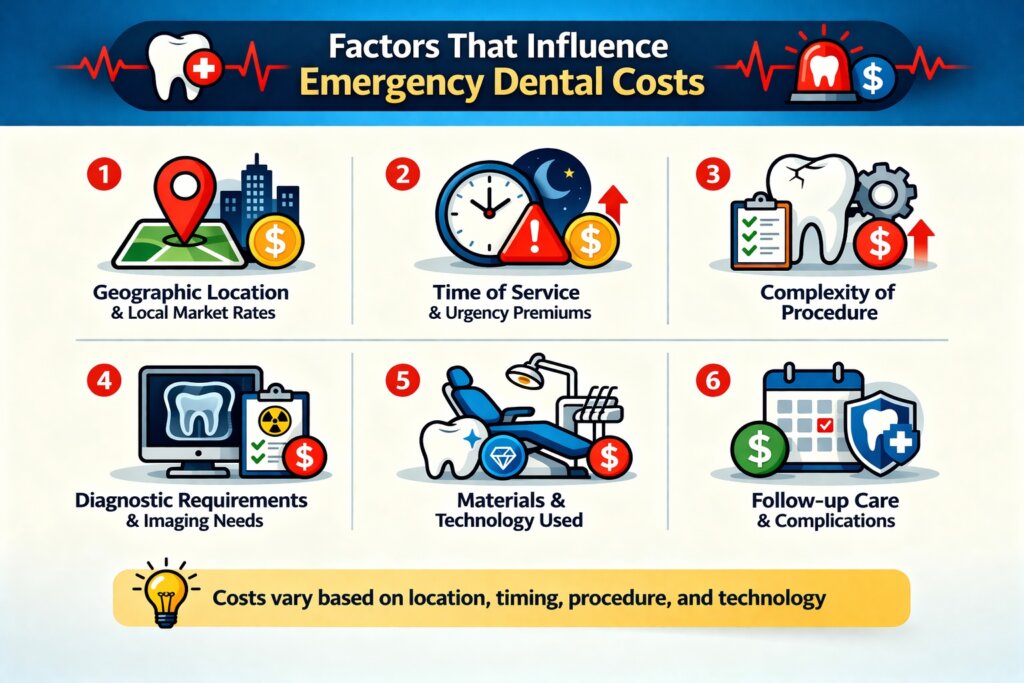
Several variables affect the final cost of emergency dental treatment, making it important to understand what drives pricing in urgent care situations. Geographic location, time of service, and treatment complexity all play significant roles in determining your out-of-pocket expenses. Additional factors, such as the dental practice’s overhead costs and the sophistication of its equipment, can also affect pricing.
1. Geographic Location and Local Market Rates
Dental costs vary significantly between urban and rural areas, with major metropolitan areas like San Francisco typically charging higher rates due to increased overhead costs. The local competition and average income levels in your area also influence pricing structures.
2. Time of Service and Urgency Premiums
After-hours, weekend, and holiday emergency visits command premium pricing due to the additional costs of maintaining 24/7 availability. These surcharges typically add 25-50% to standard procedure costs but provide access to immediate care when you need it most.
3. Complexity of the Required Procedure
Simple procedures like extractions cost less than complex treatments requiring specialized skills or equipment. Multi-step procedures or those requiring sedation increase both time and cost requirements.
4. Diagnostic Requirements and Imaging Needs
Some emergencies require extensive X-rays, CT scans, or other diagnostic imaging to properly assess the situation. Digital imaging costs more initially but often provides better diagnostic information and treatment planning.
5. Materials and Technology Used
Modern dental materials and techniques often cost more but provide better outcomes and longevity. Practices using state-of-the-art equipment may charge higher fees but often complete treatments more efficiently.
6. Follow-up Care and Complications
Some emergency treatments require multiple visits or have higher complication rates, increasing overall costs. Discussing the complete treatment plan upfront helps avoid unexpected expenses.
Understanding these cost drivers helps you make informed decisions about when and where to seek emergency treatment.
Payment Options and Financial Solutions
Managing emergency dental costs without insurance requires exploring various payment options and financial solutions available to patients. Many dental practices offer payment plans, financing programs, and cash discounts to make urgent care more accessible. Understanding these options before you need emergency treatment helps you act quickly when dental crises occur.
Multiple payment strategies can reduce the immediate financial burden of emergency dental care.
1. Cash and Credit Card Payments
Paying with cash or credit cards provides immediate access to treatment and sometimes qualifies for cash discounts. Many practices offer 5-10% discounts for cash payments made at the time of service.
2. Healthcare Credit Cards and Financing
Specialized healthcare credit cards like CareCredit offer promotional financing terms for dental treatment. These programs often provide 6-24 months of interest-free financing for qualified applicants.
3. In-House Payment Plans
Many dental practices offer their own payment plans that spread treatment costs over several months. These arrangements typically require a down payment and monthly installments without interest charges.
4. Dental Savings Plans and Discount Programs
Membership-based dental savings plans provide discounted rates for various procedures. These plans cost $100-$200 annually but can reduce emergency treatment costs by 20-50%.
5. Community Health Centers and Sliding Fee Scales
Federally qualified health centers and community dental clinics offer sliding fee scales based on income. These programs can significantly reduce costs for qualifying patients.
6. Dental Schools and Training Programs
Dental schools provide supervised student treatment at reduced costs. While appointments may take longer, the savings can be substantial for non-urgent procedures.
At Emergency Dental San Francisco, we accept cash and all major credit cards, and we offer financing options for qualified patients. Our goal is to make urgent dental care accessible regardless of your insurance status, with transparent pricing and flexible payment solutions.
When to Seek Immediate Emergency Dental Care
Certain dental conditions require immediate professional attention regardless of cost, as delays can lead to serious health complications and higher treatment costs. Recognizing true dental emergencies helps you prioritize treatment and avoid potentially life-threatening situations. Some symptoms indicate infections or injuries that can spread beyond the mouth if left untreated.
Understanding emergency warning signs ensures you seek appropriate care at the right time.
- Severe, persistent tooth pain that interferes with sleep or daily activities
- Facial swelling, especially when accompanied by fever or difficulty swallowing
- Knocked-out teeth that may be saved if treated within 30-60 minutes
- Uncontrolled bleeding from the mouth following injury or dental work
- Suspected jaw fracture or inability to open or close your mouth normally
- Abscessed teeth with pus drainage and systemic symptoms like fever
- Lost crowns or large fillings that expose sensitive tooth structure
These situations warrant immediate professional evaluation and treatment to prevent complications and preserve your oral health.
Conclusion
Emergency dental care costs without insurance range from $75 for consultations to $5,000 for complex procedures, but immediate treatment prevents complications that increase expenses later. Multiple payment options, including financing, payment plans, and cash discounts, make urgent care accessible when you need it most. Don’t let cost concerns delay treatment for serious dental emergencies that threaten your health and well-being.
Emergency Dental San Francisco makes urgent care affordable with financing options for uninsured patients. We accept cash and credit cards for accessible emergency treatment. Learn more about our payment solutions today.
FAQs
How Much Does an Emergency Dentist Visit Cost?
Without insurance, an emergency dental visit typically ranges from about $150–$400 for an exam, with X-rays and treatment (like a filling, drainage, or extraction) adding to the total. At Emergency Dental San Francisco, we focus on fast pain relief first and provide clear, upfront pricing and next steps before treatment.
How Much Does It Cost to Get a Tooth Pulled in an Emergency?
Emergency tooth extractions without insurance often cost about $250–$750, depending on whether it’s a simple or surgical extraction; sedation and X-rays can increase the total. We’ll evaluate the tooth, explain your options, and help you choose the safest, most cost-effective solution for same-day relief.
How Much Does An Emergency Root Canal Cost?
Without insurance, an emergency root canal commonly runs about $900–$2,000+ depending on the tooth (front vs. molar), complexity, and imaging; a crown is usually a separate cost if needed later. Our clinicians prioritize getting you out of pain quickly and outlining a realistic, step-by-step plan for follow-up care.
How Much Does It Cost To Fix a Broken Tooth in an Emergency?
Fixing a broken tooth can range widely—about $200–$600 for bonding or a filling, $900–$2,500+ for a crown, and more if a root canal is needed. We’ll assess the crack depth, protect the tooth, and clearly review repair options to stabilize it safely as soon as possible.
Can I Go to the ER for Dental Pain and How Much Will It Cost?
You can go to the ER for severe swelling, fever, trouble breathing/swallowing, or uncontrolled bleeding, but most ERs can’t provide definitive dental treatment; they may offer pain medication, antibiotics, and referral. ER bills without insurance often range from several hundred to several thousand dollars, whereas an urgent-care dental visit is typically more direct, faster for tooth-specific care, and focused on treating the source of pain—call 415-230-2783 for 24/7 guidance.

Emergency Dental San Francisco is a dental office focused on providing same-day dental appointments to patients in San Francisco and the surrounding area. We provide urgent dental care services during weekends, evenings and holidays.
We accept several forms of payment and have financing options available to those who qualify. We accept most dental insurance.