


26 Mar Emergency Palliative Dental Treatment: What It Is and When You Need It
Emergency palliative dental treatment provides immediate pain relief when you’re suffering from severe dental pain but can’t receive definitive treatment right away. This type of care focuses on managing your discomfort and stabilizing your condition until comprehensive treatment can be performed. Unlike curative procedures, palliative treatment addresses symptoms rather than the underlying cause of your dental problem.
This article explains what emergency palliative treatment dental procedures involve, when you might need this type of care, and how to access immediate relief. You’ll learn about the specific situations that call for palliative treatment and what to expect during your visit to a dental clinic near me.
Key Takeaways
- Emergency palliative dental treatment provides immediate pain relief without curing the underlying problem.
- This treatment is coded as D9110 and covers services that don’t have distinct procedure codes.
- Common situations include severe toothaches, infections, and trauma when definitive treatment isn’t immediately possible.
- Palliative care may include pain medication, temporary fillings, or drainage of infections.
- Follow-up appointments are essential for definitive treatment after palliative care.
- Emergency dental clinics provide 24/7 access to palliative treatment when regular dental offices are closed.
What Is Emergency Palliative Treatment Dental Care
Emergency palliative treatment dental care refers to immediate interventions that relieve dental pain without providing a permanent solution. The American Dental Association defines this as treatment that relieves pain but is not curative, with services that don’t have distinct procedure codes. This type of care falls under dental code D9110, which covers palliative treatment of dental pain per visit.
The primary goal is to manage your pain and prevent the condition from worsening until you can receive comprehensive treatment. Think of it as dental first aid that gets you through a crisis.
Palliative treatment differs from emergency dental procedures in several key ways. While emergency procedures aim to fix the problem permanently, palliative care focuses solely on symptom management. For example, an emergency root canal treats the infection and saves the tooth, while palliative treatment might involve draining the infection and prescribing antibiotics to temporarily control pain and swelling.
When You Need Emergency Palliative Treatment Dental Services
Several situations call for emergency palliative treatment when visiting a dental office near me isn’t immediately possible. Recognizing these scenarios helps you understand when to seek this type of care rather than waiting for regular dental hours. Time-sensitive dental emergencies often require immediate pain management even when definitive treatment must wait.
The most common situations include severe infections, trauma, and equipment failures that compromise your oral health.
1. Severe Dental Infections and Abscesses
Dental abscesses cause intense throbbing pain that often worsens at night or when lying down. Palliative treatment may involve draining the infection and prescribing antibiotics to control bacterial spread until a root canal or extraction can be performed.
2. Fractured or Cracked Teeth
When a tooth breaks or cracks, sharp edges can cut your tongue and cheek while exposed nerves cause severe pain. Temporary measures include smoothing rough edges and placing protective coverings until permanent restoration is possible.
3. Lost Fillings or Crowns
Missing dental work exposes sensitive tooth structure to air, food, and bacteria. Palliative care involves placing temporary fillings or cement to protect the area until permanent replacement can be completed.
4. Severe Toothaches Without Clear Cause
Sometimes intense dental pain occurs without obvious damage or infection. Pain management and anti-inflammatory medications help control symptoms while diagnostic tests determine the underlying problem.
5. Post-Surgical Complications
Dry socket, excessive bleeding, or infection after tooth extraction requires immediate attention. Palliative treatment focuses on pain control and preventing further complications until healing can progress normally.
6. Orthodontic Emergencies
Broken braces, loose wires, or damaged appliances can cause pain and soft tissue injury. Emergency adjustments and protective wax provide relief until your orthodontist can make permanent repairs.
Common Emergency Palliative Treatment Dental Procedures
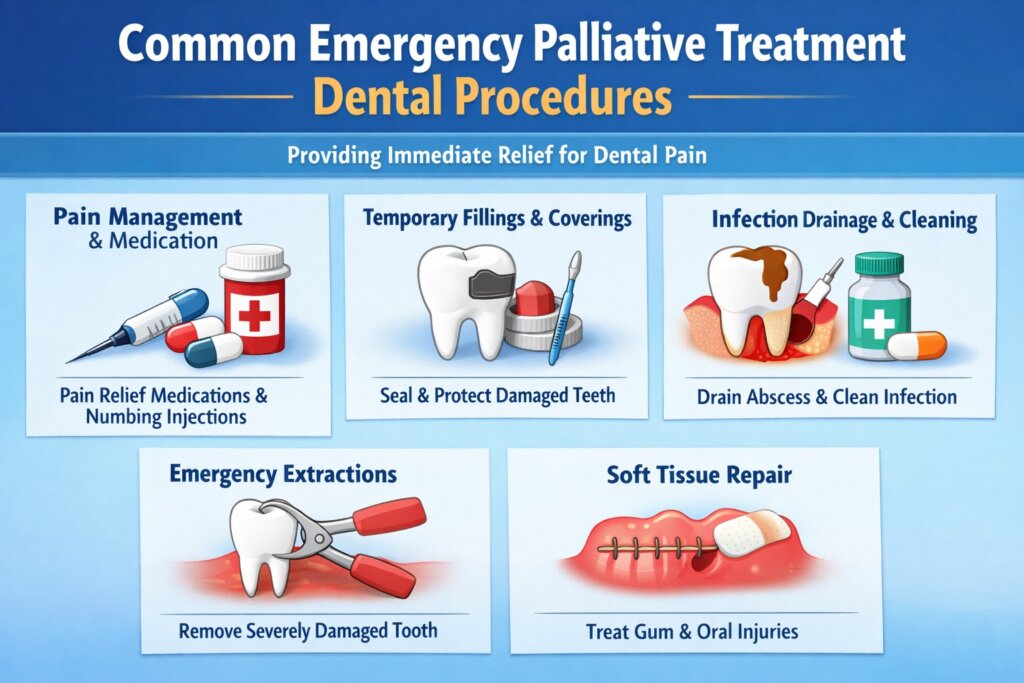
Emergency palliative treatment encompasses various procedures designed to provide immediate relief from dental teeth pain. These interventions are typically less invasive than definitive treatments but highly effective for managing acute symptoms. Understanding what to expect helps reduce anxiety when seeking emergency care.
Most palliative procedures can be completed quickly, often within a single visit to provide immediate relief.
1. Pain Management and Medication
Prescription pain relievers and anti-inflammatory drugs form the foundation of palliative care. Local anesthetic injections provide immediate numbing for severe pain that over-the-counter medications can’t control.
2. Temporary Fillings and Protective Coverings
Temporary restorative materials seal exposed tooth structure and protect sensitive areas. These materials aren’t meant to last long-term but provide crucial protection until permanent treatment can be scheduled.
3. Infection Drainage and Cleaning
Draining infected areas relieves pressure and reduces pain while antibiotics control bacterial growth. This procedure often provides dramatic pain relief within hours of treatment.
4. Emergency Extractions
When a tooth is severely damaged and causing extreme pain, emergency extraction may be the most appropriate palliative treatment. This removes the source of pain immediately while planning for replacement options later.
5. Soft Tissue Repair
Cuts, tears, or injuries to gums, lips, or cheeks require immediate attention to prevent infection and promote healing. Simple sutures and protective dressings are common palliative measures.
Finding Emergency Palliative Treatment Dental Care in San Francisco
Access to emergency palliative treatment dental services can mean the difference between manageable discomfort and unbearable pain. In San Francisco and the Bay Area, several options for immediate dental care exist, but not all facilities offer true 24/7 emergency services. Knowing where to go before an emergency occurs saves precious time when you’re in pain.
Emergency Dental San Francisco provides comprehensive palliative treatment services around the clock, ensuring you never have to suffer through a dental emergency alone.
We understand that dental emergencies don’t follow business hours. Our team provides same-day appointments, walk-in availability, and after-hours care throughout San Francisco, Oakland, Berkeley, Daly City, and surrounding communities. When you’re searching for a reliable dental clinic near me during a crisis, our 24/7 availability ensures immediate access to professional pain relief.
Our approach prioritizes rapid pain control while maintaining the highest standards of clinical care. We accept most dental insurance plans and offer transparent pricing for patients without coverage, ensuring financial concerns don’t delay necessary treatment. To streamline your emergency visit, bring a government ID, insurance information if available, a current medications list, and any recent dental records.
After Emergency Palliative Treatment: Next Steps
Emergency palliative treatment and dental care are just the first steps in resolving your dental problem. While these procedures provide crucial immediate relief, definitive treatment is necessary to address the underlying cause of your pain and prevent future complications. Most palliative treatments are intended as temporary measures requiring follow-up care within days or weeks.
Planning your next steps while still managing the immediate crisis ensures continuity of care and prevents the problem from recurring.
1. Scheduling Follow-Up Appointments
Most conditions requiring palliative treatment need definitive care within 24-72 hours. Root canals, permanent fillings, or extractions should be scheduled as soon as possible after initial pain control.
2. Medication Management
Take prescribed medications exactly as directed, even if pain improves significantly. Completing antibiotic courses prevents the emergence of antibiotic resistance and ensures effective infection control.
3. Monitoring for Complications
Watch for increasing pain, swelling, fever, or other warning signs that may indicate worsening conditions. Contact your dental provider immediately if symptoms worsen despite treatment.
4. Temporary Restoration Care
Avoid hard or sticky foods that might dislodge temporary fillings or protective coverings. Gentle brushing and warm salt water rinses help maintain oral hygiene without disrupting healing.
5. Long-Term Treatment Planning
Use the time between palliative treatment and definitive care to research treatment options, verify insurance coverage, and prepare for more extensive procedures if needed.
Preventing Future Need for Emergency Palliative Treatment Dental Care
While emergencies can’t always be prevented, many situations requiring palliative treatment result from delayed routine care or preventable accidents. Regular dental checkups identify problems before they become painful emergencies, reducing your need for crisis intervention. Simple preventive measures significantly reduce your risk of requiring emergency palliative treatment.
Investing in prevention saves money, time, and discomfort compared to emergency treatment costs.
1. Regular Dental Examinations
Biannual checkups catch small problems before they become painful emergencies requiring palliative treatment. Early intervention for cavities and gum disease prevents infections and severe pain.
2. Protective Equipment for Sports
Custom mouthguards protect teeth during contact sports and recreational activities. These devices prevent fractures, chips, and knocked-out teeth that often require emergency palliative care.
3. Avoiding Hard Foods and Objects
Don’t use teeth as tools or bite extremely hard foods that can cause fractures. Ice, popcorn kernels, and hard candy are common culprits in dental emergencies.
4. Addressing Dental Anxiety
Many people delay routine care due to anxiety, leading to emergency situations later. Sedation options and gentle dental techniques make regular care more comfortable and prevent emergency needs.
5. Maintaining Good Oral Hygiene
Daily brushing, flossing, and antimicrobial rinses prevent most dental infections that require emergency treatment. Consistent home care is your best defense against dental emergencies.
Conclusion
Emergency palliative treatment dental care provides essential immediate relief when dental pain becomes unbearable. These procedures focus on symptom management rather than permanent solutions, offering a crucial bridge until definitive treatment can be completed. When facing a dental emergency in San Francisco or the Bay Area, immediate professional care is available 24/7 to ensure you don’t suffer unnecessarily through dental pain.
Emergency Dental San Francisco provides immediate pain relief through expert palliative treatments when you need it most. Our licensed professionals focus on quickly and safely relieving your dental pain. Learn more about our emergency care options.
FAQs
What Is Emergency Palliative Dental Treatment?
Emergency palliative dental treatment is same-day care focused on quickly reducing dental pain and swelling and stabilizing the problem (such as an inflamed nerve or infection) until definitive treatment can be completed.
What Is Considered Palliative Treatment in Dentistry?
Palliative dental treatment includes measures that relieve symptoms without fully resolving the underlying cause right away—such as numbing medication, draining an abscess, smoothing a sharp broken tooth edge, placing a temporary filling, or prescribing appropriate medications when needed.
How Much Does Emergency Palliative Dental Treatment Cost?
Cost depends on the exam, X-rays, and what’s needed to control pain (for example, a temporary filling or infection drainage). Emergency Dental San Francisco accepts most insurance, offers financing for those who qualify, and provides clear pricing before treatment.
What Does a Dentist Do for Emergency Tooth Pain?
A dentist identifies the cause with an exam and X-rays, then provides fast relief—often with local anesthesia, temporary restorations, bite adjustment, treatment for infection or swelling, and a clear plan for next steps such as a root canal, extraction, or crown.
Can The ER Provide Palliative Care For Dental Pain?
An ER can help with severe pain, swelling, fever, or spreading infection, but they typically can’t provide definitive dental treatment (like draining a tooth abscess or fixing a broken tooth). For most dental emergencies, an urgent-care dental clinic can treat the source and relieve pain more directly.

Emergency Dental San Francisco is a dental office focused on providing same-day dental appointments to patients in San Francisco and the surrounding area. We provide urgent dental care services during weekends, evenings and holidays.
We accept several forms of payment and have financing options available to those who qualify. We accept most dental insurance.