


12 Jan Emergency Dental Repair for Lost Fillings and Crowns: When Temporary or Permanent Restoration Is Needed
A lost filling or crown creates immediate vulnerability in your tooth, exposing sensitive dentin and nerve tissue to bacteria, temperature changes, and potential infection. Emergency dental repair for lost fillings and crowns requires prompt professional attention to prevent complications like severe tooth pain from exposed dentin, decay under the crown or filling, and permanent tooth damage.
This guide explains immediate steps to take when dental restorations fail, why quick treatment prevents serious complications, and how professional emergency care restores protection and comfort. You’ll learn about temporary solutions, permanent repair options, and when to seek urgent dental care.
Key Takeaways
- Lost crowns and fillings expose tooth tissue to bacteria and temperature sensitivity, requiring same-day repair.
- Temporary cement can provide short-term relief, but professional replacement prevents decay and infection.
- Emergency dental repair includes crown recementation, new dental fillings, and decay removal when needed.
- Delaying treatment often leads to root canal needs, crown replacement, or tooth extraction.
- 24/7 emergency dental services provide immediate pain relief and permanent restoration solutions.
When dental restorations fail unexpectedly, understanding your repair options helps you make informed decisions about immediate and long-term care.
Understanding Emergency Dental Repair for Lost Crowns and Fillings
Emergency dental repair addresses the urgent need to restore tooth protection when crowns or fillings become dislodged or damaged. The exposed tooth tissue becomes vulnerable to bacterial invasion, temperature sensitivity, and structural damage that can compromise the entire tooth. Professional repair involves cleaning the affected area, removing any decay, and placing appropriate restoration materials.
Lost dental restorations often occur from normal wear, sticky foods, or underlying decay that weakens the bond between the restoration and tooth structure. Emergency Dental San Francisco provides same-day assessment and repair services to address these urgent situations before complications develop.
Immediate Steps When Your Crown or Filling Falls Out
Taking proper action in the first few hours after losing a crown or filling can prevent pain and protect the exposed tooth from further damage. Quick response also improves the chances of successful recementation or simple filling replacement.
1. Retrieve and Examine the Lost Restoration
Find the crown or filling, if possible, and examine it for cracks or damage. Clean restorations in good condition may be recemented, while damaged ones require replacement.
2. Clean the Affected Tooth Gently
Rinse your mouth with warm salt water to remove debris from the exposed tooth surface. Avoid aggressive brushing or probing the sensitive area with your tongue or fingers.
3. Manage Pain and Sensitivity
Apply a cold compress to the outside of your cheek for 15-minute intervals to reduce swelling. Over-the-counter pain relievers can help manage discomfort until professional treatment.
4. Protect the Exposed Tooth
Use dental wax, sugar-free gum, or temporary dental cement from a pharmacy to cover sharp edges. Avoid chewing on the affected side and stick to soft foods.
5. Seek Professional Care Quickly
Contact an emergency dentist within 24 hours for proper evaluation and repair. Temporary measures provide short-term relief but don’t address underlying issues or prevent complications.
Emergency situations require professional assessment to determine whether simple recementation is sufficient or if decay removal and new restoration placement are necessary.
Common Causes of Crown and Filling Loss
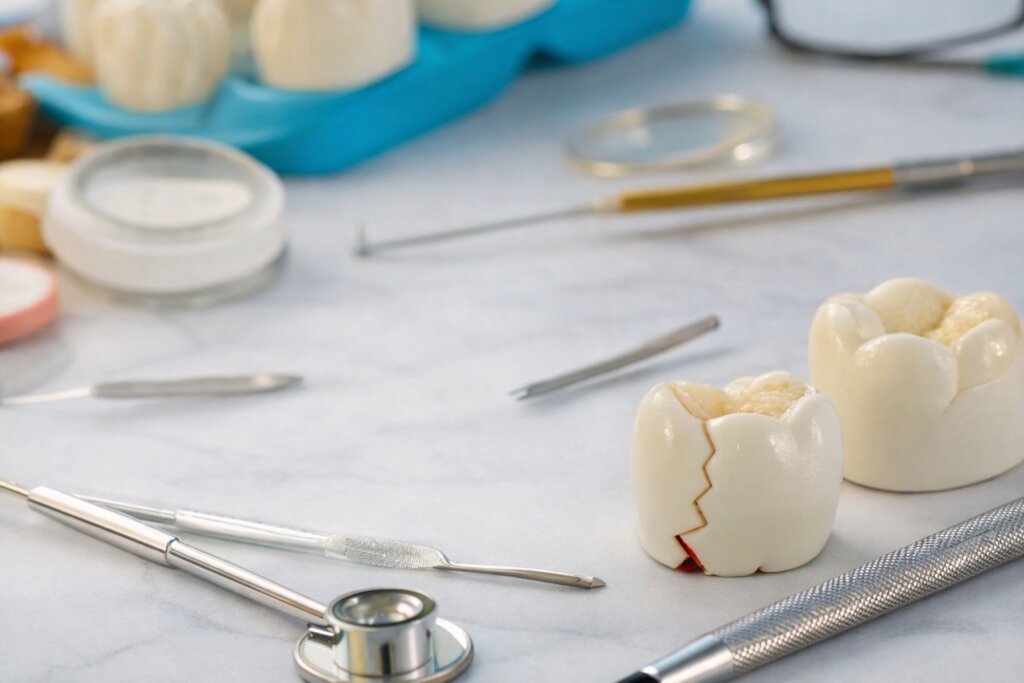
Understanding why dental restorations fail helps prevent future occurrences and guides treatment decisions. Most crown and filling losses result from predictable factors that an emergency dental evaluation can identify and address.
1. Decay Under Crown or Filling
Bacterial infiltration around restoration margins can create new cavities that weaken the bond between the tooth and the restoration. This decay often develops silently until the restoration becomes loose or falls out completely.
2. Normal Wear and Aging
Dental restorations have finite lifespans, typically lasting 10-15 years for crowns and 5-10 years for fillings. Material fatigue and repeated stress eventually compromise the seal and retention.
3. Trauma or Excessive Force
Biting hard objects, teeth grinding, or facial trauma can dislodge even well-fitted restorations. Sports injuries and accidents commonly cause crown displacement or filling fracture.
4. Poor Initial Fit
Crowns that don’t fit properly or fillings with inadequate bonding may fail prematurely. The crown won’t stay on; issues often indicate preparation problems or impression inaccuracies.
5. Sticky or Hard Foods
Caramel, taffy, and hard candies can pull out loose restorations or create enough force to dislodge secure ones. Ice chewing and nut cracking place excessive stress on dental work.
Professional examination identifies the specific cause of restoration failure, guiding appropriate repair strategies and prevention recommendations.
Pain and Sensitivity After Crown or Filling Loss
Exposed tooth tissue can cause various types of discomfort, indicating the urgency of professional repair. Understanding these symptoms helps distinguish between manageable discomfort and situations requiring immediate emergency care.
| Symptom Type | Typical Causes | Urgency Level |
|---|---|---|
| Tooth sensitivity to cold/heat | Exposed dentin and nerve endings | Moderate – treat within 24 hours |
| Sharp pain when biting | Pressure on exposed pulp or cracked tooth | High – seek same-day care |
| Constant throbbing pain | Infection or inflammation | Urgent – immediate treatment needed |
| Sensitive tooth to air | Dentin exposure and nerve irritation | Moderate – professional care recommended |
Pain when biting after crown fell out often indicates deeper structural problems requiring comprehensive evaluation and treatment planning.
Professional Emergency Dental Repair Options

Emergency dental repair encompasses several treatment approaches, depending on the condition of the lost restoration, the underlying tooth’s health, and the patient’s needs. Professional evaluation determines the most appropriate repair method for long-term success.
1. Crown Recementation
Simple recementation works when the crown remains intact, and the underlying tooth shows no decay or damage. The dentist cleans both surfaces and uses stronger dental cement for secure reattachment.
2. Crown Replacement
Damaged crowns or those with poor fit require complete replacement with new impressions and laboratory fabrication. Temporary crowns protect the tooth during the fabrication period.
3. New Dental Filling Placement
Lost fillings often require larger replacements due to additional decay or loss of tooth structure. Modern composite materials provide durable, aesthetic restoration options.
4. Decay Removal and Tooth Preparation
Decay under a crown or filling necessitates the complete removal of infected tissue before placing a new restoration. This process may require local anesthesia and multiple appointments.
5. Root Canal Therapy
Extensive decay or infection reaching the tooth pulp requires root canal treatment before crown or filling replacement. This preserves the tooth while eliminating infection and pain.
Emergency Dental San Francisco provides comprehensive evaluation and same-day treatment options to address urgent restorative needs and offer appropriate long-term solutions.
When to Seek emergency dental care
Certain symptoms and situations require immediate professional attention rather than temporary home management. Recognizing these warning signs prevents serious complications and tooth loss.
Severe tooth pain from exposed dentin that doesn’t respond to over-the-counter pain medication indicates possible nerve involvement requiring urgent treatment. Swelling, fever, or facial pain suggests an infection that needs immediate antibiotic therapy and drainage.
The crown doesn’t fit anymore; situations like this often indicate underlying tooth changes or damage to restorations requiring professional assessment. Attempting to force ill-fitting restorations can cause tooth fracture or further damage.
Prevention and Long-Term Care
Preventing future crown and filling loss involves maintaining proper oral hygiene, attending regular dental checkups, and making lifestyle changes to protect dental restorations. Professional monitoring identifies potential problems before restoration failure occurs.
Regular dental exams for preventing lost crowns include checking restoration margins, assessing underlying tooth health, and identifying early signs of wear or loosening. Professional cleaning removes bacterial buildup that contributes to restoration failure.
Conclusion
Lost crowns and fillings require prompt professional repair to prevent complications and preserve tooth health. Emergency dental repair provides immediate relief and long-term restoration solutions. Contact Emergency Dental San Francisco at 415-230-2783 for same-day treatment and expert care.
Emergency Dental San Francisco provides same-day emergency repair for lost fillings and crowns. Our licensed professionals prioritize immediate pain relief and clear treatment options. Get started with fast, compassionate care today.
FAQs
Is a Lost Filling or Crown Considered a dental emergency?
It can be—especially if you have pain, sensitivity, swelling, bleeding, or a cracked tooth. Even without severe symptoms, the exposed tooth is vulnerable, so we recommend same-day evaluation to prevent further damage.
What Should I Do Immediately if My Filling or Crown Falls Out?
Rinse your mouth with warm water, avoid chewing on that side, and keep the area clean. Save the crown if you have it, and call us right away so we can guide you and arrange prompt care.
How Long Can a Tooth Stay Exposed After Losing a Filling or Crown?
Ideally, not long—hours to a day is best. The longer the tooth is exposed, the higher the risk of pain, decay, fracture, or infection, so it’s safest to be seen as soon as possible.
Can an Emergency Dentist Replace a Lost Filling or Crown the Same Day?
Often, yes. Depending on the tooth condition, we may be able to place a new filling, re-cement the crown, or provide a secure temporary restoration the same day to protect the tooth and relieve discomfort.
Does Losing a Crown or Filling Cause Tooth Pain or Infection?
It can. Exposure can trigger sensitivity and pain, and bacteria can enter and lead to decay or infection—especially if there was prior damage under the restoration. A prompt exam and X-rays help us treat it safely and prevent complications.

Emergency Dental San Francisco is a dental office focused on providing same-day dental appointments to patients in San Francisco and the surrounding area. We provide urgent dental care services during weekends, evenings and holidays.
We accept several forms of payment and have financing options available to those who qualify. We accept most dental insurance.