
27 Apr Emergency Dental Procedures: Which Treatments Can Save a Damaged or Infected Tooth?
When dental pain strikes at midnight or a tooth gets knocked out during weekend activities, knowing which emergency procedures can save your tooth makes the difference between preservation and permanent loss. Time becomes your most critical factor, with some procedures requiring immediate action within 30 minutes for optimal success. The right emergency dental care can transform a potential disaster into a manageable situation with proper treatment and follow-up.
This guide covers essential dental emergency procedures that preserve teeth, manage severe pain, and prevent complications from spreading. You’ll discover step-by-step actions for common emergencies, understand when professional intervention becomes necessary, and learn how to maximize your chances of saving damaged teeth through prompt, appropriate care.
Key Takeaways
- Knocked-out teeth require replantation within 30 minutes for best survival rates.
- Root canal therapy can save severely infected or fractured teeth when performed promptly.
- Emergency extractions prevent dangerous infections from spreading to surrounding tissues.
- Immediate pain control and infection management are priorities in all dental emergencies.
- Professional emergency dental care provides better outcomes than delayed treatment.
- Proper first aid measures before reaching the dentist significantly improve success rates.
Understanding which procedures can save your tooth starts with recognizing true dental emergencies and taking appropriate immediate action.
Critical Dental Emergency Procedures for Tooth Preservation
Emergency dental procedures focus on three main goals: saving the natural tooth structure, eliminating pain and infection, and preventing further damage to surrounding tissues. These interventions range from simple repairs to complex surgical procedures, each designed to address specific types of dental trauma or disease. The success of these procedures often depends on how quickly treatment begins after the initial injury or onset of symptoms.
Emergency Dental San Francisco provides immediate access to all these life-saving procedures, with 24/7 availability ensuring you receive prompt care when every minute counts. Our clinical team prioritizes tooth preservation whenever possible, using advanced techniques and equipment to maximize successful outcomes.
1. Emergency Tooth Replantation
Tooth replantation involves carefully placing a knocked-out tooth back into its original socket, securing it in position, and monitoring healing over several weeks. This procedure works best when performed within 30 minutes of tooth loss, as the periodontal ligament cells remain viable for only a short time outside the mouth.
2. Root Canal Therapy
Emergency root canal treatment removes infected or severely damaged pulp tissue from inside the tooth, cleaning and sealing the root canals to prevent further infection. This procedure can save teeth that would otherwise require extraction due to deep decay, trauma, or abscess formation.
3. Emergency Tooth Extraction
When a tooth cannot be saved through other means, emergency extraction removes the damaged tooth to prevent infection spread and relieve severe pain. This procedure becomes necessary when extensive damage, advanced infection, or structural compromise makes restoration impossible.
4. Dental Abscess Drainage
Abscess drainage involves creating a small incision to release infected fluid and pus, reducing pressure and pain while allowing healing to begin. This procedure often accompanies antibiotic therapy and may precede definitive treatment like root canal therapy or extraction.
5. Emergency Crown or Filling Replacement
Lost crowns or fillings expose sensitive tooth structure to bacteria and temperature changes, requiring immediate restoration to prevent further damage. Emergency replacement procedures protect the tooth while permanent solutions are prepared.
6. Fracture Repair and Stabilization
Cracked or fractured teeth need immediate assessment and stabilization to prevent complete breaks that could result in tooth loss. Emergency repair techniques may include bonding, temporary crowns, or splinting depending on fracture severity and location.
7. Soft Tissue Injury Management
Cuts, tears, or puncture wounds to gums, lips, or tongue require immediate cleaning, suturing if necessary, and infection prevention measures. Proper wound care prevents complications and promotes optimal healing of oral tissues.
Each procedure requires specific techniques and timing for optimal results, making professional emergency dental care essential for successful outcomes.
Immediate Actions That Maximize Treatment Success
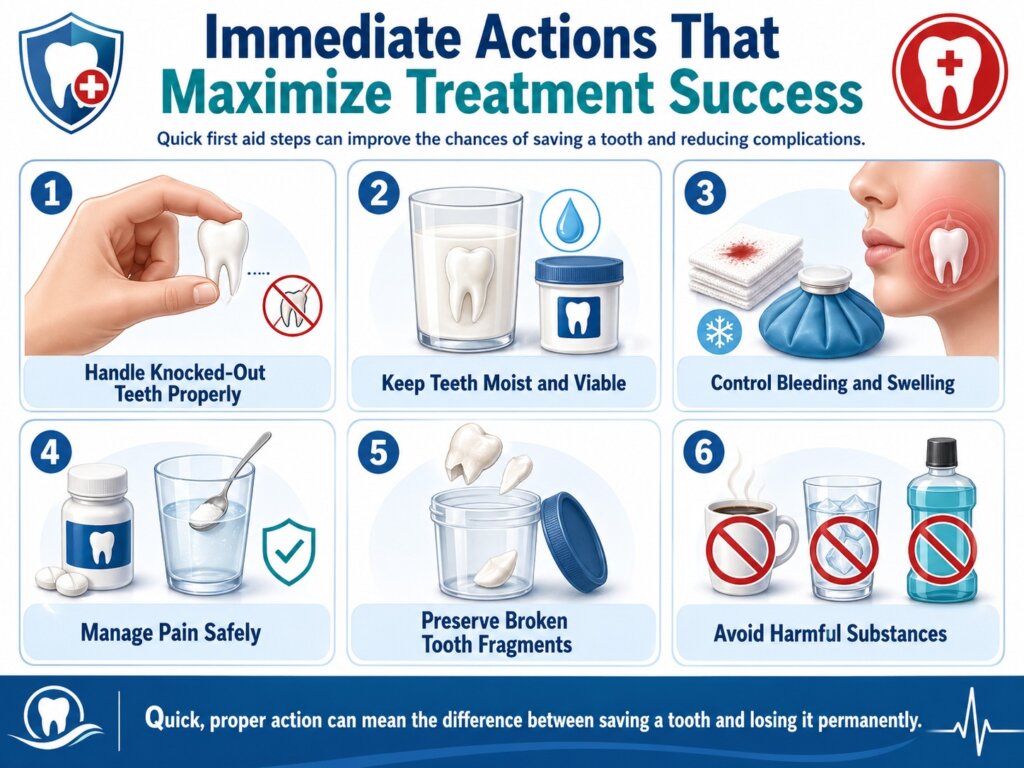
The actions you take in the first few minutes after a dental emergency can significantly impact the success of subsequent professional treatment. Proper first aid measures help preserve tooth viability, reduce pain and swelling, and prevent complications that could compromise treatment outcomes. These steps serve as a bridge between the emergency occurrence and professional dental intervention.
Quick, appropriate responses can mean the difference between saving a tooth and losing it permanently.
1. Handle Knocked-Out Teeth Properly
Pick up the tooth by the crown only, never touching the root surface where delicate periodontal ligament cells attach. Rinse gently with clean water if dirty, but avoid scrubbing or removing any tissue fragments that may still be attached.
2. Keep Teeth Moist and Viable
Place the tooth back in its socket if possible, or store it in milk, saliva, or a tooth preservation solution. Avoid tap water, which can damage root surface cells, and never let the tooth dry out during transport to the emergency dentist.
3. Control Bleeding and Swelling
Apply gentle pressure with clean gauze or cloth to control bleeding from tooth sockets or soft tissue injuries. Use cold compresses on the outside of the face to reduce swelling and numb pain while avoiding direct ice contact with tissues.
4. Manage Pain Safely
Take over-the-counter pain medications as directed, but avoid placing aspirin directly on gums as this can cause chemical burns. Rinse with warm salt water to reduce bacteria and soothe irritated tissues.
5. Preserve Broken Tooth Fragments
Collect any pieces of broken teeth or dental work, storing them in clean water or milk for potential use in repairs. Even small fragments can sometimes be reattached using modern bonding techniques.
6. Avoid Harmful Substances
Stay away from extremely hot or cold foods and beverages that could increase pain or damage exposed tooth structures. Avoid alcohol-based mouthwashes that may irritate open wounds or exposed nerves.
These immediate care steps create the best possible conditions for emergency dental procedures to succeed when you reach professional care.
When Professional Emergency Dental Care Becomes Essential
Certain dental situations require immediate professional intervention to prevent tooth loss, stop dangerous infections, or address life-threatening complications. Recognizing these critical moments helps you make informed decisions about seeking emergency care versus waiting for regular dental appointments. The distinction between urgent and non-urgent situations can determine whether your tooth survives the emergency.
Professional emergency dentists have specialized training, equipment, and medications necessary for complex procedures that cannot be performed in regular dental offices.
| Emergency Level | Symptoms | Required Action | Time Frame |
|---|---|---|---|
| Critical | Uncontrolled bleeding, facial swelling affecting breathing, jaw fracture | Hospital emergency room | Immediate |
| Urgent | Knocked-out tooth, severe abscess, extreme pain | Emergency dentist | Within 30 minutes to 2 hours |
| Semi-urgent | Lost filling, mild swelling, moderate pain | Same-day dental appointment | Within 24 hours |
| Non-urgent | Slight sensitivity, minor chips, routine discomfort | Regular dental visit | Within 1-2 weeks |
Continuous bleeding from tooth sockets, gums, or soft tissues for more than 30 minutes needs professional intervention to identify and address the underlying cause. Emergency dentists can provide sutures, medications, or surgical procedures to control hemorrhaging.
Emergency Dental San Francisco offers comprehensive emergency services for all these critical situations, with immediate appointments available 24/7 throughout the Bay Area including San Francisco, Oakland, Berkeley, and surrounding communities.
Advanced Emergency Procedures for Complex Cases
Some dental emergencies require sophisticated procedures that go beyond basic tooth repair or extraction, involving multiple treatment steps and specialized techniques. These advanced interventions address complex fractures, severe infections, or situations where multiple teeth need simultaneous treatment. Success with these procedures depends on the emergency dentist’s experience, available technology, and the patient’s overall health status.
Complex cases often require coordination between different dental specialties and may involve multiple treatment sessions for optimal outcomes.
1. Surgical Root Canal Treatment
When conventional root canal therapy cannot access all infected areas, surgical approaches through the gum and bone allow direct treatment of root tips and surrounding infected tissue. This procedure, called an apicoectomy, can save teeth that would otherwise require extraction due to persistent infection.
2. Emergency Periodontal Surgery
Severe gum infections or abscesses may require surgical drainage, tissue removal, or bone grafting procedures to eliminate infection and restore healthy tissue. These surgeries prevent infection spread to adjacent teeth and preserve supporting bone structure.
3. Complex Fracture Repair
Multi-surface fractures or root fractures may require crown lengthening procedures, orthodontic extrusion, or surgical exposure of healthy tooth structure before restoration can be completed. These techniques can save teeth that initially appear hopeless.
4. Multiple Tooth Stabilization
When trauma affects several adjacent teeth, splinting procedures connect the damaged teeth to stable neighbors, allowing healing while maintaining proper alignment. This technique is particularly important for front teeth where aesthetics and function are critical.
5. Emergency Implant Placement
In some cases, immediate implant placement following tooth extraction can preserve bone and gum tissue while providing a foundation for future tooth replacement. This advanced procedure requires careful case selection and precise surgical technique.
Our clinic maintains the advanced equipment and expertise necessary for these complex procedures, ensuring you receive comprehensive care regardless of your emergency’s complexity.
Recovery and Follow-Up After Emergency Dental Procedures
Successful emergency dental treatment extends beyond the immediate procedure to include proper healing, infection prevention, and long-term tooth preservation. Post-treatment care instructions vary depending on the specific procedure performed, but all emergency dental work requires careful monitoring during the healing period. Following these guidelines helps ensure your emergency treatment achieves its intended goals of pain relief and tooth preservation.
Recovery timelines and expectations differ significantly between procedures, making individualized aftercare instructions essential for optimal outcomes.
1. Pain and Swelling Management
Expect some discomfort and swelling for 24-48 hours after most emergency procedures, with peak symptoms occurring within the first 24 hours. Use prescribed pain medications as directed and apply ice packs for 15-minute intervals to control swelling and provide comfort.
2. Infection Prevention Protocols
Take any prescribed antibiotics for the full course, even if symptoms improve before the medication is finished. Maintain gentle oral hygiene around treated areas and use prescribed antimicrobial rinses to prevent secondary infections.
3. Activity and Diet Restrictions
Avoid hard, chewy, or extremely hot foods for several days after treatment to prevent damage to healing tissues. Stick to soft foods and lukewarm beverages while tissues recover from surgical procedures or trauma.
4. Follow-Up Appointment Scheduling
Most emergency procedures require follow-up visits within 1-2 weeks to monitor healing, remove sutures if necessary, and plan any additional treatment needed. These appointments are critical for catching complications early and ensuring complete recovery.
5. Warning Signs to Watch
Contact your emergency dentist immediately if you experience increasing pain after the first 48 hours, persistent bleeding, fever, or signs of infection spreading. Early intervention for complications prevents minor issues from becoming serious problems.
6. Long-Term Care Planning
Emergency procedures often represent the first step in comprehensive treatment plans that may include additional restorations, orthodontics, or preventive measures. Discuss long-term goals and timeline expectations with your dental team during recovery visits.
We provide detailed written aftercare instructions for every procedure and remain available 24/7 to address any concerns that arise during your recovery period.
Conclusion
Dental emergency procedures can save teeth when performed promptly with proper technique and follow-up care. Quick action, appropriate first aid, and immediate professional treatment maximize your chances of preserving natural teeth through even severe emergencies. Emergency Dental San Francisco stands ready to provide these life-saving procedures whenever dental crises strike, ensuring you receive expert care that prioritizes both immediate relief and long-term tooth preservation.
Emergency Dental San Francisco specializes in same-day emergency procedures that can save damaged teeth. Our licensed clinicians prioritize immediate pain relief and tooth preservation. Learn more about our urgent dental care today.
FAQs
What Is Considered a Dental Emergency?
A dental emergency is any mouth injury or infection that needs prompt care to stop severe pain, bleeding, swelling, or tooth loss—such as a knocked-out or broken tooth, uncontrolled bleeding, facial swelling, an abscess, or pain that won’t improve. If you’re unsure, call Emergency Dental San Francisco at 415-230-2783 for guidance and same-day options.
What Should I Do If I Have a Toothache and Can’t See a Dentist Right Away?
Rinse with warm salt water, gently floss to remove trapped debris, use a cold compress for swelling, and take OTC pain medicine as directed (avoid placing aspirin on the gum). If you have swelling, fever, or worsening pain, you may need urgent treatment—call us 24/7 so we can help you get safe, fast relief and clear next steps.
How Do You Stop a Tooth From Bleeding After an Injury?
Apply firm pressure with clean gauze (or a clean cloth) for 10–15 minutes and repeat if needed; keep your head elevated and use a cold compress. If bleeding won’t stop, you feel dizzy, or the injury is severe, seek urgent dental care immediately—our clinicians can evaluate the source and treat it safely.
What Should I Do If I Knock Out a Tooth?
Handle the tooth by the crown (not the root), gently rinse it with water if dirty, and try to place it back in the socket; if you can’t, store it in milk or your saliva and get to a dentist immediately. Time matters most—call 415-230-2783 right away so we can guide you and arrange urgent care.
Can I Go to the ER for a Dental Emergency?
You can go to the ER for uncontrolled bleeding, trouble breathing/swallowing, major facial swelling, or serious trauma, but most ERs can’t provide definitive dental treatment. For toothaches, abscesses, broken teeth, or knocked-out teeth, an urgent-care dental office like Emergency Dental San Francisco can usually treat the cause the same day and help you avoid delays.

Emergency Dental San Francisco is a dental office focused on providing same-day dental appointments to patients in San Francisco and the surrounding area. We provide urgent dental care services during weekends, evenings and holidays.
We accept several forms of payment and have financing options available to those who qualify. We accept most dental insurance.