

28 Sep When an Emergency Tooth Extraction Is Necessary and When a Tooth May Still Be Saved
Tooth pain that won’t quit, a jaw that’s swollen by morning, a tooth that cracked during dinner—these aren’t situations where you wait for a Monday appointment. A dental emergency extraction can feel overwhelming, especially if you’ve never had one before. Knowing what the process actually looks like can make a real difference in how you handle the next few hours.
This article walks you through everything you need to know about urgent tooth extraction: when it’s necessary, what happens step by step at the dentist office near me or a nearby emergency clinic, what to do before and after, and what warning signs to take seriously. If you’re already in pain and need to act fast, call 415-230-2783 or book a same-day appointment with Emergency Dental San Francisco right now.
Key Takeaways
- A dental emergency extraction is performed when a tooth cannot be saved and is causing acute pain, infection, or structural damage.
- Emergency dental care dentist visits follow a clear sequence: triage, imaging, anesthesia, extraction, and aftercare instructions.
- Severe pain, uncontrolled bleeding, facial swelling, and fever are signs you need same-day care—not a scheduled visit.
- Bleeding after extraction is normal briefly, but persistent or increasing bleeding requires immediate professional attention.
- Pediatric dental emergencies involving tooth fractures or luxation injuries need prompt evaluation by a child-oriented dental team.
- Emergency Dental San Francisco offers same-day urgent extractions, walk-in availability, and financing options across the Bay Area.
What Is a Dental Emergency Extraction and When Does a Dentist Recommend It?
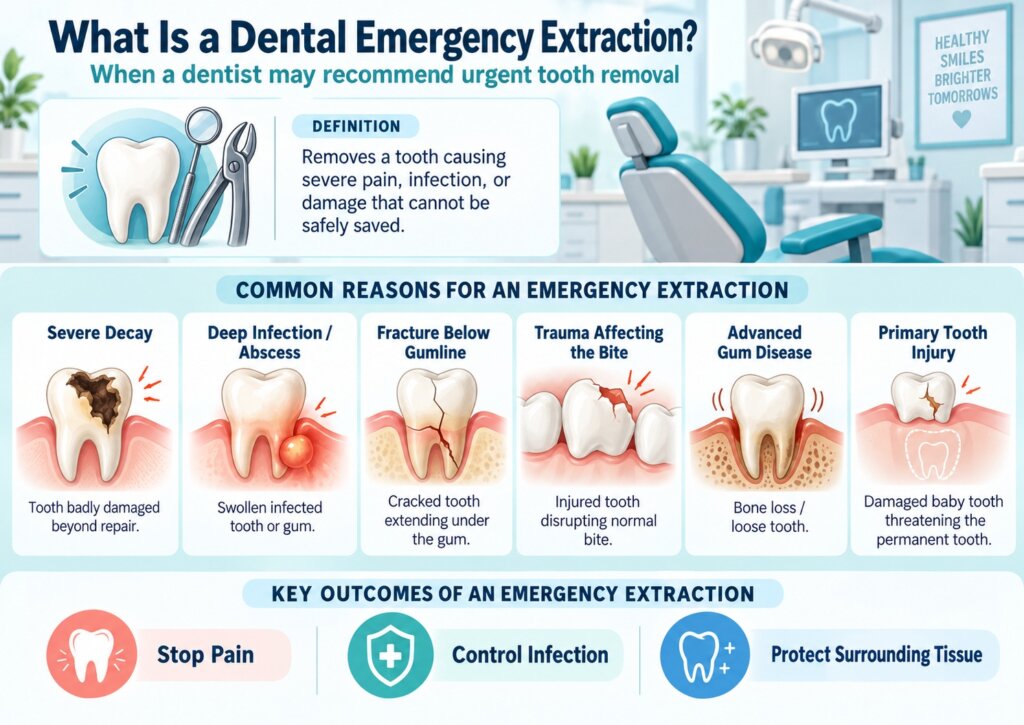
A dental emergency extraction is the removal of a tooth that poses an immediate threat to your health—either because it’s infected, severely damaged, or causing pain that cannot be managed any other way. According to Indian Health Service clinical guidance, emergency dental services are defined as care needed to relieve acute conditions, which may include examination, radiographs, appropriate anesthesia, and tooth extraction when professionally indicated, alongside alternatives like palliative treatment, drainage, or temporary restorations. Not every toothache ends in extraction, but when it does, the goal is the same: stop the pain, control the infection, and protect the surrounding tissue.
You might be wondering what actually pushes a dentist to recommend pulling the tooth rather than saving it. The answer usually comes down to whether the tooth structure is viable and whether the infection or damage has spread too far for repair to be effective.
Common clinical reasons for urgent extraction include:
- Severe decay that has destroyed the tooth beyond restoration
- A deep infection or abscess that hasn’t responded to antibiotics
- A fracture that extends below the gumline
- A tooth that is interfering with the bite after trauma
- Significant bone loss from advanced periodontal disease
- A primary (baby) tooth injury that threatens the developing permanent tooth beneath it
A peer-reviewed pediatric dental study identifies severe pain, cellulitis, dentoalveolar fracture, and localized infection with pain or swelling among urgent presentations—with treatments ranging from extraction and drainage to fracture stabilization and bleeding control. Pediatric cases, in particular, require careful evaluation: for injured primary teeth, extraction may be necessary when a fracture involves the pulp, a luxation injury risks the permanent tooth, or the tooth disrupts normal occlusion.
Recognizing the Symptoms That Signal You Need Emergency Dental Care at a Dentist Office Near Me
Pain is the most obvious signal, but it’s not the only one. Some of the most serious dental emergencies—like a spreading infection—can escalate quickly even when the pain feels manageable at first. Knowing which symptoms demand same-day attention helps you act before the situation gets worse.
Seek emergency dental care dentist services right away if you experience any of the following:
- Severe, throbbing tooth pain that doesn’t respond to over-the-counter pain relievers
- Facial or jaw swelling, especially if it’s increasing over hours
- Fever combined with oral pain or swelling, which may indicate a spreading infection
- Uncontrolled bleeding from the mouth after trauma or a previous extraction
- A visible crack, break, or displacement of a tooth after an injury
- Difficulty swallowing or breathing alongside oral swelling—this is a medical emergency requiring the ER
Potentially serious warning signs in pediatric patients include traumatic dental injury, rapidly increasing fever, uncontrolled bleeding after extraction, and increasing swelling of the face or throat—these warrant immediate attention rather than routine scheduling. If your child is showing any of these signs, contact an emergency care dentist or pediatric dentist near me right away.
At our clinic, triage starts the moment you walk in or call. We assess severity, manage pain first, and then move to diagnosis.
What to Do Before You Arrive: Preparing for Your Urgent Extraction Visit
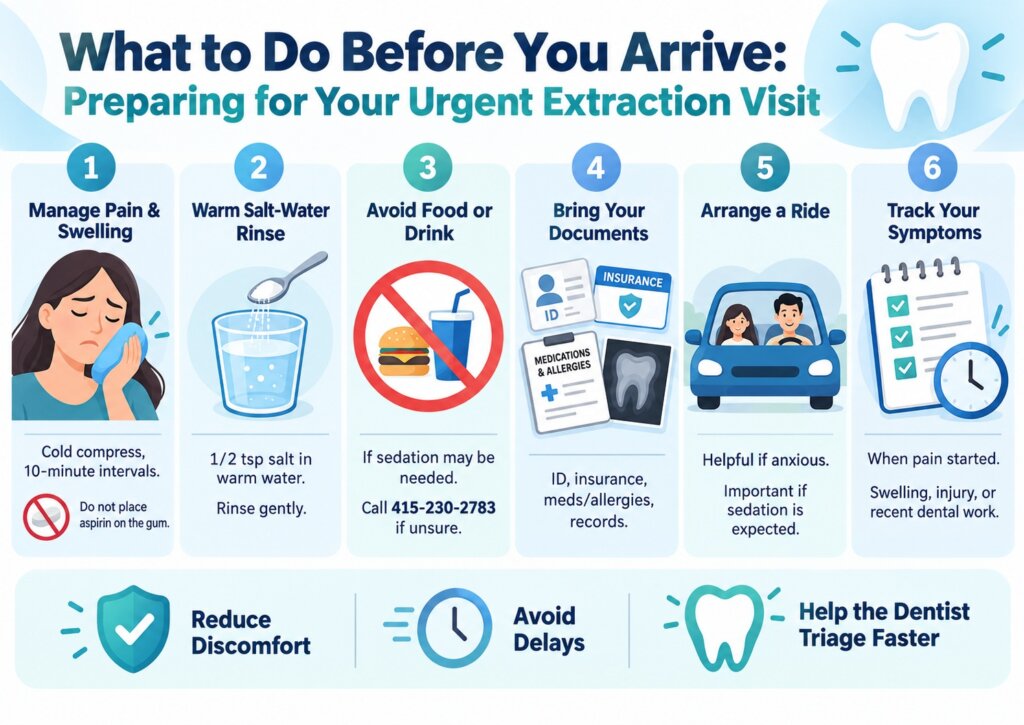
There are a few things you can do on the way to the dentist office near me that may reduce discomfort and help the visit go more smoothly. These steps won’t replace professional care, but they can make a difference while you’re waiting or in transit across the Bay Area.
1. Manage Pain and Swelling at Home
Apply a cold compress to the outside of your cheek in 10-minute intervals. Avoid placing aspirin directly on the gum—it can irritate tissue and won’t speed up relief.
2. Rinse With Warm Salt Water
A gentle salt-water rinse may help reduce bacteria around the affected area. Use about half a teaspoon of salt in a glass of warm water and rinse carefully without vigorous swishing.
3. Avoid Eating or Drinking Before the Visit If Possible
If sedation is being considered, your care team may ask about your last meal. Check with the clinic by phone if you’re unsure—call 415-230-2783 for guidance specific to your situation.
4. Gather Your Documents
Bring a government-issued ID, your insurance card if you have one, a list of current medications and allergies, and any recent dental X-rays or records. This helps the team move quickly without delays.
5. Arrange a Ride If You’re Anxious or Expect Sedation
If you’re nervous about the procedure or anticipate that sedation may be used, having someone drive you home afterward is a practical step worth planning in advance.
6. Note the Timeline of Your Symptoms
When did the pain start? Has the swelling increased? Did you have a recent procedure or injury? This information helps the dentist triage your case and choose the right approach faster.
Step-by-Step: What Happens During a Dental Emergency Extraction at Our Dentist Office
Walking into an urgent dental visit without knowing what to expect can add to the stress. Here’s exactly what the process looks like when you come in for a dental emergency extraction at our clinic.
1. Triage and Pain Control
The first priority is reducing your pain. Before any imaging or diagnosis, the care team assesses your condition and may administer initial pain relief so you’re comfortable enough to proceed.
2. Examination and X-Rays
The dentist performs a clinical exam and takes digital radiographs to evaluate the tooth, surrounding bone, and any signs of infection. This step determines whether extraction is the right course or whether alternatives—like drainage or a temporary restoration—are appropriate first.
3. Review of Options and Transparent Estimate
You’ll receive a clear explanation of what the dentist found and what the treatment options are. Our team explains everything in plain language—no jargon—and provides an upfront cost estimate before any procedure begins. We accept most dental insurance plans and offer financing for patients who qualify.
4. Local Anesthesia
The area around the tooth is numbed with a local anesthetic. Most patients feel pressure during the procedure but not sharp pain. If you’re anxious, let the team know—there are options to help you stay calm and comfortable.
5. The Extraction
Using clinical instruments, the dentist loosens the tooth from its socket and removes it. Simple extractions typically take only a few minutes once anesthesia is effective. More complex cases—like a broken tooth or impacted wisdom tooth—may take longer and involve additional steps.
6. Socket Care and Clot Formation
After the tooth is removed, gauze is placed over the socket and you’ll be asked to bite down gently. Bleeding normally continues briefly before a blood clot forms in the socket—this clot is essential to healing and should not be disturbed. Persistent or uncontrolled bleeding after extraction requires urgent professional assessment.
7. Written Aftercare Instructions and Follow-Up Plan
Before you leave, you receive written aftercare instructions, any necessary prescriptions, and a realistic plan for follow-up care. The team explains what’s normal to expect and what warning signs to watch for over the next 24 to 72 hours.
Emergency Dental San Francisco provides same-day urgent extractions with this exact process—available to walk-ins and scheduled patients alike, seven days a week, including holidays. Book your appointment online or call 415-230-2783 to get started.
After the Extraction: Recovery, Warning Signs, and When to Call
Recovery from an urgent extraction is usually straightforward when you follow the aftercare instructions carefully. Most patients experience manageable soreness and mild swelling for one to three days. What you do in the first 24 hours has a significant impact on how smoothly the healing goes.
Here’s what to expect and what to avoid:
- Do bite gently on gauze for 30 to 45 minutes to support clot formation
- Do use a cold compress on your cheek for the first few hours to reduce swelling
- Do stick to soft foods like yogurt, soup, or mashed potatoes for the first day or two
- Avoid rinsing vigorously, using a straw, or smoking—these can dislodge the blood clot
- Avoid hard, crunchy, or sticky foods near the extraction site
- Avoid touching the socket with your tongue or fingers
Contact the clinic immediately if you notice any of the following after your dental emergency extraction:
- Pain or swelling that increases after the second day instead of improving
- Fever or chills developing after the procedure
- Bleeding that doesn’t slow down after applying firm pressure with gauze for 30 minutes
- A bad taste or smell from the socket, which may indicate dry socket or infection
These are not normal parts of recovery and need prompt evaluation. Our team is reachable 24/7—call 415-230-2783 anytime if something feels off after your visit.
Pediatric Dental Emergency Extractions: What Parents Should Know
Children experience dental emergencies too—and the approach for a pediatric dentist near me differs from adult care in important ways. Primary teeth serve as placeholders for permanent teeth, so the decision to extract is made carefully based on the child’s age, the tooth involved, and the risk to the developing permanent tooth beneath it.
According to clinical guidance, extraction of a primary tooth may be required when a fracture involves the pulp, a luxation injury threatens the developing permanent tooth, or the tooth interferes with normal occlusion. Prompt referral to a child-oriented dental team is strongly recommended in these cases.
Warning signs in children that require immediate emergency dental care dentist attention include:
- Traumatic dental injury from a fall or impact
- Rapidly increasing fever alongside oral pain or swelling
- Uncontrolled bleeding after an extraction
- Increasing swelling of the face or throat
If your child is showing any of these signs, do not wait for a regular appointment. Our clinic provides gentle pediatric urgent care for knocked-out teeth, sports injuries, severe toothaches, and other emergencies across San Francisco, Oakland, Berkeley, and surrounding Bay Area communities.
Conclusion
A dental emergency extraction is a focused, manageable procedure when handled by experienced clinicians with the right tools and a clear process. Recognizing the signs early, knowing what to bring, and understanding each step of the visit helps you stay calm and get the relief you need faster. Emergency Dental San Francisco is available same-day, after hours, and on weekends—call 415-230-2783 or book online to get seen today.
Emergency Dental San Francisco specializes in same-day urgent extractions with compassionate, same-day relief. We serve the Bay Area seven days a week, including holidays. Call 415-230-2783 or book online—get started today.
FAQs
What Is Considered a Dental Emergency Extraction?
A dental emergency extraction is needed when a tooth can’t be saved and is causing severe pain, infection (abscess/swelling), uncontrolled bleeding, significant trauma (cracked or broken below the gumline), or problems that could worsen quickly. Our clinicians confirm this with an exam and X-rays, then focus on safe, same-visit pain relief and clear next steps.
Can a Dentist Do an Emergency Tooth Extraction the Same Day?
Yes—many emergency extractions can be done the same day after an evaluation, X-rays, and a review of your medical history and medications. At Emergency Dental San Francisco, we offer same-day, after-hours, weekend, and holiday care when clinically appropriate.
How Much Does an Emergency Tooth Extraction Cost?
Cost depends on factors like whether the extraction is simple or surgical, tooth location, imaging needed, and infection complexity. We accept most dental insurance plans, offer financing for those who qualify, and provide straightforward estimates before treatment.
Should I Go to the ER for a Tooth That Needs Extraction?
Most tooth extractions are best handled by an emergency dentist, since ERs typically can’t perform dental extractions and may only provide pain control or antibiotics. Go to the ER for trouble breathing/swallowing, rapidly spreading facial/neck swelling, uncontrolled bleeding, or fever with severe swelling; otherwise, call us 24/7 at 415-230-2783 for urgent dental care.
What Can I Do at Home While Waiting for an Emergency Tooth Extraction?
Rinse gently with warm salt water, use a cold compress for swelling, and take over-the-counter pain relievers as directed on the label (avoid aspirin if you’re bleeding). Don’t place aspirin on the gums, avoid chewing on that side, and keep the area clean; if swelling, fever, or pain is worsening, contact us right away.

Emergency Dental San Francisco is a dental office focused on providing same-day dental appointments to patients in San Francisco and the surrounding area. We provide urgent dental care services during weekends, evenings and holidays.
We accept several forms of payment and have financing options available to those who qualify. We accept most dental insurance.