

25 Mar Can You Get Emergency Dental Work After Hip Replacement?
Yes, you can receive emergency dental work after hip replacement, but specific safety protocols and timing considerations are essential. Recent hip replacement patients require careful coordination between dental and orthopedic care to prevent complications while addressing urgent dental needs. Emergency Dental San Francisco understands these complex medical situations and provides safe, coordinated care for patients with prosthetic joints who need immediate dental treatment.
This article covers essential guidelines for emergency dental work after hip replacement, including antibiotic protocols, timing recommendations, and when urgent care cannot wait. You’ll learn how to navigate dental emergencies safely while protecting your joint replacement investment.
Key Takeaways
- Emergency dental work is possible after hip replacement with proper antibiotic protocols and medical coordination.
- Non-urgent dental procedures should be delayed 3-6 months after hip replacement surgery for optimal healing.
- Urgent dental issues like abscesses, severe pain, or trauma require immediate treatment regardless of recent joint replacement.
- Antibiotic prophylaxis recommendations vary between medical organizations but are often prescribed for high-risk patients.
- Emergency Dental San Francisco provides safe, coordinated care for patients with prosthetic joints needing urgent dental treatment.
Understanding the relationship between dental health and joint replacement recovery helps patients make informed decisions about urgent care.
Understanding Emergency Dental Work After Hip Replacement Timing
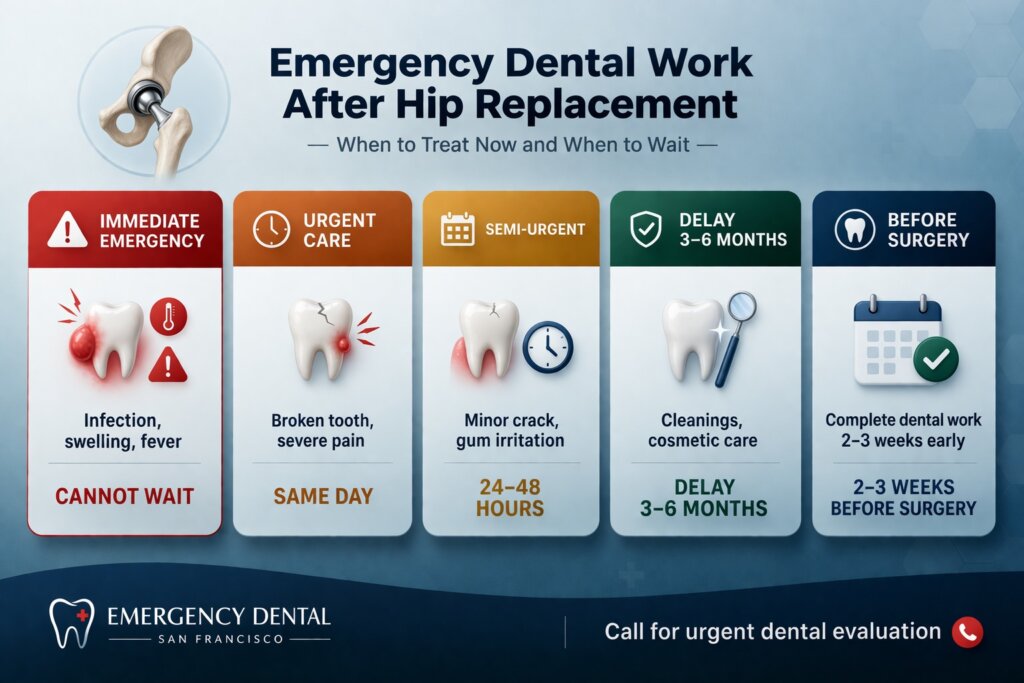
The timing of dental procedures after hip replacement surgery directly impacts infection risk and healing outcomes. Most orthopedic surgeons recommend avoiding non-urgent dental work for three to six months following joint replacement surgery. This waiting period allows the prosthetic joint to integrate properly and reduces the risk of periprosthetic joint infection (PJI).
Emergency situations change these recommendations entirely. Dental abscesses, severe infections, uncontrolled bleeding, or trauma cannot wait for the ideal healing window.
Emergency Dental San Francisco recognizes that dental emergencies don’t follow convenient schedules, especially for patients recovering from major orthopedic surgery.
1. Immediate Emergency Situations (Cannot Wait)
Dental abscesses with facial swelling, fever, or difficulty swallowing require immediate treatment regardless of recent hip replacement. These infections can become life-threatening and outweigh prosthetic joint infection risks.
2. Urgent But Manageable Situations (Same-Day Care)
Severe toothaches, broken teeth from trauma, or lost crowns causing pain need prompt attention but allow time for proper antibiotic prophylaxis coordination with your orthopedic surgeon.
3. Semi-Urgent Situations (24-48 Hour Window)
Cracked teeth without severe pain, minor gum infections, or orthodontic emergencies can often be managed with pain control while coordinating care between dental and orthopedic teams.
4. Non-Urgent Procedures (Delay 3-6 Months)
Routine cleanings, elective extractions, cosmetic procedures, and preventive treatments should be postponed until your orthopedic surgeon clears you for normal dental care.
5. Pre-Surgical Dental Work (Complete 2-3 Weeks Before)
If you have planned hip replacement surgery, complete all necessary dental work at least two to three weeks beforehand to allow proper healing before your orthopedic procedure.
The key distinction lies between true emergencies and procedures that can safely wait.
Antibiotic Protocols for Emergency Dental Care After Joint Replacement
Antibiotic prophylaxis recommendations for dental procedures after hip replacement vary between medical organizations, creating some confusion for patients and providers. The American Academy of Orthopedic Surgeons (AAOS) and American Dental Association (ADA) have different perspectives on routine antibiotic use. Emergency situations often require more aggressive antibiotic protocols than routine dental care.
Understanding these protocols helps patients prepare for emergency dental treatment while protecting their prosthetic joints.
1. AAOS Guidelines for Emergency Dental Elements
The AAOS suggests that routine antibiotic prophylaxis may not significantly reduce periprosthetic joint infection risk for most dental procedures. Emergency situations with active infection or extensive tissue manipulation may warrant antibiotic coverage.
2. High-Risk Patient Protocols
Immunocompromised patients, those with diabetes, or individuals within the first year post-surgery often receive antibiotic prophylaxis for emergency dental work. Common protocols include Amoxicillin 2g orally one hour before treatment.
3. Emergency Infection Management
Active dental infections requiring emergency treatment may need intravenous antibiotics like Amoxicillin 1g IV plus Gentamicin for high-risk patients with prosthetic joints.
4. Coordination with Orthopedic Surgeons
Emergency dental providers should contact your orthopedic surgeon when possible to coordinate antibiotic protocols, especially for extensive procedures or patients with multiple risk factors.
5. Post-Procedure Monitoring
Patients with prosthetic joints require careful monitoring after emergency dental work for signs of infection, including fever, joint pain, swelling, or drainage around the surgical site.
Emergency Dental San Francisco works closely with orthopedic surgeons to ensure appropriate antibiotic protocols for each patient’s specific situation.
Safety Protocols for Emergency Dental Treatment
Emergency dental care for hip replacement patients requires enhanced safety protocols beyond standard dental practice procedures. These protocols protect both the prosthetic joint and ensure effective dental treatment. Proper coordination between medical teams, appropriate antibiotic coverage, and careful monitoring help minimize risks while addressing urgent dental needs.
Emergency Dental San Francisco follows strict safety protocols specifically designed for patients with prosthetic joints.
1. Pre-Treatment Medical History Review
Comprehensive review of hip replacement surgery details, current medications, healing status, and orthopedic surgeon recommendations before beginning emergency dental treatment.
2. Enhanced Infection Control Measures
Strict sterilization protocols, appropriate personal protective equipment, and sterile technique help prevent bacterial contamination that could affect prosthetic joints during emergency procedures.
3. Coordinated Care Communication
Direct communication with orthopedic surgeons when possible to coordinate treatment plans, antibiotic protocols, and post-treatment monitoring for emergency dental situations.
4. Modified Treatment Approaches
Emergency procedures may be modified to minimize tissue trauma and bacterial exposure while still addressing urgent dental needs effectively and safely.
5. Post-Treatment Monitoring Protocols
Enhanced follow-up care including specific instructions for monitoring signs of infection, appropriate pain management, and when to contact orthopedic or dental teams.
6. Documentation and Communication
Detailed documentation of emergency treatment provided, medications prescribed, and recommendations shared with both patient and orthopedic surgical team for continuity of care.
These protocols ensure safe emergency dental care while protecting your joint replacement investment.
Coordinating Care Between Dental and Orthopedic Teams
Successful emergency dental treatment after hip replacement requires effective communication and coordination between dental and orthopedic healthcare teams. This collaboration ensures appropriate antibiotic protocols, timing considerations, and post-treatment monitoring. Clear communication helps prevent complications while ensuring urgent dental needs receive proper attention.
Patients play a crucial role in facilitating this coordination by providing complete medical information and maintaining communication with both teams.
1. Information Sharing Requirements
Dental emergency providers need complete information about your hip replacement surgery including date, type of prosthesis, healing status, current medications, and any complications experienced during recovery.
2. Antibiotic Protocol Coordination
Emergency dental teams should coordinate with orthopedic surgeons regarding appropriate antibiotic prophylaxis protocols, especially for high-risk patients or extensive emergency procedures involving dental holding structures.
3. Treatment Timing Decisions
Joint decisions between dental and orthopedic teams help determine whether emergency dental treatment should proceed immediately or if brief delays allow for better medical coordination.
4. Post-Treatment Communication
Emergency dental providers should communicate treatment details, medications prescribed, and follow-up recommendations to orthopedic surgeons for comprehensive patient care coordination.
5. Patient Communication Responsibilities
Patients must inform both dental and orthopedic teams about treatments received, medications taken, and any symptoms or complications experienced after emergency dental care.
6. Emergency Contact Information
Maintain current contact information for both dental emergency services and orthopedic surgical teams to facilitate rapid communication during urgent situations.
We work directly with your orthopedic team to ensure coordinated, safe emergency dental care when you need it most.
Post-Emergency Care Monitoring and Follow-Up
Careful monitoring after emergency dental treatment is especially important for hip replacement patients due to potential infection risks and medication interactions. Proper follow-up care helps identify any complications early while ensuring both dental healing and prosthetic joint safety. Understanding what symptoms require immediate attention versus normal healing responses helps patients navigate post-treatment recovery safely.
Emergency Dental San Francisco provides clear post-treatment instructions and remains available for follow-up concerns after emergency care.
1. Normal Healing vs. Warning Signs
Learn to distinguish between normal post-dental procedure discomfort and warning signs like fever, increasing pain, unusual swelling, or signs of spreading infection that require immediate medical attention.
2. Medication Management
Carefully manage prescribed antibiotics and pain medications, ensuring they don’t interfere with your hip replacement recovery medications or cause adverse interactions.
3. Oral Hygiene Modifications
Follow specific oral hygiene instructions that promote dental healing while considering any mobility limitations from your hip replacement recovery that might affect routine care.
4. Joint Monitoring Requirements
Monitor your prosthetic hip joint for any unusual pain, swelling, warmth, or decreased range of motion that might indicate infection spreading from dental treatment sites.
5. Follow-Up Appointment Scheduling
Schedule appropriate follow-up appointments with both dental and orthopedic teams to ensure proper healing and address any concerns about treatment interactions or complications.
6. Emergency Re-Contact Protocols
Know when and how to contact emergency dental services or your orthopedic surgeon if complications arise after emergency dental treatment, including specific symptoms that require immediate attention.
Proper post-treatment monitoring protects both your dental health and prosthetic joint investment while ensuring optimal healing outcomes.
Conclusion
Emergency dental work after hip replacement is possible with proper protocols and medical coordination. True dental emergencies require immediate treatment regardless of recent joint replacement surgery. Emergency Dental San Francisco provides safe, coordinated emergency care for patients with prosthetic joints throughout the Bay Area.
Emergency Dental San Francisco provides safe emergency dental exams for patients with hip replacements. Our licensed professionals follow strict safety protocols for post-surgical patients. Learn more about your emergency dental options today.
FAQs
Can I Have Emergency Dental Work After a Hip Replacement?
Yes—emergency dental care is usually safe after a hip replacement, but we’ll coordinate with your orthopedic surgeon as needed and tailor treatment to your medical history to reduce infection risk and get you out of pain quickly.
How Soon After Hip Replacement Can I Go to the Dentist for an Emergency?
If it’s an emergency (pain, swelling, infection, trauma), you should be seen right away—timing depends on your surgery date, healing status, and surgeon guidance, and we can help you navigate that same day.
Do I Need Antibiotics Before Emergency Dental Work With a Hip Replacement?
Sometimes, but not always—antibiotics are based on your specific risk factors and the type of procedure, so we’ll review your medical history and, when appropriate, consult your surgeon to follow current best practices.
What Dental Procedures Are Risky After a Hip Replacement?
Procedures that may cause more bleeding or bacteria to enter the bloodstream (like extractions or deep gum treatment) can warrant extra precautions, but we can still perform needed emergency treatment safely with proper evaluation and infection-control protocols.
Can a Dental Infection Affect a Hip Replacement?
Yes—untreated dental infections can, in rare cases, spread and potentially threaten a joint replacement, which is why prompt evaluation and treatment are important if you have swelling, fever, or worsening tooth pain.

Emergency Dental San Francisco is a dental office focused on providing same-day dental appointments to patients in San Francisco and the surrounding area. We provide urgent dental care services during weekends, evenings and holidays.
We accept several forms of payment and have financing options available to those who qualify. We accept most dental insurance.