

23 Mar Emergency Dental Removal for Cracked Teeth: Fast Extraction Options
Cracked teeth can strike without warning, turning a normal day into an urgent situation requiring immediate professional attention. Emergency dental removal becomes necessary when cracks extend deep into the tooth structure, causing severe pain, an increased risk of infection, or complete structural failure, making saving the tooth impossible.
This comprehensive guide explores your fast extraction options for cracked teeth, emergency treatment protocols, and how to access immediate care when time matters most. You’ll learn to identify when extraction is necessary, understand the removal process, and discover same-day treatment solutions available in the San Francisco Bay Area.
Key Takeaways
- Cracked teeth requiring emergency removal need immediate professional evaluation within hours to prevent infection.
- Deep vertical cracks, split teeth, and fractured roots typically require extraction rather than repair.
- Same-day emergency dental removal is available 24/7 at specialized urgent care dental clinics.
- Pain management and infection control are prioritized during emergency extraction procedures.
- Post-extraction care and replacement planning begin immediately after tooth removal.
Understanding Emergency Dental Removal for Cracked Teeth

Emergency dental removal becomes the treatment of choice when tooth cracks compromise the structural integrity beyond repair. Unlike minor chips or surface fractures, severe cracks penetrate deep into the tooth’s pulp chamber or extend below the gum line. These situations create immediate risks including bacterial infection, abscess formation, and intense pain that disrupts daily life.
The decision for extraction versus repair depends on crack location, depth, and extent of damage. Vertical root fractures, complete tooth splits, and cracks extending into the root structure typically require removal.
Emergency Dental San Francisco specializes in urgent tooth extractions, providing same-day relief when cracked teeth cannot be saved. Our clinic operates 24/7 across the Bay Area, ensuring immediate access to professional extraction services when you need them most.
Types of Tooth Cracks Requiring Emergency Dentist Intervention
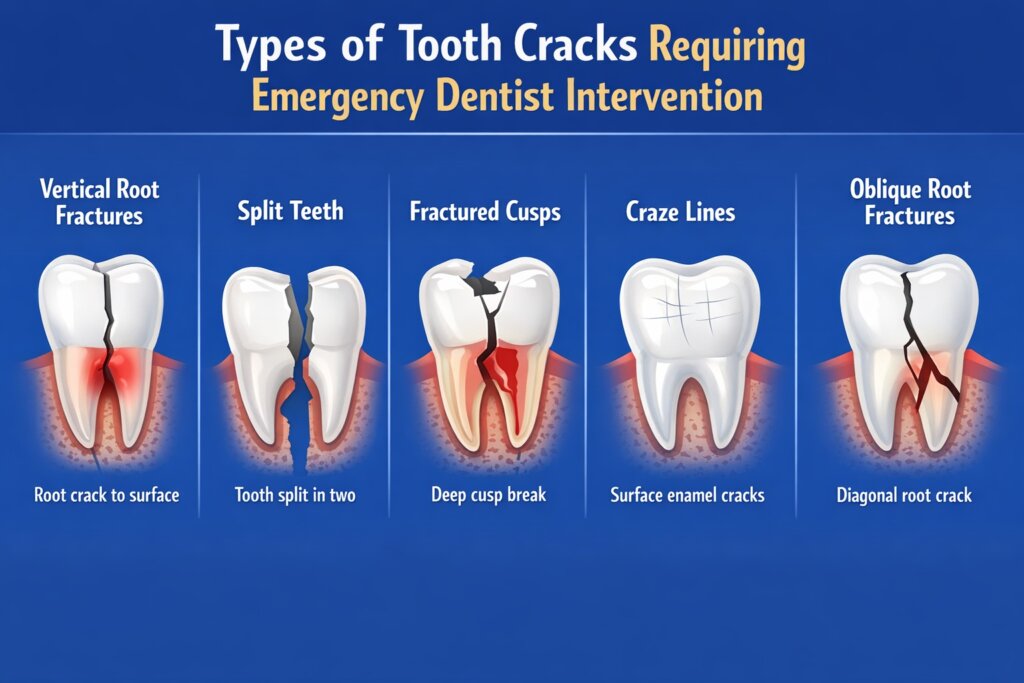
Different crack patterns determine whether emergency removal becomes necessary or if alternative treatments remain viable. Understanding these crack types helps you recognize when immediate extraction is the best option. Each crack pattern presents unique challenges and treatment approaches.
1. Vertical Root Fractures
These cracks start in the root and extend toward the chewing surface, often remaining undetected until infection develops. Vertical root fractures typically require extraction because the crack compromises the tooth’s foundation.
2. Split Teeth
Complete separation of tooth segments makes restoration impossible in most cases. Split teeth result from untreated cracked tooth syndrome and usually need immediate removal to prevent further complications.
3. Fractured Cusps
Broken tooth cusps may require extraction if the fracture extends deep into the root structure. Surface cusp fractures can sometimes be repaired, but deep breaks often necessitate removal.
4. Craze Lines
Superficial cracks in tooth enamel rarely require extraction but need monitoring. These hairline fractures can deepen over time, potentially requiring future removal if they progress.
5. Oblique Root Fractures
Diagonal cracks through the root structure typically require extraction because they cannot be effectively repaired. These fractures often result from trauma and compromise tooth stability.
When Cracked Teeth Need Immediate Emergency Dental Clinic Care
Certain symptoms indicate that your cracked tooth requires emergency removal rather than delayed treatment. Recognizing these warning signs helps you seek appropriate care before complications worsen. Time-sensitive situations demand immediate professional intervention.
| Symptom | Urgency Level | Likely Treatment |
|---|---|---|
| Severe constant pain | Immediate | Emergency extraction |
| Swelling with fever | Immediate | Extraction with antibiotics |
| Visible tooth separation | Same day | Emergency removal |
| Bleeding from crack | Within hours | Extraction or repair |
| Loose tooth segments | Same day | Emergency extraction |
You should contact an emergency dentist immediately if you experience throbbing pain, facial swelling, or visible tooth damage. These symptoms often indicate that the crack has reached the tooth’s nerve or root system.
Fast Extraction Options at Open Dental Emergency Clinics
Modern emergency dental removal procedures prioritize speed, comfort, and safety through advanced techniques and immediate pain management. Fast extraction options include same-day consultations, rapid diagnostic imaging, and immediate surgical intervention when indicated. These streamlined approaches minimize your time in pain while ensuring thorough treatment.
1. Same-Day Consultation and X-Ray
Immediate diagnostic imaging reveals crack extent and surrounding bone structure. Digital X-rays provide instant results, allowing for rapid treatment planning and extraction scheduling.
2. Local Anesthesia Administration
Fast-acting numbing agents ensure comfort during the extraction process. Multiple injection techniques can be used to achieve complete pain control before beginning removal.
3. Surgical Extraction Techniques
Complex cracks may require surgical removal with tissue reflection and bone contouring. These advanced techniques ensure complete tooth removal while preserving healthy surrounding structures.
4. Socket Preservation Procedures
Immediate bone grafting can be performed during extraction to maintain jaw structure. This preparation facilitates future tooth replacement options like dental implants.
5. Post-Extraction Pain Management
Prescription medications and detailed aftercare instructions ensure comfortable recovery. Pain control protocols begin immediately after extraction completion.
Emergency extraction procedures typically involve local anesthesia, careful tooth sectioning if needed, and gentle removal techniques that preserve surrounding tissue.
What to Expect During Emergency Tooth Extraction
The emergency extraction process follows established protocols designed to ensure safety, comfort, and successful tooth removal. Understanding what happens during your visit helps reduce anxiety and prepares you for the experience. Each step serves a specific purpose in achieving optimal outcomes.
Your emergency dentist will begin with pain assessment and immediate relief measures before proceeding with diagnostic evaluation.
1. Initial Pain Assessment
Immediate pain evaluation determines the urgency level and appropriate pain management approach. This assessment guides treatment prioritization and anesthesia selection.
2. Diagnostic Imaging
Digital X-rays reveal crack extent, root structure, and surrounding bone condition. These images help plan the extraction approach and identify potential complications.
3. Treatment Planning Discussion
Your dentist explains the extraction necessity, procedure details, and post-treatment expectations. This conversation covers alternatives, risks, and recovery timeline.
4. Anesthesia Administration
Local numbing ensures complete comfort during the extraction procedure. Additional sedation options may be available for anxious patients or complex cases.
5. Tooth Removal Process
Careful extraction techniques minimize tissue trauma while ensuring complete tooth removal. Surgical approaches may be necessary for severely damaged or impacted teeth.
6. Socket Care and Suturing
Post-extraction socket management promotes healing and prevents complications. Sutures may be placed to control bleeding and support tissue healing.
Post-Extraction Care and Recovery Guidelines
Proper aftercare following emergency dental removal ensures optimal healing and prevents complications like dry socket or infection. Recovery guidelines include specific instructions for pain management, oral hygiene, and activity restrictions during the initial healing period. Following these protocols promotes faster healing and reduces discomfort.
The first 24 hours after extraction are critical for establishing proper blood clot formation and beginning the healing process.
- Apply ice packs for 20-minute intervals to reduce swelling and discomfort
- Take prescribed pain medications as directed to maintain comfort levels
- Avoid rinsing, spitting, or using straws for the first 24 hours
- Eat soft foods and avoid the extraction site when chewing
- Keep the extraction site clean with gentle salt water rinses after 24 hours
- Contact your emergency dentist if bleeding persists or pain increases
Most patients experience significant pain relief within hours of emergency extraction, with continued improvement over the following days. Complete socket healing typically occurs within 1-2 weeks, though bone remodeling continues for several months.
Replacement Options After Emergency Removal
Tooth replacement planning begins immediately after emergency extraction to maintain oral function and prevent adjacent teeth from shifting. Modern replacement options include dental implants, bridges, and partial dentures, each offering distinct advantages depending on your situation. Early planning often leads to better long-term outcomes and reduced treatment complexity.
| Replacement Option | Timeline | Advantages |
|---|---|---|
| Dental Implant | 3-6 months | Permanent, natural function |
| Fixed Bridge | 2-3 weeks | Quick restoration, proven results |
| Partial Denture | 1-2 weeks | Removable, cost-effective |
| Immediate Implant | Same day | Single procedure, preserved bone |
Immediate implant placement may be possible in some emergency extraction cases, reducing overall treatment time and preserving bone structure.
Insurance and Payment Options for Emergency Extractions
Emergency dental removal costs vary based on extraction complexity, anesthesia requirements, and additional procedures needed. Most dental insurance plans cover emergency extractions as necessary treatment, though coverage levels differ between plans. Understanding your financial options before treatment helps you make informed decisions about your care.
We accept most dental insurance plans and offer financing options for qualified patients, ensuring that emergency care remains accessible when you need it most. For patients without insurance, we accept cash and all major credit cards while working to keep emergency extractions affordable.
Pre-treatment estimates help you understand costs and coverage before beginning the extraction procedure. Emergency situations sometimes require immediate treatment before insurance verification, but we work with you to maximize your benefits whenever possible.
Conclusion
Emergency dental removal for cracked teeth requires immediate professional care to prevent serious complications and provide pain relief. Same-day extraction options are available through specialized emergency dental clinics operating 24/7 throughout the San Francisco Bay Area. Quick action and proper aftercare ensure the best outcomes for your oral health and comfort.
Emergency Dental San Francisco specializes in same-day tooth extraction for severely cracked teeth. Our experienced clinicians provide fast, compassionate relief when your tooth can’t be saved. Learn more about immediate extraction options today.
FAQs
How Much Does an Emergency Tooth Extraction Cost?
Costs vary based on the tooth, complexity (simple vs. surgical), X-rays, anesthesia, and infection treatment; we’ll review your options and provide clear, upfront pricing after an exam. We accept most insurance and offer financing for those who qualify, plus cash and major credit cards for self-pay patients.
Can a Dentist Remove a Tooth the Same Day?
Yes—many emergency extractions can be done the same day after an evaluation and X-rays, especially when you’re in significant pain or there’s infection risk. We offer same-day, after-hours, weekend, and holiday care to help you get relief quickly.
What Qualifies as a Dental Emergency for Tooth Removal?
Severe tooth pain, facial swelling, an abscess, uncontrolled bleeding, a cracked tooth causing intense pain, or a tooth that can’t be saved (due to deep decay or advanced infection) can qualify as an emergency. If you’re unsure, call us 24/7 at 415-230-2783 for guidance on next steps.
Does an Emergency Tooth Extraction Hurt?
During the extraction, you should feel pressure but not sharp pain because we numb the area thoroughly; we focus on comfort and gentle technique. Afterward, soreness is common for a few days, and we’ll give you clear instructions and appropriate pain-control options.
What Should I Do Before and After an Emergency Tooth Extraction?
Before: bring a list of medications/allergies, any recent X-rays/records, and arrange a ride if sedation is planned; avoid eating if instructed. After: bite on gauze as directed, avoid smoking, straws, and vigorous rinsing for 24 hours, eat soft foods, use cold packs for swelling, and take medications exactly as prescribed; contact us right away if you have worsening swelling, fever, or heavy bleeding.

Emergency Dental San Francisco is a dental office focused on providing same-day dental appointments to patients in San Francisco and the surrounding area. We provide urgent dental care services during weekends, evenings and holidays.
We accept several forms of payment and have financing options available to those who qualify. We accept most dental insurance.