

20 Mar Emergency Dental Tooth Extraction: How Dentists Manage Pain Before, During, and After the Procedure
Severe dental pain can strike at any moment, turning a normal day into an unbearable ordeal that demands immediate attention. Emergency dental tooth extraction offers the fastest path to relief when conservative treatments fail or when infection threatens your health. The key to ending dental agony lies in understanding when extraction becomes necessary and finding an emergency dentist who can provide same-day care with professional precision.
This article explores how emergency dental professionals deliver rapid pain relief through tooth extraction procedures, what to expect during treatment, and why choosing the right urgent care dental clinic makes all the difference. You’ll discover the warning signs that require immediate extraction, the step-by-step process dentists use to eliminate pain quickly, and practical guidance for managing dental emergencies before professional care.
Key Takeaways
- Emergency dental tooth extraction provides immediate relief from severe pain when other treatments cannot save the tooth.
- Professional emergency dentists use advanced techniques to minimize discomfort during same-day extraction procedures.
- Recognizing urgent symptoms like severe swelling, fever, or uncontrolled bleeding helps determine when extraction becomes necessary.
- Emergency dental clinics offer 24/7 availability for walk-in patients experiencing dental crises.
- Proper aftercare following emergency extraction prevents complications and promotes faster healing.
Understanding when dental pain crosses from manageable discomfort into emergency territory can save you hours of suffering.
When Emergency Dental Tooth Extraction Becomes Necessary

Dental emergencies requiring immediate extraction typically involve severe infection, trauma, or pain that cannot be controlled through conservative measures. Emergency dentist near me searches spike during weekends and holidays when regular dental offices remain closed, leaving patients desperate for relief. The decision to extract a tooth in an emergency setting focuses on eliminating pain and preventing serious complications rather than preserving the tooth at all costs.
Several conditions warrant immediate tooth removal by an emergency dental care dentist. Abscessed teeth with facial swelling and fever pose serious health risks if left untreated.
1. Severe Dental Abscess With Systemic Symptoms
An abscess that causes facial swelling, fever, or difficulty swallowing requires immediate attention from an emergency dentist. The infection can spread rapidly to other parts of the body if not addressed promptly.
2. Traumatic Tooth Fracture Below the Gum Line
Sports injuries or accidents can fracture teeth so severely that restoration becomes impossible. Emergency extraction prevents further damage to surrounding tissues and eliminates sharp edges that cause pain.
3. Impacted Wisdom Teeth Causing Severe Pain
Wisdom teeth that cannot erupt properly often cause intense pain, swelling, and infection. Emergency removal provides immediate relief when conservative management fails.
4. Loose Teeth From Advanced Periodontal Disease
Severely mobile teeth from gum disease can cause significant discomfort and may need removal to prevent further bone loss. Emergency dental clinics can address these cases when pain becomes unbearable.
5. Failed Root Canal With Persistent Infection
Root canal treatments sometimes fail, leading to recurring infection and pain. Emergency extraction becomes the best option when retreatment is not feasible or effective.
Emergency Dental San Francisco provides same-day evaluation and extraction services for all these conditions, with walk-in appointments available 24/7 throughout the Bay Area.
How Emergency Dentists Deliver Fast Pain Relief Through Extraction
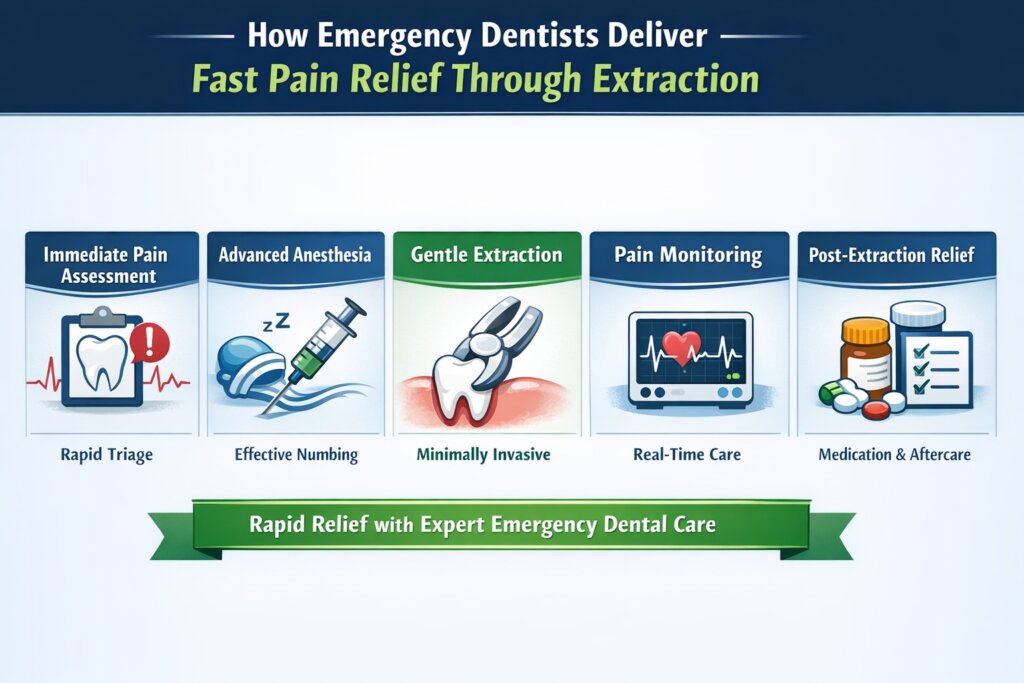
Emergency dental professionals follow a systematic approach designed to eliminate pain as quickly and safely as possible. The process begins with rapid triage to assess the severity of your condition and determine the most appropriate treatment path. Modern emergency dental clinics use advanced anesthetic techniques that provide profound numbness within minutes, enabling comfortable extractions even in severely infected cases.
Pain management starts before the extraction begins. Emergency dentists often administer oral or intravenous sedation for anxious patients or complex cases.
1. Immediate Pain Assessment and Triage
Emergency dental teams quickly evaluate your pain level and symptoms to prioritize treatment. This rapid assessment ensures patients with the most severe conditions receive immediate attention.
2. Advanced Local Anesthesia Techniques
Modern anesthetic methods provide complete numbness even in infected tissues where traditional techniques might fail. Emergency dentists use specialized injection techniques to ensure patient comfort throughout the procedure.
3. Minimally Invasive Extraction Methods
Emergency dental care dentists employ gentle extraction techniques that minimize trauma to surrounding tissues. These methods reduce post-operative pain and promote faster healing.
4. Real-Time Pain Monitoring
Throughout the procedure, emergency dentists continuously monitor patient comfort levels. Additional anesthesia can be administered immediately if any discomfort occurs.
5. Immediate Post-Extraction Pain Control
Emergency dental clinics provide prescription pain medication and detailed aftercare instructions before patients leave. This proactive approach prevents breakthrough pain during the initial healing period.
Our clinic combines these rapid pain relief techniques with state-of-the-art equipment and experienced emergency dental professionals to ensure optimal outcomes for every patient.
The Emergency Dental Extraction Process: What to Expect
Understanding the step-by-step process of emergency tooth extraction helps reduce anxiety and prepares you for what lies ahead. Most emergency extractions take between 20 to 45 minutes, depending on the complexity of your case and the number of teeth requiring removal. Emergency dental clinics prioritize efficiency without compromising safety, using proven protocols that deliver predictable results.
Your emergency extraction experience follows a structured timeline designed for maximum comfort and minimal stress.
| Phase | Duration | What Happens |
|---|---|---|
| Initial Assessment | 5-10 minutes | X-rays, examination, treatment planning |
| Anesthesia Administration | 5-10 minutes | Local anesthetic injection, waiting for numbness |
| Extraction Procedure | 10-30 minutes | Tooth removal, socket cleaning, sutures if needed |
| Post-Op Instructions | 5-10 minutes | Aftercare guidance, prescriptions, follow-up scheduling |
The actual extraction involves carefully loosening the tooth with specialized instruments before gentle removal. Emergency dentists work methodically to preserve surrounding bone and soft tissues while ensuring complete removal of the problematic tooth.
Emergency Dental San Francisco streamlines this process with digital X-rays, electronic health records, and pre-sterilized instrument setups, minimizing wait times and maximizing efficiency for patients in pain.
Managing Pain Before Emergency Dental Care
The time between recognizing you need emergency dental care and receiving professional treatment can feel endless when you’re in severe pain. Safe, temporary pain management techniques can provide some relief while you arrange emergency dental care, but these methods should never replace professional treatment. Understanding what helps and what could make your condition worse empowers you to make smart decisions during a dental crisis.
Several approaches may help reduce dental pain temporarily without interfering with upcoming treatment.
1. Cold Compress Application
Apply ice wrapped in a thin towel to the outside of your cheek for 15-20 minutes at a time. This reduces swelling and numbs pain without affecting the tooth directly.
2. Warm Salt Water Rinses
Gently rinse with warm salt water to reduce bacteria and soothe irritated tissues. Use one teaspoon of salt in a cup of warm water, but avoid vigorous swishing that might worsen pain.
3. Over-the-Counter Pain Medication
Ibuprofen works particularly well for dental pain because it reduces both inflammation and pain. Follow package directions and inform your emergency dentist about any medications you’ve taken.
4. Elevation During Rest
Keep your head elevated while lying down to reduce blood flow to the affected area. This simple position change can significantly reduce throbbing pain.
5. Avoiding Pain Triggers
Stay away from extremely hot or cold foods and beverages that might trigger sharp pain. Soft, room-temperature foods cause less discomfort while you wait for treatment.
Never place aspirin directly on your gums, as this can cause chemical burns that complicate treatment. Emergency dental professionals need to see your tissues in their natural state to make accurate treatment decisions.
Why Choose Emergency Dental Care Over Hospital Emergency Rooms
Hospital emergency rooms see nearly 2 million dental-related visits annually, but most cannot provide definitive treatment for dental emergencies. Emergency room physicians typically prescribe antibiotics and pain medication while referring patients to dental professionals for actual treatment, creating delays that prolong suffering. Emergency dental clinics offer immediate, definitive care that addresses the root cause of dental pain rather than just managing symptoms.
The cost difference between emergency room visits and emergency dental care is substantial, with ER visits averaging $749 compared to more affordable emergency dental treatment.
| Aspect | Hospital ER | Emergency Dental Clinic |
|---|---|---|
| Wait Time | 2-8 hours | Immediate to 30 minutes |
| Treatment Available | Pain medication, antibiotics | Extractions, root canals, repairs |
| Average Cost | $749 | $200-400 |
| Follow-up Required | Always | Usually resolved same day |
Emergency dental care provides specialized equipment, dental X-ray capabilities, and sterile surgical environments specifically designed for oral procedures. Emergency dentists have the training and tools necessary to perform extractions, drain abscesses, and provide other treatments that hospital emergency rooms cannot offer.
Open dental clinics like Emergency Dental San Francisco eliminate the need for multiple appointments and referrals by providing comprehensive emergency care in a single visit, getting you back to normal life faster.
Aftercare Following Emergency Dental Tooth Extraction
Proper aftercare following emergency tooth extraction is crucial for preventing complications and ensuring optimal healing. The first 24 to 48 hours after extraction are the most critical for establishing proper blood clot formation and beginning the healing process. Emergency dental clinics provide detailed aftercare instructions, but understanding the reasoning behind these guidelines helps ensure better compliance and outcomes.
Following these aftercare principles promotes faster healing and reduces the risk of painful complications like dry socket.
1. Protect the Blood Clot
Avoid spitting, using straws, or vigorous rinsing for 24 hours after extraction. These actions can dislodge the blood clot that forms in the socket, leading to painful dry socket complications.
2. Manage Swelling With Ice
Apply ice packs to the outside of your face for 15 minutes on, 15 minutes off during the first day. This reduces swelling and provides natural pain relief without medications.
3. Take Medications as Prescribed
Follow the exact dosing schedule for pain medications and antibiotics provided by your emergency dentist. Consistent medication levels prevent breakthrough pain and fight infection effectively.
4. Eat Soft Foods Only
Stick to soft, cool foods like yogurt, smoothies, and mashed potatoes for the first few days. Gradually return to normal foods as comfort allows, avoiding the extraction site.
5. Maintain Gentle Oral Hygiene
Continue brushing and flossing other teeth normally, but avoid the extraction site for the first few days. After 24 hours, gentle salt water rinses can help keep the area clean.
6. Watch for Warning Signs
Contact your emergency dental care provider immediately if you experience severe pain that worsens after day three, excessive bleeding, signs of infection, or fever above 101°F.
Most patients experience significant pain relief within hours of emergency extraction, with continued improvement over the following days as healing progresses.
Conclusion
Emergency dental tooth extraction provides immediate relief from severe dental pain when other treatments cannot save the tooth. Professional emergency dental clinics offer 24/7 access to experienced dentists who use advanced techniques to minimize discomfort during same-day procedures. Taking prompt action when dental emergencies arise prevents complications and gets you back to normal life quickly and safely.
Emergency Dental San Francisco provides same-day tooth extractions to end severe dental pain quickly. Our licensed professionals prioritize immediate relief with compassionate, professional care. Learn more about fast emergency extraction services.
FAQs
Can a Dentist Do an Emergency Tooth Extraction the Same Day?
Yes. If the tooth is causing severe pain, infection, or can’t be saved, a dentist can often perform a same-day extraction after an exam and X-rays to confirm it’s safe and appropriate.
How Much Does an Emergency Tooth Extraction Cost?
Cost depends on whether it’s a simple or surgical extraction, the tooth’s location, and whether imaging or infection treatment is needed. We accept most insurance plans, offer financing for those who qualify, and provide clear estimates before treatment.
When Is a Tooth Extraction Considered an Emergency?
It’s an emergency when you have severe tooth pain, facial swelling, a suspected abscess, uncontrolled bleeding, a badly broken tooth, or a tooth that’s too infected or damaged to treat with a filling or root canal.
What Should I Do Before an Emergency Tooth Extraction?
Call as soon as possible, bring a list of medications and allergies, and share any medical conditions or recent dental X-rays. Avoid eating right before your visit in case sedation is recommended, and don’t place aspirin directly on the gums.
How Painful Is an Emergency Tooth Extraction?
Most patients feel pressure, not sharp pain, because the area is fully numbed with local anesthetic. Afterward, soreness is common for a few days and is usually managed with dentist-recommended pain relief and clear aftercare instructions.

Emergency Dental San Francisco is a dental office focused on providing same-day dental appointments to patients in San Francisco and the surrounding area. We provide urgent dental care services during weekends, evenings and holidays.
We accept several forms of payment and have financing options available to those who qualify. We accept most dental insurance.