

12 Mar Emergency Dental Care for Kids After Sports Tooth Injuries
Sports-related dental injuries affect thousands of children every year, with tooth trauma ranking among the most common playground and athletic field accidents. When your child experiences a knocked-out tooth, cracked dental work, or severe mouth pain during sports activities, quick professional intervention can mean the difference between saving and losing a permanent tooth. The urgency becomes even more critical when you consider that ER visits for tooth problems unrelated to physical injuries rose by almost 60% nationally among children under 15 from 2019 to 2022.
This guide will walk you through recognizing dental emergencies in young athletes, taking immediate action steps, and accessing professional emergency dental care for kids when time matters most. You’ll learn when to call for urgent treatment, how to protect injured teeth before reaching the clinic, and what to expect during emergency dental visits.
Key Takeaways
- Sports dental injuries require immediate professional attention within 30 minutes for the best chance of saving teeth.
- Emergency Dental San Francisco provides 24/7 pediatric urgent care for knocked-out teeth, fractures, and sports-related mouth trauma.
- Proper first aid steps can preserve damaged teeth until professional treatment begins.
- Prevention through custom mouthguards reduces the risk of sports-related dental injuries by up to 60%.
- Professional emergency dental care offers better outcomes than hospital emergency rooms for tooth-related injuries.
Recognizing Sports Dental Emergencies in Children
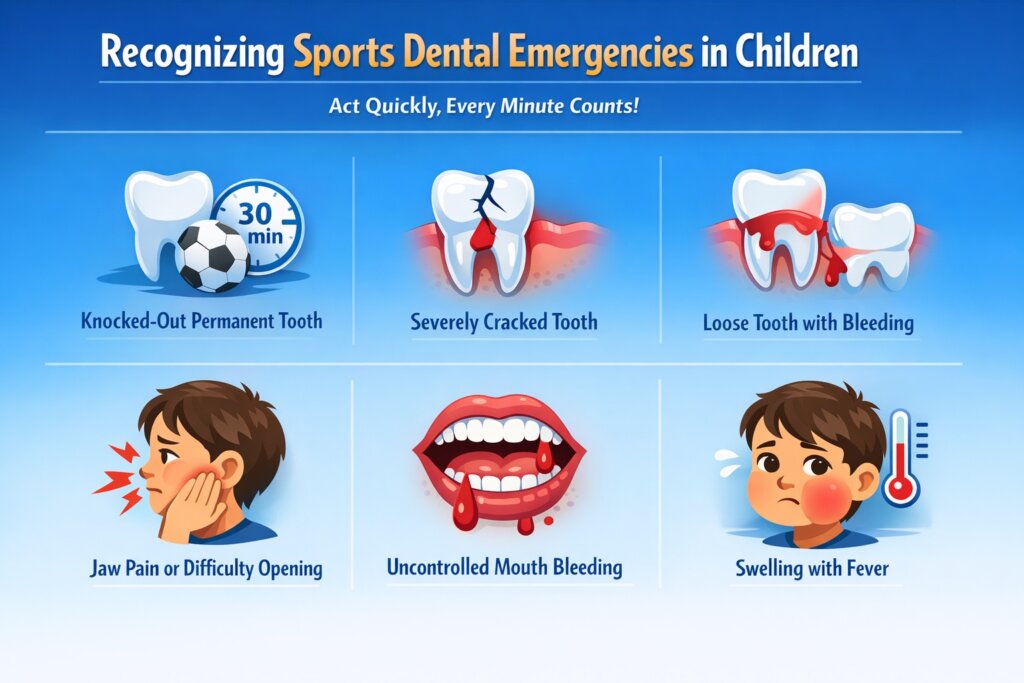
Sports dental emergencies require immediate recognition and swift action from parents and coaches. Unlike routine dental issues that can wait for regular office hours, traumatic tooth injuries create time-sensitive situations where every minute counts. The most critical factor in successful treatment often depends on how quickly you identify the severity of the injury and seek appropriate care.
Understanding which injuries constitute true emergencies helps you decide where to seek treatment.
1. Knocked-Out Permanent Teeth
A completely dislodged permanent tooth represents the most urgent sports dental emergency. The tooth’s survival depends on professional reimplantation within 30 minutes, making immediate action essential for preserving your child’s smile.
2. Severely Cracked or Fractured Teeth
Deep cracks extending into the tooth’s root or fractures exposing the inner pulp create pathways for infection. These injuries often cause intense pain and require emergency intervention to prevent permanent damage.
3. Loose Teeth with Bleeding
Teeth that feel wobbly after impact, especially when accompanied by bleeding gums, indicate potential root damage. Quick stabilization can often save these teeth from complete loss.
4. Jaw Pain or Difficulty Opening Mouth
Severe jaw discomfort or limited mouth opening after sports trauma may signal fractures or joint injuries requiring immediate evaluation. These symptoms often accompany other dental injuries.
5. Uncontrolled Mouth Bleeding
Persistent bleeding from gums, tongue, or inner cheeks that doesn’t respond to direct pressure needs professional attention. Heavy bleeding can indicate deep tissue damage requiring sutures.
6. Swelling with Fever
Facial swelling combined with fever suggests infection from traumatic injury. This combination requires urgent antibiotic treatment to prevent serious complications.
Immediate First Aid Steps for Sports Tooth Injuries

Taking the right first aid steps immediately after a sports dental injury can significantly improve treatment outcomes. Your quick thinking and proper technique during those crucial first minutes often determine whether your child’s tooth can be saved. The key lies in staying calm while following specific protocols for different types of injuries.
These emergency steps should be performed while someone calls for professional help.
1. Handle Knocked-Out Teeth by the Crown Only
Never touch the root surface of a dislodged tooth, as this can damage cells needed for successful reimplantation. Hold the tooth by its white crown portion and gently rinse with clean water if dirty.
2. Attempt Gentle Reinsertion
For cooperative older children, try placing the clean tooth back into its socket using gentle pressure. Have your child bite down on clean cloth to hold the tooth in position during transport to emergency care.
3. Keep Displaced Teeth Moist
If reinsertion isn’t possible, store the tooth in cold milk, saline solution, or between your child’s cheek and gum. Avoid water storage, which can damage root cells within minutes.
4. Control Bleeding with Direct Pressure
Apply clean gauze or cloth directly to bleeding areas with steady pressure for 10-15 minutes. Avoid repeatedly lifting the compress to check bleeding, as this disrupts clot formation.
5. Apply Cold Compression for Swelling
Use ice packs wrapped in thin cloth against the outside of the mouth for 10 minutes on, 10 minutes off. Direct ice contact can damage tissues and should be avoided.
6. Document the Injury
Take photos of visible damage and note the time of injury for emergency dental providers. This information helps professionals prepare appropriate treatment before your arrival.
When to Choose Emergency Dental Care Over Hospital ERs
Many parents instinctively head to hospital emergency rooms when their child suffers sports dental trauma, but specialized emergency dental care often provides superior treatment for tooth-related injuries. Hospital ERs excel at treating life-threatening conditions but typically lack the specialized equipment and expertise needed for complex dental procedures. Understanding when to choose emergency dental care for kids can save precious time and improve treatment outcomes.
Emergency Dental San Francisco offers immediate pediatric dental care, with the specialized tools and expertise needed for sports-injury treatment.
1. Tooth Reimplantation Procedures
Emergency dental clinics maintain the specialized instruments and materials needed for successful tooth reimplantation. Hospital ERs rarely have these resources and may only provide pain medication and referrals.
2. Digital X-Ray Capabilities
Dental emergency facilities use specialized imaging equipment designed to detect root fractures, bone damage, and hidden injuries. This technology provides clearer images than standard hospital X-ray machines for dental trauma.
3. Immediate Stabilization Treatment
Emergency dental providers can immediately stabilize loose teeth using splinting techniques and specialized bonding materials. These procedures require dental expertise not typically available in hospital settings.
4. Pain Management Protocols
Dental emergency clinics understand the unique pain patterns associated with tooth trauma and can provide targeted relief. Their protocols address both immediate discomfort and prevention of future complications.
5. Follow-Up Care Coordination
Emergency dental facilities can seamlessly coordinate ongoing treatment with pediatric dental specialists. This continuity of care is essential for complex cases that require multiple appointments.
Professional Treatment Options for Sports Dental Injuries
Professional emergency dental treatment for sports injuries involves several specialized procedures designed to save damaged teeth and restore normal function. The specific treatment approach depends on the type and severity of the injury, your child’s age, and whether permanent or primary teeth are affected. Emergency Dental San Francisco provides comprehensive treatment options using modern equipment and child-friendly approaches.
Treatment decisions are made quickly but carefully, with clear explanations provided to both parents and young patients.
1. Tooth Reimplantation and Splinting
Knocked-out permanent teeth undergo careful cleaning and reimplantation into their original sockets. Flexible splints hold the tooth in place while it heals over several weeks.
2. Root Canal Therapy for Children
Severely damaged teeth with exposed pulp may require emergency root canal treatment to prevent infection. Pediatric techniques ensure comfort while preserving the tooth structure for normal development.
3. Composite Bonding for Fractures
Chipped or cracked teeth are repaired immediately using tooth-colored composite materials. This treatment restores appearance and protects against further damage or sensitivity.
4. Emergency Extractions
Teeth that are too damaged for preservation require careful extraction to prevent infection and to prepare for future replacement options. Pain control and healing support are prioritized throughout the process.
5. Soft Tissue Repair
Cut lips, gums, or cheeks are sutured professionally using techniques that minimize scarring. Proper wound care prevents infection and promotes optimal healing.
6. Orthodontic Emergency Care
Damaged braces or orthodontic appliances are repaired immediately to prevent further injury. Sharp edges are smoothed, and loose components are secured or removed.
Prevention Strategies for Youth Sports Dental Injuries
Preventing sports dental injuries proves far more effective and less costly than treating them after they occur. Custom-fitted mouthguards represent the gold standard for protection, reducing injury risk by up to 60% in contact sports. While prevention strategies require upfront investment and planning, they provide invaluable protection for your child’s developing smile.
Prevention becomes especially important when you consider that 46% of U.S. children ages 2-19 already have untreated or restored dental caries, making additional trauma particularly problematic.
1. Custom-Fitted Mouthguards
Professional mouthguards created from dental impressions offer superior protection and comfort compared to store-bought alternatives. These devices distribute impact forces across all teeth rather than concentrating pressure on individual teeth.
2. Proper Helmet Selection
Sports helmets with face guards provide additional protection for teeth and jaws during high-risk activities. Ensure proper fit and replacement according to manufacturer guidelines for maximum effectiveness.
3. Rule Education and Enforcement
Teaching young athletes proper techniques and safety rules reduces dangerous contact situations. Coaches and parents should emphasize safe play over aggressive tactics that increase injury risk.
4. Regular Dental Checkups
Routine dental visits identify weak or damaged teeth that may be more susceptible to sports injuries. Early treatment of existing problems prevents complications during athletic activities.
5. Emergency Action Planning
Coaches and parents should maintain emergency contact information and know the location of the nearest emergency dental facility. Quick response planning can save teeth and reduce treatment complexity.
Conclusion
Sports-related dental injuries in children require immediate professional attention to ensure optimal outcomes and preserve teeth. Quick recognition, proper first aid, and emergency dental care provide the best chance for saving damaged teeth. Prevention through custom mouthguards and emergency preparedness protects young athletes from serious dental trauma.
Emergency Dental San Francisco specializes in same-day emergency care for kids’ sports tooth injuries. We provide fast, compassionate treatment for knocked-out or cracked teeth. Learn more about our immediate pediatric dental services.
FAQs
What Is Considered a Dental Emergency for a Child?
A child dental emergency includes a knocked-out or loose tooth, a broken or displaced tooth, uncontrolled bleeding, facial swelling, signs of infection (like an abscess), severe toothache, or jaw injury—especially after sports. If your child is in significant pain or swelling is spreading, call Emergency Dental San Francisco at 415-230-2783 for same-day urgent care.
What Should I Do If My Child Knocks Out a Tooth?
Stay calm and act fast: find the tooth, hold it by the crown (not the root), gently rinse with water if dirty, and try to place it back in the socket if it’s a permanent tooth. If you can’t, store it in milk or saliva and come in immediately—time matters most in the first 30–60 minutes. Call 415-230-2783 so we can prepare for urgent treatment.
How Can I Relieve My Child’s Tooth Pain Until We See a Dentist?
Use a cold compress on the outside of the cheek, give age-appropriate acetaminophen or ibuprofen as directed, and keep your child on soft foods. Avoid placing aspirin on the gums and avoid hot/cold triggers. If pain is severe or swelling starts, contact Emergency Dental San Francisco for prompt evaluation.
Where Can I Find an Emergency Pediatric Dentist Near Me?
If you’re in San Francisco or the Bay Area, Emergency Dental San Francisco offers urgent, same-day and after-hours care for sports-related tooth injuries, including weekends and holidays. You can walk in, book online, or call us 24/7 at 415-230-2783.
When Should I Take My Child to the ER for a Dental Problem?
Go to the ER (or call 911) if your child has trouble breathing or swallowing, rapidly worsening facial/neck swelling, uncontrolled bleeding, a high fever with lethargy, or a significant head/jaw injury. For most dental injuries and tooth pain, an urgent dental visit is the fastest way to treat the source—call Emergency Dental San Francisco at 415-230-2783 for immediate guidance.

Emergency Dental San Francisco is a dental office focused on providing same-day dental appointments to patients in San Francisco and the surrounding area. We provide urgent dental care services during weekends, evenings and holidays.
We accept several forms of payment and have financing options available to those who qualify. We accept most dental insurance.