

02 Mar Should You Visit the Emergency Room for Dental Pain? What You Need to Know
Severe dental pain strikes at the worst possible moments—Sunday nights, holidays, or during important meetings. When your tooth throbs with unbearable intensity, you face a critical decision: should you rush to the emergency room for dental pain, or seek care elsewhere? Understanding your options can save you time, money, and unnecessary suffering while ensuring you receive the most appropriate treatment for your specific situation.
This comprehensive guide will help you navigate dental emergencies with confidence, distinguishing between situations that require hospital emergency care versus those best handled by specialized urgent dental providers. You’ll discover the key differences in treatment approaches, costs, and outcomes to make informed decisions during your most painful moments.
Key Takeaways
- Emergency rooms provide only temporary pain relief for dental issues, not definitive treatment.
- Urgent dental care facilities offer comprehensive treatment, including extractions, root canals, and repairs.
- Hospital emergency department visits for dental pain cost three times as much as specialized dental emergency care.
- Only life-threatening dental complications require emergency room visits.
- Same-day dental appointments are available 24/7 through specialized providers like Emergency Dental San Francisco.
Recent data reveal a striking reality about dental pain management in emergency settings.
When Emergency Room for Dental Pain Makes Sense

Hospital emergency departments serve a specific role in dental crisis management, but their scope remains limited to life-threatening situations. Emergency rooms excel at managing complications that extend beyond the mouth, particularly when dental issues pose systemic health risks. Medical emergency teams focus on stabilizing patients rather than providing definitive dental treatment.
The decision to visit an emergency room for dental pain should focus on immediate life-safety concerns. Most dental pain, even severe cases, falls outside the emergency room’s treatment capabilities.
1. Facial Swelling Affecting Breathing or Swallowing
Severe facial swelling that restricts your airway represents a true medical emergency requiring immediate hospital intervention. This condition, known as Ludwig’s angina, can rapidly become life-threatening as swelling spreads to the throat and neck regions.
2. Uncontrolled Bleeding After Dental Trauma
Profuse bleeding that doesn’t respond to direct pressure after 30 minutes warrants emergency room evaluation. This situation often occurs following significant facial trauma or complications from dental procedures performed elsewhere.
3. Suspected Jaw or Facial Bone Fractures
Dental trauma accompanied by suspected fractures of the jaw, cheekbone, or orbital bones requires emergency room assessment and imaging. These injuries typically result from motor vehicle accidents, sports injuries, or significant falls.
4. High Fever with Severe Facial Swelling
A combination of fever above 101°F with significant facial swelling may indicate a spreading infection requiring immediate medical attention. This presentation suggests the infection has moved beyond localized dental tissues into surrounding structures.
5. Difficulty Opening Your Mouth (Trismus)
Complete inability to open your mouth, especially when accompanied by swelling and fever, can signal a serious deep-space infection. This condition may compromise your ability to maintain your airway or take adequate nutrition.
Emergency rooms typically provide pain medications, antibiotics for infections, and referrals to dental specialists for follow-up care.
Why Emergency Room Dentist Options Are Limited
Hospital emergency departments face significant constraints when addressing dental pain, creating a gap between patient expectations and available treatments. Emergency room physicians receive minimal dental training during their medical education, focusing instead on life-threatening conditions across multiple organ systems. The infrastructure and specialized equipment necessary for comprehensive dental care simply don’t exist in most emergency room settings.
Understanding these limitations helps explain why over 40% of patients who visit emergency rooms for dental pain return within days for additional care.
Emergency rooms lack the specialized dental equipment required for definitive treatment. Basic dental procedures such as extractions, root canal therapy, and even comprehensive examinations require specialized chairs, lighting, and instruments not found in standard emergency departments. X-ray equipment in emergency rooms focuses on trauma imaging rather than detailed dental radiography needed for accurate diagnosis.
The treatment approach in emergency rooms emphasizes symptom management rather than addressing underlying dental problems. Physicians can prescribe pain medications and antibiotics, but they cannot remove infected teeth, perform root canals, or repair damaged dental structures. This limitation means patients receive temporary relief while the underlying problem persists.
Staffing represents another significant constraint, as emergency rooms don’t employ dentists or dental specialists. Emergency physicians may consult with on-call oral surgeons for severe cases, but these consultations often result in recommendations for follow-up care rather than immediate treatment. The emergency room serves as a bridge to appropriate dental care rather than a destination for comprehensive treatment.
The Cost Reality of the Emergency Room for Dental Pain
Financial considerations play a major role in emergency dental care decisions, with significant cost differences between hospital emergency rooms and specialized dental emergency services. Recent studies show that emergency room visits for dental pain average $749 per visit, compared to $90-$200 for equivalent care at urgent dental facilities. These cost disparities reflect the different approaches and overhead structures between medical and dental emergency care.
Insurance coverage patterns further complicate the financial landscape for dental emergencies.
Hospital emergency room visits are typically covered under medical insurance, which may provide better benefits than dental insurance for some patients. This coverage advantage can make emergency room visits appear more affordable initially, despite higher overall costs. Medical insurance often covers emergency room visits with standard copays or deductibles, regardless of whether the visit addresses dental or medical issues.
Dental insurance operates under different benefit structures, with annual maximums and procedure-specific coverage limitations. Emergency dental visits may quickly exhaust annual benefits, leaving patients responsible for significant out-of-pocket expenses for follow-up care. Many patients discover that their dental insurance covers emergency visits but provides limited benefits for the definitive treatment needed afterward.
The hidden costs of emergency room visits for dental pain extend beyond the initial bill. Patients often require multiple follow-up appointments with dentists to address the underlying problem, creating additional expenses and time commitments. Emergency Dental San Francisco addresses these concerns by accepting most dental insurance plans and offering financing options for qualified patients, with transparent pricing provided upfront whenever possible.
What Dentist Emergency Room Near Me Can Actually Treat
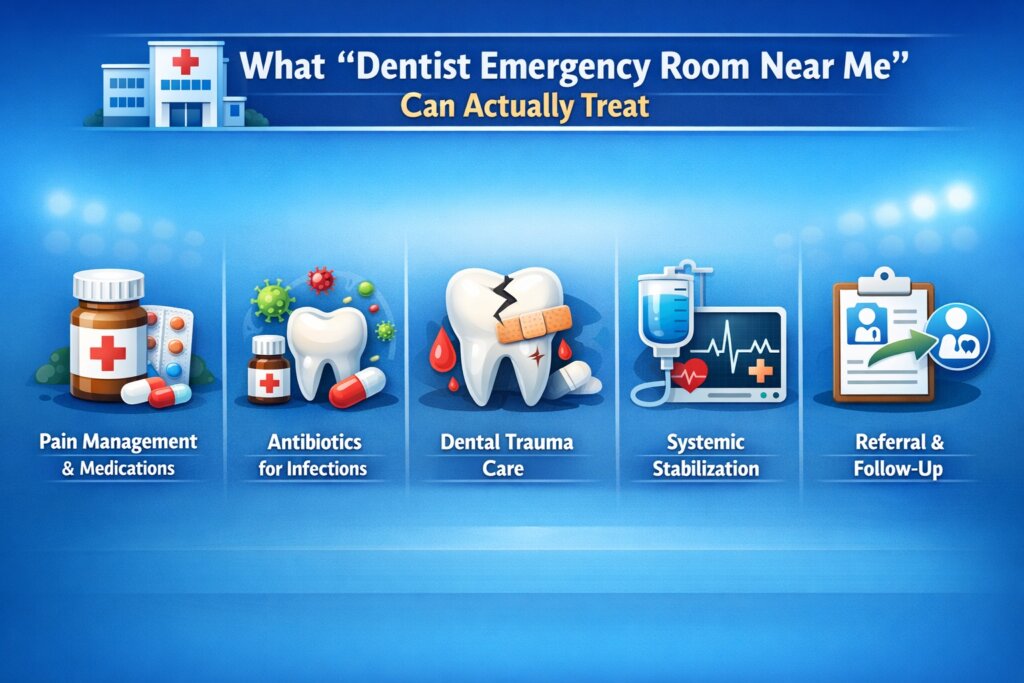
Understanding the scope of dental treatments available in your local area helps set realistic expectations for emergency care options. Most communities offer a combination of hospital emergency rooms, urgent care centers, and specialized dental emergency services, each with distinct capabilities and limitations. The key lies in matching your specific dental emergency with the most appropriate care setting.
Emergency room capabilities for dental issues remain focused on medical stabilization rather than dental restoration.
1. Pain Management and Prescription Medications
Emergency rooms excel at providing immediate pain relief through prescription medications, including both opioid and non-opioid options based on current medical guidelines. Physicians can prescribe stronger pain medications than are available over-the-counter, providing temporary relief while you arrange definitive dental care.
2. Antibiotic Treatment for Dental Infections
Emergency physicians can diagnose and treat dental infections with appropriate antibiotic therapy. This treatment helps control bacterial spread and reduce the risk of systemic infection, though it doesn’t address the infected tooth itself.
3. Management of Dental Trauma Complications
Emergency rooms handle complications from dental trauma, including soft tissue injuries, bleeding control, and assessment for associated facial fractures. They can suture lacerations and provide wound care for injuries affecting the lips, tongue, and surrounding facial tissues.
4. Stabilization of Systemic Complications
When dental infections create systemic health problems, emergency rooms provide critical stabilization services. This includes IV antibiotics, fluid replacement, and monitoring for signs of sepsis or other serious complications.
5. Referral Coordination and Follow-up Planning
Emergency room staff can coordinate referrals to appropriate dental specialists and provide guidance for follow-up care. They often maintain lists of local dentists who accept emergency patients and can facilitate urgent appointments.
For comprehensive dental emergency treatment, including extractions, root canal therapy, and restorative procedures, specialized providers like Emergency Dental San Francisco offer 24/7 availability with the equipment and expertise to address the underlying dental problems directly.
When to Choose Urgent Dental Care Over Emergency Rooms
Most dental pain situations benefit more from specialized urgent dental care than hospital emergency room visits. Urgent dental facilities combine the immediate availability of emergency care with the specialized expertise and equipment necessary for definitive treatment. This approach addresses both the immediate pain and the underlying dental problem in a single visit, eliminating the need for multiple appointments and reducing overall treatment costs.
The decision-making process becomes clearer when you understand which dental emergencies respond best to specialized care.
Severe toothaches represent the most common dental emergency, affecting millions of Americans annually. These painful episodes typically result from deep decay, cracked teeth, or infected dental pulp. Emergency rooms can only provide temporary pain relief, while urgent dental care can diagnose the exact cause and provide definitive treatment through root canal therapy, extractions, or other appropriate procedures.
Dental abscesses require immediate attention but rarely need emergency room intervention unless accompanied by systemic complications. Urgent dental providers can drain abscesses, remove infected teeth, and prescribe appropriate antibiotics based on the specific bacterial involvement. This comprehensive approach prevents the progression of infection and eliminates the source of pain.
Knocked-out teeth are time-sensitive emergencies in which specialized dental care offers the best chance of successful reimplantation. Emergency rooms lack the expertise and equipment necessary for tooth reimplantation, while urgent dental facilities can assess tooth viability and perform immediate reimplantation procedures when appropriate.
Broken crowns, lost fillings, and damaged dental work create both pain and functional problems that require specialized repair. Emergency Dental San Francisco provides same-day repair services for these common issues, restoring both comfort and function immediately rather than waiting for follow-up appointments.
Making the Right Choice for Your Dental Emergency
The decision between emergency room care and urgent dental services depends on accurately assessing the severity and nature of your dental problem. Life-threatening complications require immediate medical attention, while most dental pain responds better to specialized dental emergency care. Understanding the warning signs that indicate a medical emergency versus a dental emergency helps you choose the most appropriate and cost-effective treatment path.
Time sensitivity plays a crucial role in dental emergency decision-making, particularly in situations such as knocked-out teeth or severe trauma.
Start by evaluating your symptoms systematically to determine the appropriate level of care. Severe facial swelling, difficulty breathing or swallowing, uncontrolled bleeding, or high fever with dental pain warrant immediate emergency room evaluation. These symptoms suggest complications that extend beyond the dental structures and require medical intervention.
For isolated dental pain, even when severe, urgent dental care typically provides superior outcomes at lower costs. Specialized dental emergency providers can address the underlying cause while providing immediate pain relief, eliminating the need for multiple appointments and follow-up referrals.
Consider your insurance coverage and financial situation when choosing between care options. While emergency room visits may have lower immediate out-of-pocket costs due to medical insurance coverage, the total cost of care often exceeds urgent dental care when follow-up treatment is included.
Geographic factors influence your options, particularly in rural areas where specialized dental emergency services may be limited. In these situations, emergency rooms may serve as the only immediate option, but patients should arrange follow-up dental care as quickly as possible to address underlying problems.
Conclusion
Emergency rooms serve patients with dental pain best when life-threatening complications arise, while urgent dental care provides superior treatment for most dental emergencies. The cost savings, comprehensive treatment options, and definitive problem resolution available through specialized dental emergency services make them the preferred choice for typical dental pain situations. When facing dental emergencies in the San Francisco Bay Area, Emergency Dental San Francisco offers 24/7 professional care that addresses both immediate pain relief and long-term dental health needs.
Emergency Dental San Francisco provides urgent dental care when ER visits aren’t enough for serious dental pain. Our licensed professionals offer same-day relief with proper diagnostic equipment and treatment options. Learn more about immediate dental emergency solutions.
FAQs
Should I Go to the ER for Dental Pain?
Go to the ER if you have trouble breathing or swallowing, facial/neck swelling, fever with worsening swelling, uncontrolled bleeding, or a serious injury. For most toothaches, abscesses, broken teeth, or lost fillings, an emergency dentist can treat the cause faster. Emergency Dental San Francisco offers same-day, after-hours, weekend, and holiday care.
Can the Emergency Room Treat a Toothache?
The ER can help with pain control and rule out dangerous swelling or infection, but they usually can’t provide definitive dental treatment, such as a root canal, extraction, or drainage. Our clinicians focus on diagnosing the source and providing urgent, hygienic dental treatment with clear next steps.
What Will the ER Do for Severe Tooth Pain?
Typically, the ER will assess you, check for signs of spreading infection, provide pain medication, and may prescribe antibiotics if needed, then refer you to a dentist. At Emergency Dental San Francisco, we can often treat the problem directly (e.g., stabilize a cracked tooth, treat an abscess, or perform an urgent extraction) to relieve pain quickly and safely.
Will the ER Prescribe Antibiotics for a Tooth Infection?
They may prescribe antibiotics if there are signs of bacterial infection or spreading swelling, but antibiotics alone don’t fix the infected tooth. We evaluate whether antibiotics are appropriate and provide the dental treatment needed to remove the source of infection.
How Much Does an ER Visit Cost for Dental Pain?
ER costs vary widely and are often significantly higher than an urgent dental visit, especially after facility fees and imaging. We accept most dental insurance plans, offer financing for those who qualify, and provide transparent pricing so you can get relief without unnecessary ER-level costs.

Emergency Dental San Francisco is a dental office focused on providing same-day dental appointments to patients in San Francisco and the surrounding area. We provide urgent dental care services during weekends, evenings and holidays.
We accept several forms of payment and have financing options available to those who qualify. We accept most dental insurance.