

16 Feb Emergency Dental Help for Dental Trauma: How Treatment Differs for Fractured, Displaced, and Knocked-Out Teeth
Dental trauma strikes without warning and demands immediate action. Whether you’ve suffered a knocked-out tooth from a sports injury, cracked a molar in an accident, or experienced severe facial trauma, the first hour after injury can determine whether your teeth survive or require extensive reconstruction. Emergency Dental San Francisco provides 24/7 urgent care specifically designed to handle dental trauma cases with the speed and precision your situation demands.
This comprehensive guide covers everything you need to know about dental trauma emergencies, from immediate first aid steps to professional treatment options. You’ll learn when trauma requires emergency care, what steps to take before reaching our clinic, and how our same-day emergency services can save your teeth and restore your smile.
Key Takeaways
- Dental trauma requires immediate professional care within the first 30-60 minutes for the best chance of saving teeth.
- Hospital emergency rooms cannot provide the specialized dental care needed for most trauma cases.
- Proper first aid techniques can significantly improve treatment outcomes for knocked-out or fractured teeth.
- Emergency dental clinics offer comprehensive trauma care, including extractions, repairs, and pain management.
- Quick action and professional treatment can prevent complications such as infections, nerve damage, and tooth loss.
Understanding Emergency Dental Help for Trauma Cases
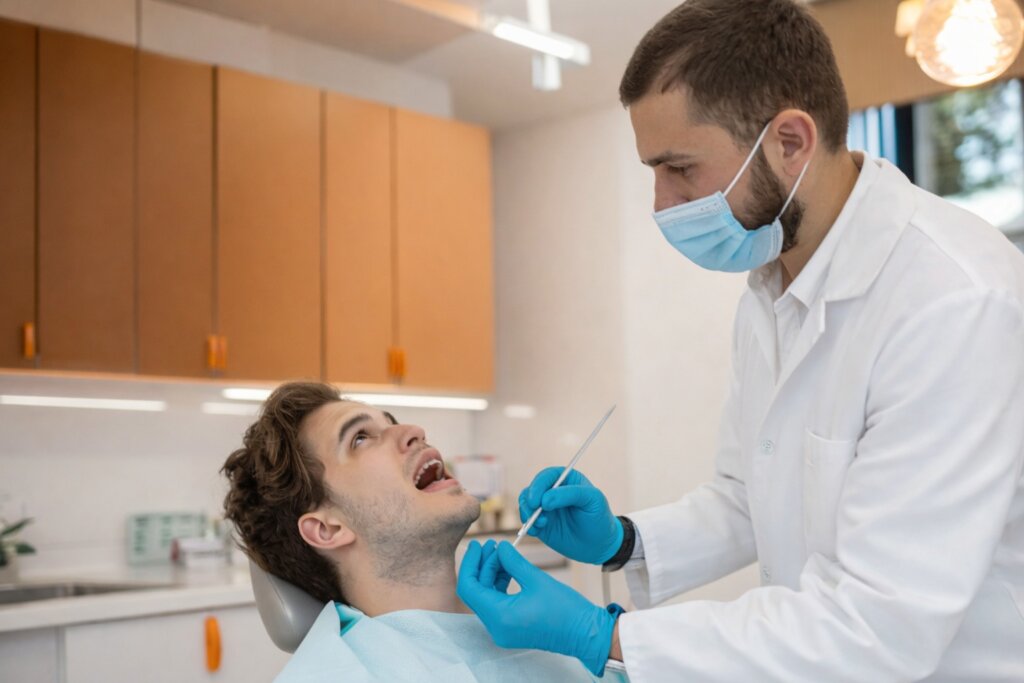
Dental trauma encompasses any injury to your teeth, gums, or surrounding oral structures that requires immediate medical attention. Unlike routine dental problems that can wait for regular office hours, trauma cases demand urgent intervention to prevent permanent damage. The most common types include knocked-out teeth, fractured crowns or roots, jaw injuries, and soft tissue lacerations inside the mouth.
Time becomes your most critical factor in trauma situations. Research shows that teeth have the highest survival rate when reimplanted within 30 minutes of being knocked out.
Many people make the mistake of heading to hospital emergency rooms for dental trauma, but most ERs lack the specialized equipment and expertise needed for proper dental care. An estimated 2 million Americans visit hospital emergency departments annually for dental pain and trauma, costing the healthcare system $3.9 billion, according to recent data. These visits often result in temporary pain relief and referrals to dental specialists, delaying the urgent care your teeth actually need.
Recognizing When Dental Trauma Needs Emergency Care
Not every dental injury constitutes a true emergency, but certain signs indicate you need immediate professional attention. Understanding these warning signals helps you decide whether to seek urgent care or wait for regular dental appointments. Emergency Dental San Francisco treats trauma cases that require immediate intervention to save teeth and prevent complications.
1. Knocked-Out Teeth (Avulsed Teeth)
A completely knocked-out permanent tooth represents a true dental emergency requiring immediate care. The tooth’s survival depends on how quickly you seek professional treatment.
2. Fractured or Cracked Teeth
Visible cracks, chips, or breaks in your teeth need urgent evaluation, especially if you experience pain or sensitivity. Deep fractures can expose the tooth’s nerve, leading to severe pain and potential infection.
3. Severe Dental Pain Following Trauma
Intense, persistent pain after any facial or mouth injury often indicates nerve damage or internal tooth fractures. This type of pain typically worsens over time without professional treatment.
4. Uncontrolled Bleeding from Oral Injuries
Bleeding that doesn’t stop after 15-20 minutes of direct pressure requires emergency care. Heavy bleeding can indicate damage to major blood vessels or deep tissue injuries.
5. Loose or Displaced Teeth
Teeth that feel loose, have shifted position, or seem pushed into the gum tissue need immediate stabilization. Delayed treatment often results in tooth loss or complicated orthodontic problems.
6. Jaw Pain or Difficulty Opening Your Mouth
Trauma that affects jaw movement, causes clicking sounds, or prevents normal mouth opening may indicate a jaw fracture or joint injury requiring urgent evaluation.
Immediate First Aid Steps for Dental Trauma
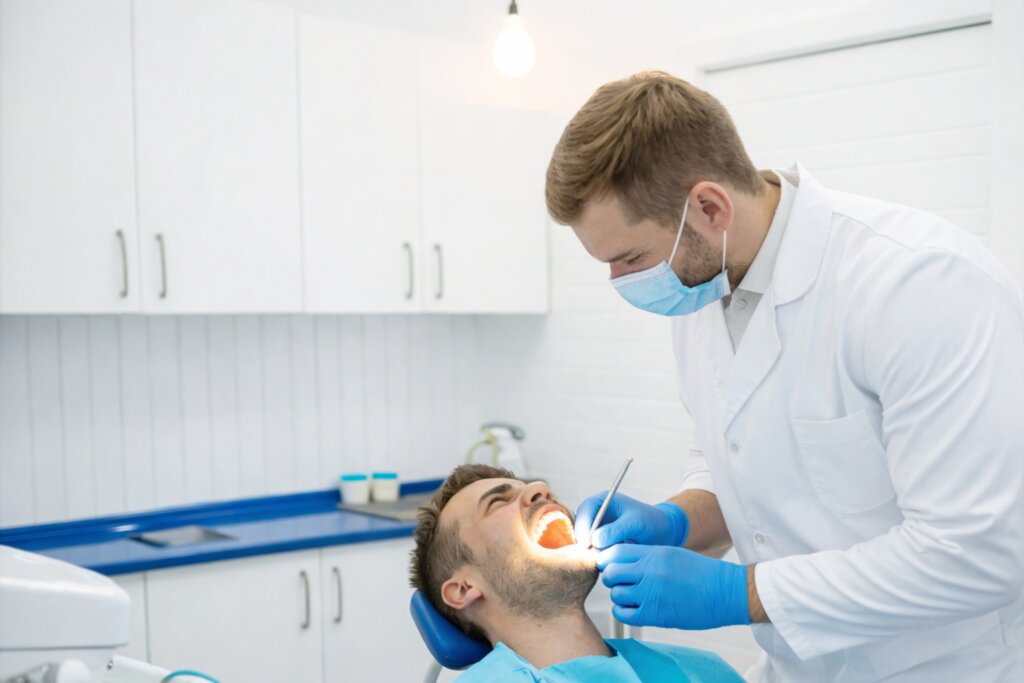
The actions you take immediately after dental trauma can significantly impact your treatment outcome and tooth survival rates. These first aid measures help stabilize your condition and preserve damaged tissues until you reach professional care. Remember that first aid provides temporary relief but never replaces emergency dental treatment.
Your response should focus on controlling bleeding, managing pain, and preserving any damaged tooth structures for potential repair or reimplantation.
1. Control Bleeding with Direct Pressure
Apply gentle but firm pressure to bleeding areas using clean gauze or cloth. Maintain pressure for 15-20 minutes without constantly checking the wound, as this disrupts clot formation.
2. Preserve Knocked-Out Teeth Properly
Handle the tooth by its crown only, never touching the root surface. Rinse gently with milk or saline solution if it is dirty, then store it in milk, saliva, or between your cheek and gum.
3. Save All Tooth Fragments
Collect any broken pieces of teeth, crowns, or dental work in a clean container with milk or saline solution. These fragments may be reattached during emergency treatment.
4. Apply Cold Compresses for Swelling
Use ice packs wrapped in cloth for 15-20 minutes at a time to reduce swelling and numb pain. Never apply ice directly to your skin or inside your mouth.
5. Take Over-the-Counter Pain Medication
Ibuprofen provides both pain relief and anti-inflammatory effects for dental trauma. Follow package directions and avoid aspirin, which can increase bleeding.
6. Rinse with Warm Salt Water
A gentle rinse with warm salt water helps clean the area and reduce bacteria. Mix one teaspoon of salt into a cup of warm water, then rinse carefully.
Professional Emergency Dental Treatment for Trauma
Professional emergency dental care goes far beyond what hospitals or urgent care centers can provide for trauma cases. Specialized dental clinics have the equipment, expertise, and immediate availability needed to save traumatized teeth and restore oral function. Our emergency dental services focus on rapid pain relief, tissue preservation, and long-term tooth survival.
| Trauma Type | Emergency Treatment | Success Rate | Time Sensitivity |
|---|---|---|---|
| Knocked-out tooth | Reimplantation and splinting | 85-95% if treated within 30 minutes | Critical – under 1 hour |
| Crown fracture | Bonding or temporary restoration | 90-95% with immediate care | Same day recommended |
| Root fracture | Splinting or extraction | 70-80% depending on location | Within 24 hours |
| Tooth displacement | Repositioning and stabilization | 80-90% with prompt treatment | Same day essential |
Treatment approaches vary based on the type and severity of your trauma, but all emergency interventions prioritize saving natural teeth whenever possible.
Preventing Future Dental Trauma
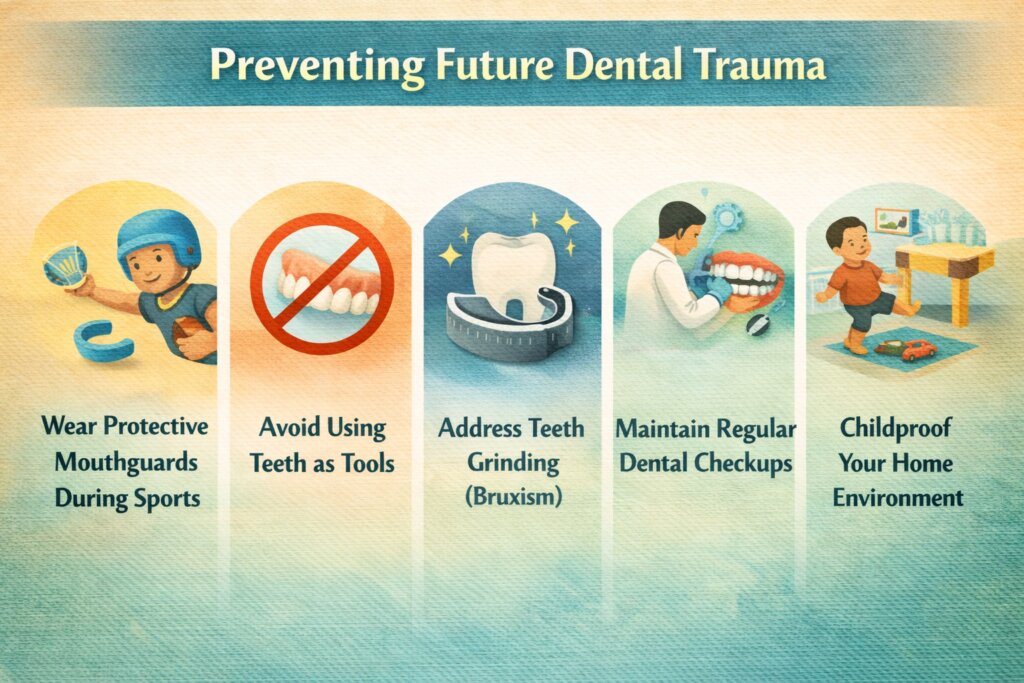
While accidents happen unexpectedly, many cases of dental trauma can be prevented through proper precautions and protective measures. Understanding common causes of trauma helps you make informed decisions about protecting your teeth during high-risk activities. Prevention strategies prove especially important for athletes, children, and individuals with jobs involving physical risks.
Simple protective measures can dramatically reduce your risk of experiencing dental trauma that requires emergency care.
1. Wear Protective Mouthguards During Sports
Custom-fitted mouthguards provide superior protection compared to over-the-counter options. They’re essential for contact sports but beneficial for any athletic activity with collision or fall risks.
2. Avoid Using Teeth as Tools
Never use your teeth to open packages, crack nuts, or hold objects. These habits frequently cause chips, cracks, and fractures that require emergency repair.
3. Address Teeth Grinding (Bruxism)
Chronic teeth grinding weakens tooth structure and increases the risk of fracture during trauma. Night guards help protect your teeth from grinding damage.
4. Maintain Regular Dental Checkups
Routine dental care helps identify weak spots, old fillings, and structural problems that can make teeth more vulnerable to trauma. Early intervention prevents emergency situations.
5. Childproof Your Home Environment
Remove or pad sharp furniture edges, secure loose rugs, and create safe play areas to reduce the risk of childhood trauma. Most pediatric dental injuries occur at home.
Why Choose Emergency Dental San Francisco for Trauma Care
When dental trauma strikes, you need more than just pain relief – you need specialized care that can save your teeth and restore your smile. Emergency Dental San Francisco combines immediate availability with advanced trauma treatment capabilities, ensuring you receive the right care at the right time. Our clinic operates 24/7 specifically to handle urgent cases that cannot wait for regular dental appointments.
We understand that trauma situations create anxiety and confusion, which is why our team focuses on clear communication and gentle care throughout your treatment.
Our trauma care protocols follow established emergency dentistry guidelines and use modern equipment and techniques to achieve optimal outcomes. We accept most dental insurance plans and offer financing options to ensure that cost never delays critical treatment. For patients without insurance, we accept cash and all major credit cards while working to keep emergency care accessible and affordable.
Conclusion
Dental trauma demands immediate professional care to save teeth and prevent complications. Quick action combined with proper emergency dental treatment offers the best chance for full recovery and long-term oral health. Call 415-230-2783 now for immediate trauma care that prioritizes your comfort and tooth preservation.
Emergency Dental San Francisco provides immediate trauma care for cracked, knocked-out, or damaged teeth. Our licensed professionals prioritize pain relief and safety first. Get started with same-day emergency appointments.
FAQs
What Is Considered a Dental Emergency?
A dental emergency is any mouth or tooth problem that involves severe pain, swelling, bleeding, infection (like an abscess), trauma (cracked, broken, or knocked-out tooth), or anything that could worsen quickly—especially if you have a fever, facial swelling, or trouble swallowing or breathing.
Where Can I Get Emergency Dental Care Right Now?
You can call an urgent-care dental office for same-day or after-hours treatment. Emergency Dental San Francisco offers walk-ins and same-day appointments, including weekends and holidays—call 415-230-2783 or book online for immediate help.
How Much Does an Emergency Dentist Visit Cost?
Costs vary based on the exam, X-rays, and the treatment needed (such as drainage, a filling, or extraction). We accept most insurance plans, offer financing to those who qualify, and provide clear, upfront pricing options for patients paying in cash or by card.
What Should I Do If I Have a Toothache and Can’t See a Dentist?
Rinse with warm salt water, take OTC pain reliever as directed (avoid placing aspirin on the gums), apply a cold compress to reduce swelling, and keep the area clean. If pain is severe, swelling is present, or symptoms are worsening, call us 24/7 so we can help you get safe, same-day care.
Can the ER Treat a Dental Emergency?
The ER can help with serious swelling, uncontrolled bleeding, trauma, or breathing/swallowing issues, and they may prescribe pain medication or antibiotics—but they typically can’t provide definitive dental treatment like draining an abscess or repairing a tooth. For most dental emergencies, an emergency dentist is the fastest way to treat the problem at its source.

Emergency Dental San Francisco is a dental office focused on providing same-day dental appointments to patients in San Francisco and the surrounding area. We provide urgent dental care services during weekends, evenings and holidays.
We accept several forms of payment and have financing options available to those who qualify. We accept most dental insurance.