


29 Dec Dental Emergency Walk-In for Swollen Jaw
A swollen jaw can turn your day upside down, bringing intense pain and worry about what’s happening inside your mouth. Emergency Dental San Francisco provides immediate walk-in care for jaw swelling emergencies, offering same-day appointments and 24/7 availability across the Bay Area. Our urgent care dental practice specializes in fast diagnosis and treatment of dental infections, abscesses, and other conditions causing facial swelling.
This guide explains the most common causes of jaw swelling, warning signs that require immediate emergency dental care, and safe steps you can take at home before your visit. You’ll also learn about our emergency treatment options and how to access our walk-in dental services when you need relief most.
Key Takeaways
- Jaw swelling often indicates a dental infection or abscess requiring immediate professional care.
- Fever, difficulty swallowing, or breathing problems with swelling are medical emergencies.
- Cold compresses and saltwater rinses can provide temporary relief before treatment.
- Same-day emergency dental care is available 24/7 for walk-in patients in San Francisco.
- Early treatment prevents complications and reduces recovery time significantly.
Common Causes of Emergency Dental Walk-In for Swollen Jaw
Understanding what causes jaw swelling helps you recognize when you need immediate dental emergency care. Most cases stem from bacterial infections that develop around teeth or gums. These infections can spread quickly, making prompt treatment essential for your health and comfort.
The following conditions represent the most frequent reasons patients visit our 24-hour emergency dentist walk-in clinic for facial swelling.
1. Dental Abscess and Deep Infections
A dental abscess forms when bacteria invade the tooth’s inner pulp or surrounding tissues. The infection creates a pocket of pus that causes significant swelling and throbbing pain.
2. Severely Cracked or Decayed Teeth
Deep cracks or advanced decay allow bacteria to reach sensitive tooth structures. This bacterial invasion triggers inflammation and swelling in surrounding tissues.
3. Impacted or Infected Wisdom Teeth
Wisdom teeth that cannot fully emerge often trap food and bacteria. The resulting infection causes swelling around the back of the jaw and can spread to nearby areas.
4. Advanced Gum Disease and Periodontal Infections
Severe gum infections can cause swelling that extends beyond the gum line. These infections may affect the jawbone and surrounding soft tissues.
5. Recent dental trauma or Injury
Accidents or sports injuries can damage teeth and surrounding tissues. Even minor trauma can lead to infections that cause delayed swelling days after the initial injury.
Red Flag Symptoms Requiring Immediate Emergency Dental Care
Certain symptoms with jaw swelling indicate serious complications that need urgent medical attention. These warning signs suggest the infection may be spreading or affecting your ability to breathe or swallow safely. Recognizing these symptoms can prevent life-threatening complications.
| Symptom Severity | Action Required | Treatment Timeline |
|---|---|---|
| Mild swelling, manageable pain | Schedule same-day appointment | Within 24 hours |
| Moderate swelling with fever | Walk-in for immediate care | Within 2-4 hours |
| Severe swelling, breathing issues | Emergency room or urgent clinic | Immediately |
1. Rapidly Increasing Facial Swelling
Swelling that worsens noticeably within hours indicates an aggressive infection. This rapid progression requires immediate intervention to prevent further spread.
2. Fever Above 101°F with Dental Pain
Fever combined with jaw swelling suggests the infection has entered your bloodstream. This systemic response needs prompt antibiotic treatment and professional care.
3. Difficulty Swallowing or Opening Your Mouth
Swelling that affects your ability to swallow or open your mouth can compromise your airway. This represents a dental emergency requiring immediate professional evaluation.
4. Trouble Breathing or Voice Changes
Any breathing difficulty or changes in your voice with facial swelling indicates the infection may be affecting your throat. Seek emergency care immediately.
5. Severe Facial Redness or Skin Changes
Red streaks on your face or significant skin discoloration suggests the infection is spreading through your tissues. This requires urgent antibiotic treatment.
6. Foul Taste with Drainage
A bad taste in your mouth with visible drainage indicates an active infection that needs professional cleaning and treatment. While less urgent than breathing problems, this still requires same-day care.
Contact our emergency dental clinic immediately or seek hospital care if you experience any of these symptoms.
Safe At-Home Steps Before Your Emergency Dental Walk-In Visit
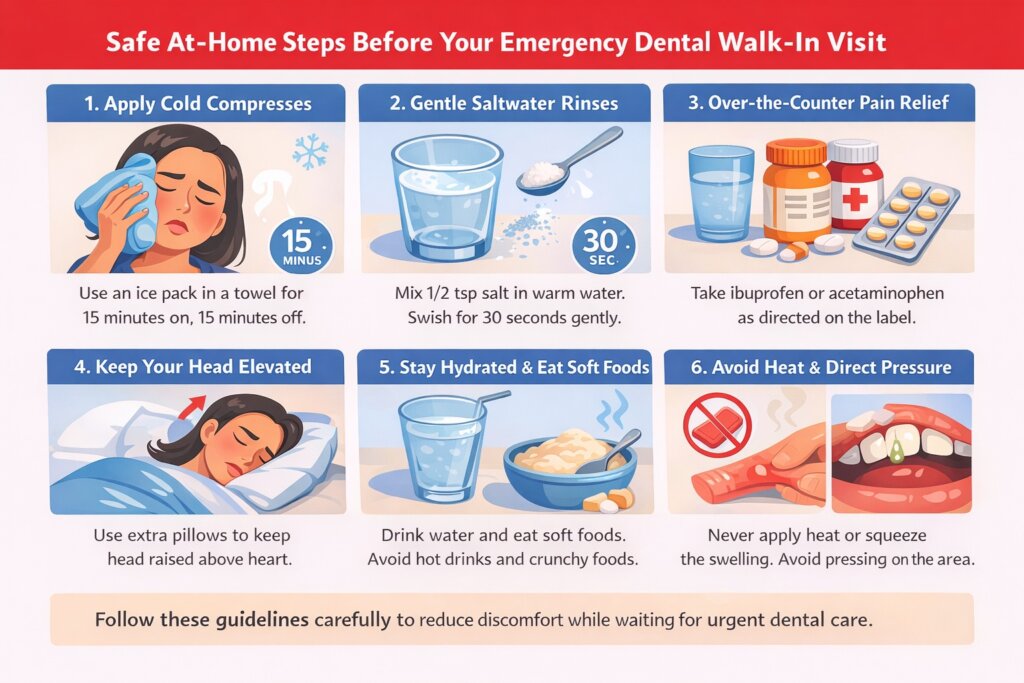
While waiting for professional treatment, certain home care measures can help reduce discomfort and prevent the infection from worsening. These steps provide temporary relief but should never replace professional dental emergency care. Think of these measures as a bridge to get you safely to your appointment.
1. Apply Cold Compresses for Swelling Control
Use an ice pack wrapped in a thin towel for 15 minutes on, 15 minutes off. Cold therapy reduces inflammation and provides temporary pain relief without masking serious symptoms.
2. Gentle Saltwater Rinses
Mix half a teaspoon of salt in warm water and gently swish for 30 seconds. This helps clean the area and may reduce bacteria, but avoid vigorous rinsing that could spread infection.
3. Over-the-Counter Pain Management
Take ibuprofen or acetaminophen as directed on the package for pain and inflammation. Avoid aspirin directly on gums, which can damage tissues and increase bleeding.
4. Keep Your Head Elevated
Sleep with extra pillows to keep your head raised above your heart. This position helps reduce blood flow to the swollen area and may decrease throbbing pain.
5. Stay Hydrated and Eat Soft Foods
Drink plenty of water and stick to soft, cool foods that don’t require much chewing. Avoid hot foods and drinks that can increase inflammation and discomfort.
6. Avoid Heat and Direct Pressure
Never apply heat to facial swelling or try to squeeze or drain the area yourself. Heat can worsen infections, and squeezing can spread bacteria to surrounding tissues.
Follow these guidelines carefully, and avoid common mistakes that could make your condition worse.
Emergency Treatment Options at Our 24-Hour Emergency Dentist Walk-In Clinic
Our dental clinic provides comprehensive emergency care for jaw swelling, from initial diagnosis through complete treatment. We use modern diagnostic equipment and follow strict infection control protocols to ensure safe, effective care. Every patient receives a thorough evaluation to determine the best treatment approach for their specific condition.
1. Emergency Examination and Digital X-Rays
We start with a detailed examination and digital imaging to identify the source of infection. These X-rays reveal hidden abscesses, bone involvement, and the extent of damage requiring treatment.
2. Immediate Drainage and Infection Control
When appropriate, we provide same-day drainage of abscesses to relieve pressure and remove infected material. This procedure offers rapid pain relief and prevents further bacterial spread.
3. Antibiotic Therapy for Systemic Infections
Patients with fever or extensive swelling receive appropriate antibiotic prescriptions to fight the infection systemically. We select antibiotics based on the type and severity of your infection.
4. Emergency Root Canal or Extraction Services
Severely infected teeth may require root canal therapy to save the tooth or extraction if the damage is too extensive. We provide both options with effective pain management and clear aftercare instructions.
5. Pain Management and Comfort Measures
Our team prioritizes your comfort with appropriate pain medications and gentle treatment techniques. We explain each step of the process and ensure you understand your treatment plan.
6. Follow-Up Care and Prevention Planning
Before you leave, we provide detailed aftercare instructions and schedule necessary follow-up appointments. This ensures proper healing and helps prevent future emergency situations.
Treatment typically begins with pain relief and progresses based on your individual needs and the severity of your condition.
When to Choose Our Open Dental Emergency Walk-In Over the Hospital ER
Many people wonder whether to visit an emergency room or an emergency dental care dentist for jaw swelling. Understanding the difference can save you time and ensure you receive the most appropriate treatment. Hospital emergency rooms typically focus on life-threatening conditions and may only provide temporary pain relief for dental issues.
| Condition | Best Treatment Location | Why |
|---|---|---|
| Dental abscess without breathing issues | Emergency Dental San Francisco | Specialized equipment and immediate treatment |
| Infected wisdom tooth | Emergency Dental San Francisco | Same-day extraction or treatment available |
| Swelling with breathing difficulty | Hospital ER first, then dental follow-up | Airway management priority |
| Facial trauma with possible fracture | Hospital ER for evaluation | May require surgical intervention |
Our specialized urgent care dental practice offers definitive treatment for most dental emergencies that cause facial swelling.
What to Bring to Your Emergency Dental Walk-In Appointment
Preparing for your visit helps streamline the treatment process and ensures we have all necessary information to provide optimal care. Having the right documents and information ready can reduce wait times and help our team make informed treatment decisions quickly. This preparation becomes especially important when you’re dealing with pain and swelling.
- Government-issued photo identification
- Insurance cards and any dental coverage information
- Complete list of current medications and known allergies
- Recent dental X-rays or records if available
- Payment method (cash, credit card, or financing information)
- Emergency contact information for family members
Gather these items before heading to our clinic for the most efficient visit possible.
Insurance and Payment Options for Emergency Dental Care
We accept most dental insurance plans and work to maximize your benefits for emergency treatment. Our team provides upfront cost estimates whenever possible, so you understand your financial responsibility before treatment begins. For patients without insurance, we offer multiple payment options to make urgent care accessible when you need it most.
- Most major dental insurance plans accepted
- Financing options available for qualified patients
- Cash and all major credit cards welcomed
- Transparent pricing with upfront estimates
- Payment plans for extensive treatment when appropriate
Financial concerns should never delay treatment for serious dental infections that cause jaw swelling.
Conclusion
Jaw swelling requires prompt professional evaluation to prevent serious complications and provide effective pain relief. Emergency Dental San Francisco offers 24/7 walk-in care with same-day treatment options for patients throughout the Bay Area. Call 415-230-2783 or book online immediately for expert emergency dental care when you need it most.
Emergency Dental San Francisco provides immediate walk-in care for swollen jaw emergencies. Our licensed professionals prioritize fast pain relief and safety. Get started with same-day treatment today.
FAQs
Can a swollen jaw be a dental emergency?
Yes, a swollen jaw is often a dental emergency because it commonly signals an infection or abscess that can spread quickly. Without prompt treatment, the swelling can worsen and lead to serious complications involving the face, jawbone, or airway. Seeking same-day emergency dental care helps stop the infection and relieve pain faster.
What causes sudden jaw swelling on one side?
Sudden one-sided jaw swelling is most often caused by a dental abscess, infected tooth, impacted wisdom tooth, or advanced gum disease. Trauma to the mouth or jaw can also trigger delayed swelling due to infection or inflammation. A dental exam and X-rays are needed to pinpoint the exact cause.
Should I go to the ER or an emergency dentist for a swollen jaw?
If jaw swelling is accompanied by trouble breathing, swallowing, or severe facial swelling, go to the ER immediately. Otherwise, an emergency dentist is usually the best choice for dental infections, abscesses, and tooth-related swelling because they can provide definitive treatment the same day.
How can I reduce jaw swelling before seeing an emergency dentist?
You can apply a cold compress to the outside of your face for short intervals and rinse gently with warm saltwater. Over-the-counter pain relievers may help reduce discomfort if taken as directed. Avoid heat, pressing on the swelling, or trying to drain it yourself.
How fast can a dental infection causing jaw swelling spread?
A dental infection can spread within hours to days, especially if it reaches deeper tissues or the bloodstream. Rapidly increasing swelling, fever, or facial redness are signs the infection is advancing. Early emergency dental treatment significantly reduces the risk of complications and speeds up recovery.

Emergency Dental San Francisco is a dental office focused on providing same-day dental appointments to patients in San Francisco and the surrounding area. We provide urgent dental care services during weekends, evenings and holidays.
We accept several forms of payment and have financing options available to those who qualify. We accept most dental insurance.